
Best 8ft Reptile Enclosure for Bioactive Setups
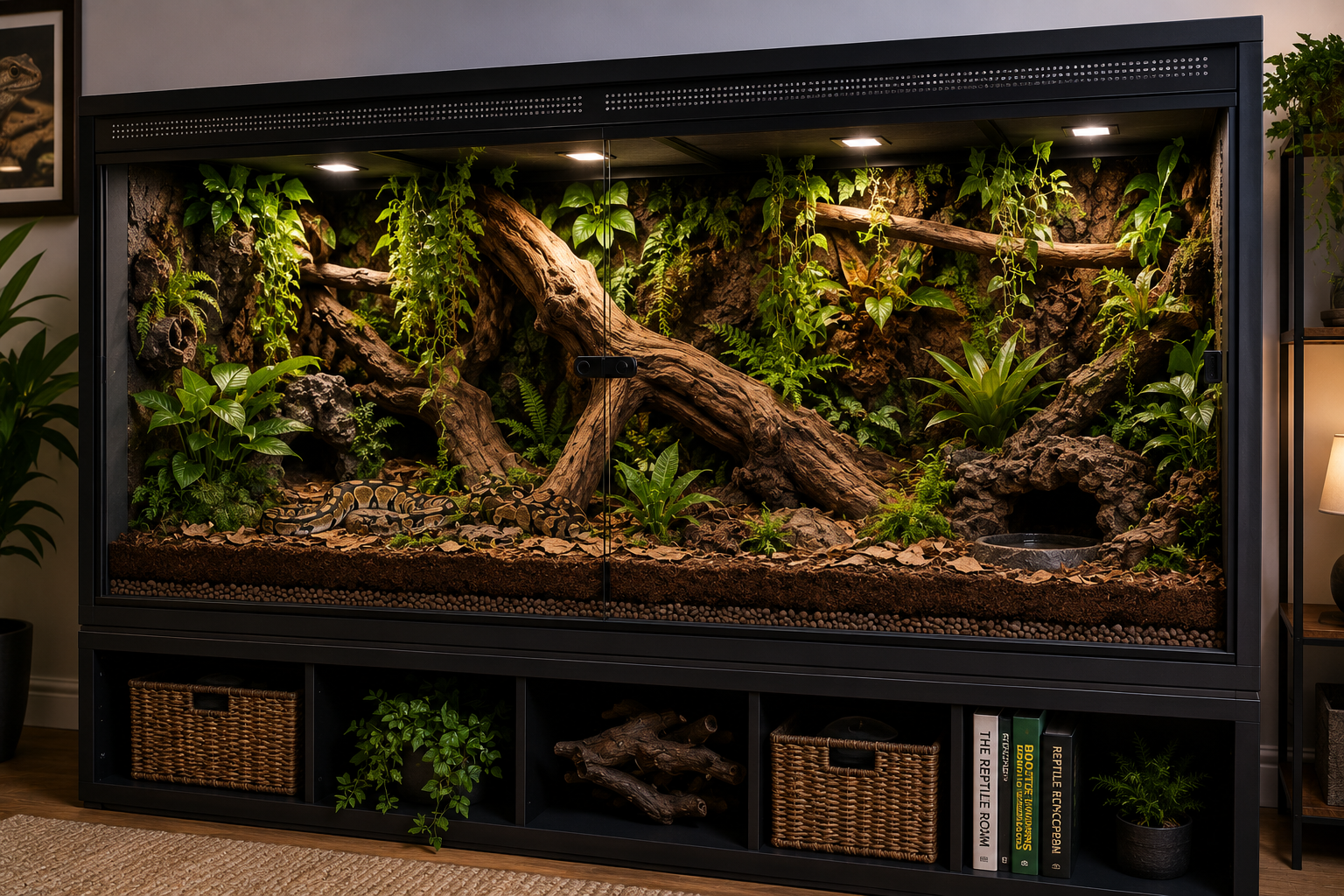
Best 8ft Reptile Enclosure for Bioactive Setups
An 8-foot PVC reptile enclosure is one of the best options for large bioactive setups because it provides ample space for natural behaviors, supports stable heat and humidity, and resists moisture damage. The best enclosures also offer durable PVC construction, front-opening doors, secure ventilation, and enough room for live plants, deep substrate, and environmental enrichment. (Stumps Custom Wood)
Why Choose an 8ft Enclosure?
Large reptiles need more than enough room to simply turn around—they benefit from space to explore, climb, burrow, bask, and establish natural temperature gradients.
An 8-foot enclosure provides:
Greater freedom of movement
More enrichment opportunities
Better temperature gradients
Larger planting areas
Room for multiple hides
More natural habitat design
For many large species, this extra space supports better welfare and easier habitat management.
Why PVC Is the Best Material for Bioactive Habitats
Bioactive setups maintain moist substrates, live plants, and beneficial cleanup organisms.
PVC is especially well suited because it offers:
Excellent moisture resistance
Strong humidity retention
Superior insulation
Easy-to-clean non-porous surfaces
Resistance to warping and rot
These characteristics make PVC one of the most popular enclosure materials for bioactive systems. (Stumps Custom Wood)
Features to Look For
The best 8-foot PVC enclosure should include:
Durable PVC Construction
Thick PVC panels help maintain stable environmental conditions while standing up to years of use.
Front-Opening Doors
Front access makes:
Feeding easier
Cleaning simpler
Plant maintenance more convenient
Animal interaction less stressful
Deep Substrate Capacity
Bioactive habitats require space for:
Drainage layers
Bioactive substrate
Root systems
Cleanup crews
Burrowing behavior
Look for an enclosure that accommodates a substantial substrate depth.
Excellent Heat and Humidity Retention
A quality PVC enclosure should make it easier to maintain:
Stable humidity
Proper basking temperatures
Consistent ambient temperatures
This is especially valuable for tropical reptiles.
Secure Ventilation
Good airflow is essential, but it should not excessively dry out the enclosure.
Balanced ventilation helps maintain healthy plants while supporting appropriate humidity levels.
Ideal Reptiles for an 8ft Bioactive Enclosure
An 8-foot enclosure is well suited for larger species that benefit from additional space.
Examples include:
Boa Constrictor
Carpet Python
Argentine Black and White Tegu
Savannah Monitor
Always research the specific care requirements of your species before choosing an enclosure size.
What Makes a Great Bioactive Setup?
A thriving bioactive enclosure typically includes:
Live plants
Drainage layer
Bioactive substrate
Leaf litter
Cork bark
Branches and climbing structures
Cleanup crew such as springtails and isopods
Together, these elements help create a more natural ecosystem. (Stumps Custom Wood)
Why Bigger Is Better
An 8-foot enclosure offers several advantages over smaller habitats:
More Stable Environmental Conditions
Larger enclosures often experience fewer sudden swings in temperature and humidity.
Better Enrichment
More floor space allows for:
Additional hides
Climbing opportunities
Natural décor
Larger plants
Improved Display
A spacious, planted enclosure creates an impressive naturalistic centerpiece while providing a more complex environment for the reptile.
Optional Premium Features
Consider upgrades such as:
Built-in LED lighting
UVB fixture mounts
Radiant heat panel compatibility
Lockable doors
Tempered glass viewing panels
Stackable designs (where appropriate)
These features can make long-term maintenance easier and improve the overall appearance of the habitat.
Common Mistakes to Avoid
Choosing an Enclosure That's Too Small
Buying for your reptile's current size rather than its adult needs often leads to an early upgrade.
Skipping Drainage
A drainage layer helps prevent waterlogged substrate and supports healthy plant roots in many bioactive setups.
Poor Plant Selection
Choose plants appropriate for your reptile's environmental conditions and activity level.
Inadequate Lighting
If you plan to use live plants, ensure your lighting supports both plant growth and your reptile's needs.
Frequently Asked Questions
Is PVC better than glass for bioactive enclosures?
Many keepers prefer PVC because it retains heat and humidity more effectively and is highly resistant to moisture. (Stumps Custom Wood)
What reptiles need an 8ft enclosure?
Large snakes and lizards, such as boa constrictors, carpet pythons, tegus, and some monitor species, may benefit from an enclosure of this size, depending on the individual animal and husbandry goals.
Can an 8ft PVC enclosure support live plants?
Yes. PVC is well suited to bioactive habitats with live plants because it tolerates moisture and helps maintain stable environmental conditions. (Stumps Custom Wood)
Should I choose a solid top or ventilated top?
The best option depends on your species' humidity and heating requirements. A solid top generally helps retain heat and humidity, while additional ventilation may be beneficial for species requiring greater airflow. (Stumps Custom Wood)
Conclusion
If you're planning a large bioactive habitat, an 8-foot PVC reptile enclosure offers the space, durability, and environmental stability needed for long-term success. Its moisture-resistant construction, excellent insulation, and generous dimensions make it an outstanding choice for naturalistic enclosures with live plants, deep substrates, and complex enrichment.
By selecting an enclosure with quality construction, thoughtful ventilation, and features that support bioactive husbandry, you'll create a habitat that benefits both your reptile and the ecosystem within it.
