
Best Wood Species for Custom Barn Doors: Oak, Walnut, Pine & More
Best Wood Species for Custom Barn Doors: Oak, Walnut, Pine & More
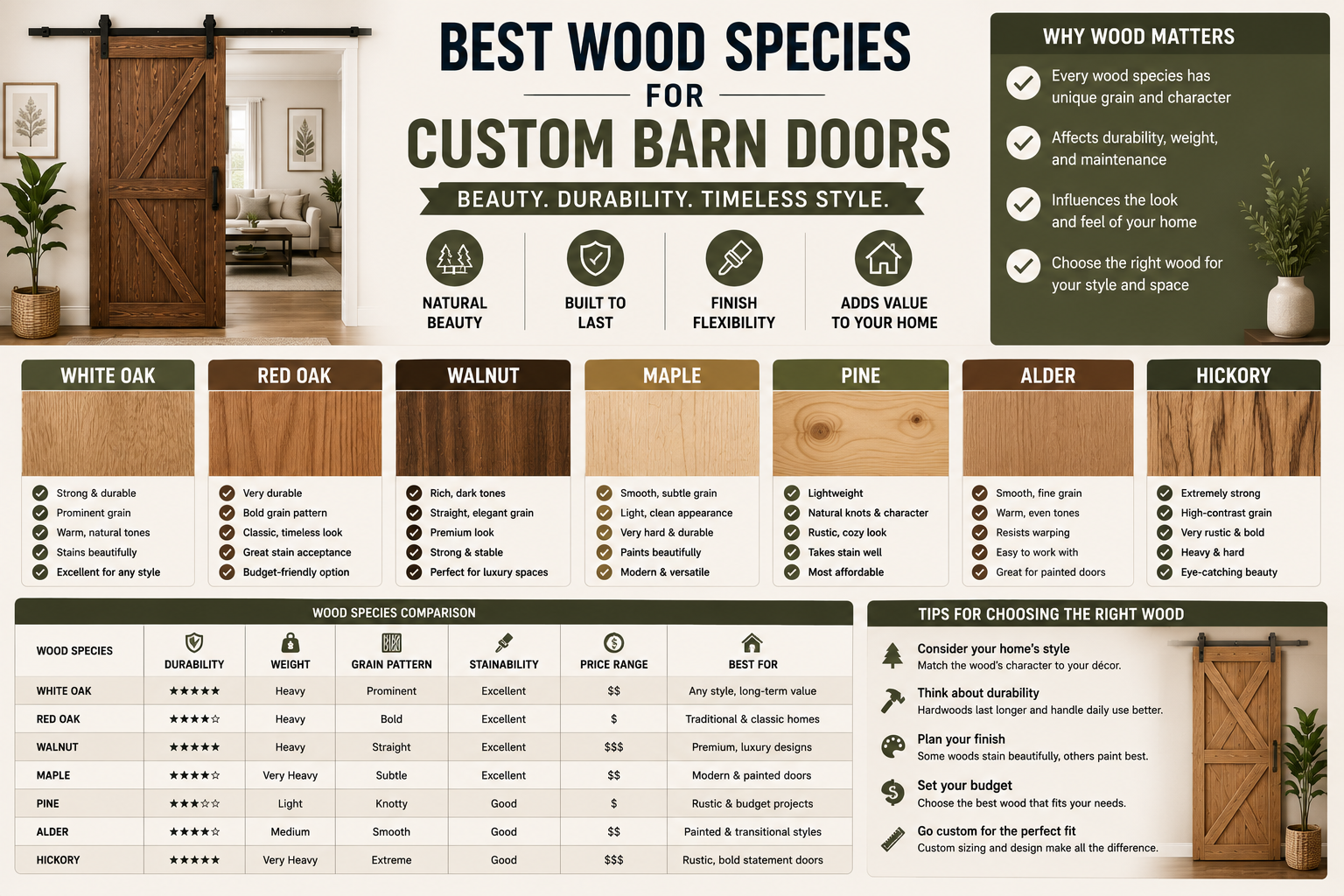
The best wood species for a custom barn door depends on your style, budget, and durability needs. White oak is prized for its strength and timeless appeal, black walnut offers a luxurious appearance with rich grain patterns, pine is an affordable farmhouse favorite, while maple, alder, and cedar each provide unique benefits. Choosing the right wood ensures your barn door will look beautiful, perform well, and complement your home's interior for years to come.
Why the Wood Species Matters
A custom barn door is more than just a functional feature—it's often one of the first design elements people notice in a room.
The wood species you choose affects:
Appearance
Durability
Grain pattern
Color
Weight
Maintenance
Cost
Overall lifespan
Since every wood has its own characteristics, understanding the differences can help you make a confident investment.
White Oak: The Timeless Favorite
White oak is one of the most popular choices for premium custom barn doors.
Advantages
Extremely durable
Beautiful straight grain
Excellent resistance to wear
Accepts stain evenly
Timeless appearance
White oak works beautifully in:
Modern farmhouse homes
Transitional interiors
Contemporary spaces
Luxury custom homes
Its warm tones and elegant grain make it a versatile option that rarely goes out of style.
Considerations
White oak is heavier than many softwoods, so it should be paired with high-quality sliding hardware.
Black Walnut: Luxury and Natural Beauty
Black walnut is considered one of the finest hardwoods for interior doors.
Advantages
Rich chocolate-brown color
Distinctive grain patterns
Premium appearance
Excellent durability
Ages beautifully over time
Walnut is ideal for homeowners who want a dramatic statement piece that showcases the natural beauty of real wood.
Best For
Executive home offices
Dining rooms
Primary bedrooms
High-end custom homes
Pine: Affordable Farmhouse Charm
Pine remains one of the most popular options for rustic and farmhouse-style barn doors.
Advantages
Budget-friendly
Lightweight
Easy to stain or paint
Rustic character
Widely available
Natural knots and grain variations give pine its signature farmhouse appeal.
Considerations
Because pine is a softwood, it is more susceptible to dents and scratches than hardwoods. However, many homeowners appreciate the lived-in character it develops over time.
Maple: Clean and Contemporary
Maple is known for its smooth texture and subtle grain.
Advantages
Hard, durable surface
Uniform appearance
Excellent painted finish
Modern aesthetic
Its understated look makes maple an excellent choice for minimalist and contemporary interiors.
Alder: Warm and Versatile
Alder has become increasingly popular for custom interior doors because of its balance between beauty and affordability.
Advantages
Warm honey-colored tones
Straight, consistent grain
Easy to stain
Lightweight compared to many hardwoods
It blends well with both rustic and modern design styles.
Cedar: Natural Character
Although cedar is often associated with exterior projects, it can also create distinctive interior barn doors.
Advantages
Attractive grain patterns
Pleasant natural aroma
Lightweight construction
Unique rustic appearance
Cedar is especially appealing in cabins, mountain homes, and rustic interiors.
Comparing Popular Wood Species
Wood SpeciesDurabilityAppearanceCostBest StyleWhite OakExcellentClassic grain$$$Farmhouse, TransitionalBlack WalnutExcellentRich dark grain$$$$Luxury, ModernMapleExcellentSmooth, subtle grain$$$ContemporaryAlderVery GoodWarm, even grain$$Rustic, TransitionalPineGoodKnotted rustic grain$FarmhouseCedarGoodRustic with bold grain$$Cabin, Rustic
Which Wood Is Best for Your Home?
Choose White Oak If You Want
Maximum durability
Timeless appeal
Excellent stain options
Long-term value
Choose Black Walnut If You Want
A premium statement piece
Rich natural color
Distinctive grain
Luxury craftsmanship
Choose Pine If You Want
A cost-effective solution
Rustic farmhouse character
A lighter-weight door
Easy customization
Choose Maple If You Want
A sleek, contemporary look
Smooth painted finishes
High durability
Minimal grain patterns
Choose Alder If You Want
Warm natural tones
Excellent value
Easy staining
Versatile design options
Choose Cedar If You Want
Rustic charm
A unique wood grain
Lightweight construction
A cabin-inspired aesthetic
Solid Wood vs Engineered Wood
When selecting a wood species, it's also worth considering the construction of the door.
Solid Wood
Benefits include:
Authentic wood throughout
Superior durability
Better sound insulation
Ability to be refinished
Long lifespan
Engineered Wood
Advantages include:
Lower cost
Greater dimensional stability
Smooth painted surfaces
Reduced maintenance
For homeowners seeking premium craftsmanship and lasting value, solid wood remains the preferred option.
Tips for Choosing the Right Finish
The finish you choose can dramatically affect the final appearance of your barn door.
Consider:
Clear finishes to highlight natural grain
Medium stains for a warm, classic look
Dark stains for a sophisticated appearance
Painted finishes for modern or coastal interiors
A high-quality finish also protects the wood from everyday wear and humidity.
Common Buying Mistakes
Choosing Wood Based Only on Price
The least expensive wood may not provide the durability or appearance you're looking for over the long term.
Ignoring the Door's Weight
Hardwoods like oak and walnut are heavier than pine or cedar and require sturdy, high-quality hardware.
Forgetting About Your Interior Style
The wood species should complement your flooring, cabinetry, trim, and overall décor for a cohesive look.
Overlooking Maintenance
Some woods benefit from occasional refinishing to preserve their appearance, especially in high-traffic areas.
Frequently Asked Questions
What is the best wood for a custom barn door?
White oak is widely regarded as one of the best all-around choices because of its durability, attractive grain, and timeless style. Black walnut is another excellent option for homeowners seeking a more luxurious appearance.
Is pine a good choice for barn doors?
Yes. Pine is an affordable and attractive option, especially for farmhouse and rustic interiors. While softer than hardwoods, it performs well in many residential settings.
Which wood lasts the longest?
Hardwoods such as white oak, black walnut, and maple generally offer the greatest durability and longevity when properly maintained.
Can I paint any wood species?
Yes. While some species are chosen to showcase their natural grain, all can be painted if the desired design calls for it.
Conclusion
The wood species you choose plays a major role in the beauty, durability, and overall character of your custom barn door. White oak delivers timeless elegance and exceptional strength, black walnut offers unmatched luxury, pine provides affordable farmhouse charm, and woods like maple, alder, and cedar each bring their own unique advantages.
By selecting a wood species that matches your home's style, budget, and functional needs, you'll create a barn door that not only enhances your interior but also provides lasting value and everyday enjoyment for years to come.
