
Laundry Room Storage Ideas for Small and Awkward Spaces
A small laundry room can become cluttered faster than almost any other space in the house. Detergent bottles crowd the washer, laundry baskets block the walkway, cleaning supplies end up on the floor, and there never seems to be a convenient place for dryer sheets, stain removers, or the little items that accumulate throughout the week.
The challenge becomes even greater when the room has an awkward layout. Perhaps your washer and dryer sit in a narrow hallway, your laundry area is tucked beneath a staircase, or your utility room has sloped ceilings, exposed pipes, or a strange corner that seems impossible to use.
The good news is that you don't need a large laundry room or an expensive renovation to create more usable storage. With thoughtful organization, space-saving shelves, wall-mounted solutions, and a few well-chosen wooden accents, even an awkward laundry area can become more functional and attractive.
For homeowners who appreciate practical storage with natural character, handcrafted wood pieces from Stumps Custom Wood can help turn unused wall space and overlooked corners into useful parts of the home.
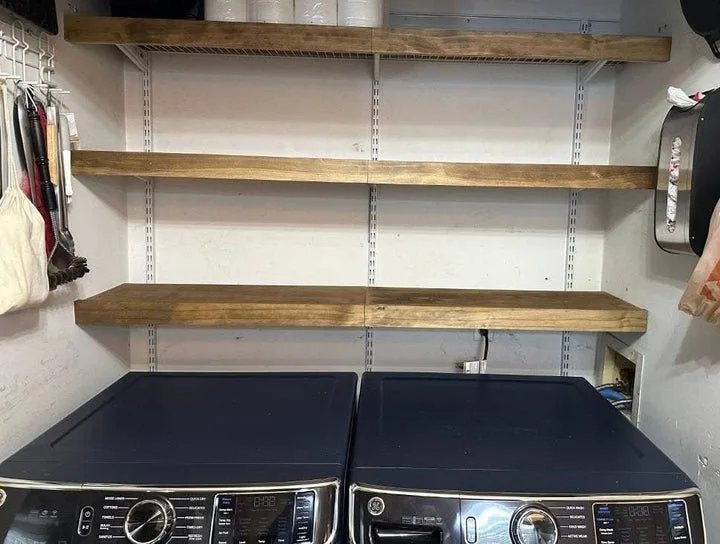
1. Install Shelves Above the Washer and Dryer
One of the easiest ways to add laundry room storage is to look up. The wall above your washer and dryer often offers valuable space that goes unused, even though it sits directly above the area where you need supplies most.
A shelf positioned above the machines can hold detergent, fabric softener, stain removers, dryer sheets, and small storage baskets. Keeping these items together makes laundry day easier because everything you need is within reach instead of scattered across the room.
For a cleaner appearance, group everyday products in matching containers or baskets. Keep frequently used supplies near the front and reserve higher shelves for items you reach for less often.
Make it look intentional: A wooden shelf can do more than hold supplies. Natural wood grain adds warmth to a room filled with appliances, plastic bottles, and hard surfaces. A well-chosen wood tone can make a basic laundry nook feel more like a finished part of your home rather than a forgotten utility corner.
Stumps Custom Wood offers a natural direction for homeowners who want functional wooden pieces with more personality than generic storage. Custom woodwork can help you explore solutions that suit your room, style, and available wall space.
Before installing any shelf, check appliance clearances, manufacturer recommendations, and the location of plumbing, electrical connections, and vents.
2. Use Narrow Shelving in Tight Gaps
Some laundry rooms have just enough space for the washer and dryer, with a narrow gap beside the machines or between an appliance and the wall. That small strip may look useless, but it can be valuable storage territory.
A slim shelving unit can hold detergent, cleaning cloths, lint rollers, stain-treatment products, and other laundry essentials. If the gap is especially narrow, measure carefully before buying anything. A unit that is too wide may become difficult to access or interfere with appliance movement.
For awkward spaces, custom sizing can be worth considering. Rather than forcing a standard storage unit into an inconvenient gap, a thoughtfully planned wooden shelf or organizer may make better use of the available area.
Keep heavier containers on lower shelves, and avoid placing items where they could fall behind a machine or obstruct maintenance access.
3. Turn an Empty Wall Into a Laundry Organization Station
If floor space is limited, wall-mounted storage can free up the room without making it feel crowded.
An unused wall beside the washer, behind the door, or above a folding surface can become a compact organization station. Depending on the available space, you could combine a few shelves with hooks, small baskets, and a designated place for laundry accessories.
Use the station for items such as:
Mesh wash bags and delicate laundry supplies
Stain-removal products and cleaning cloths
Lint rollers, brushes, and reusable dryer accessories
Small baskets for loose items found in pockets
A container for spare hangers or clothespins
The key is to give every item a home. When supplies have a designated place, they are less likely to spread across the washer, dryer, and floor.
Wooden shelves are particularly appealing here because they bring a softer, more finished look to a hardworking room. A simple shelf in a rich walnut tone can contrast beautifully with white appliances, while lighter wood can complement a bright, airy laundry space.
4. Make Awkward Corners Work Harder
Corners can be some of the most frustrating parts of a small laundry room. They may be too narrow for a full cabinet but too useful to leave empty.
Look for compact corner shelves, small wall-mounted ledges, or a narrow storage cabinet that fits the room's shape. These spaces are ideal for products you use regularly but don't need to keep directly beside the washer.
If the room has an unusual angle or an irregular wall, measure the space at several points. Walls and corners are not always perfectly square, particularly in older homes. Accurate measurements help prevent the frustration of buying storage that almost fits.
Custom wooden storage can be especially helpful when a standard shelf leaves too much wasted space or sticks out farther than the room can comfortably accommodate. A solution designed around the actual corner can make the area feel purposeful rather than awkward.
5. Add Storage Above Cabinets or Utility Fixtures
If your laundry room already has cabinets, look for unused vertical space above them. A shelf near the ceiling can hold spare paper products, extra detergent, seasonal cleaning supplies, or other items that don't need to be accessed every day.
This is also useful in laundry rooms with high ceilings and limited floor space. Instead of filling the room with additional cabinets, you can take advantage of the height you already have.
Store lightweight items in labeled bins, and keep frequently used products at a comfortable height. Anything heavy or used daily should remain easy to reach.
For a cohesive look, choose storage that complements the existing cabinetry. A wooden shelf can introduce warmth and visual texture without requiring a complete cabinet replacement.
6. Use the Space Behind the Laundry Room Door
The back of a door is often overlooked, especially in laundry closets and narrow utility rooms.
A slim over-the-door organizer can hold small cleaning products, laundry accessories, clothespins, or other lightweight supplies. Hooks can also provide a convenient place for reusable bags or items that need to air-dry, provided they don't obstruct the door or nearby equipment.
In very tight spaces, every inch matters. Just be sure the door can open and close properly and that the added storage doesn't interfere with appliances, vents, or walkways.
If a door-mounted organizer makes the room feel too crowded, try a shallow wall-mounted shelf in a nearby location instead. The best solution is one that adds storage without making it harder to move around.
7. Create a Place for Laundry Baskets
Laundry baskets can quickly take over a small room. When they have no designated place, they end up in front of appliances, beside the door, or wherever there happens to be an open patch of floor.
Start by deciding how many baskets you genuinely need. One basket for dirty laundry and another for clean clothes may be enough for a small household. Families who sort laundry by color or fabric may need a more deliberate system.
Consider these options:
Use tall, narrow baskets instead of wide ones.
Choose baskets that slide beneath a counter or folding surface when not in use.
Keep only the baskets you regularly use in the laundry area.
Place clean laundry in a designated spot rather than letting it accumulate on the dryer.
If you have room for a small folding surface, a wooden worktop or custom-built surface can make the room more useful while creating a natural place to sort clothes. Just make sure the design leaves the washer and dryer accessible for maintenance and ventilation.
8. Add a Small Folding and Sorting Surface
Not every laundry room has space for a large countertop, but even a modest surface can make a noticeable difference.
A folding area gives clean clothes a place to land instead of piling up on the dryer. It can also be used to sort garments, treat stains, or organize items before they return to bedrooms and closets.
If your machines are front-loading, a suitable countertop above them may provide useful workspace. In other layouts, a narrow wall-mounted surface or compact table might be a better fit.
Wood is an appealing choice for a folding surface because its natural grain brings warmth to an otherwise utilitarian room. Walnut can add a rich, refined appearance, while other wood tones can create a lighter, more relaxed look.
A carefully planned wooden surface can help make laundry chores feel less improvised. If your room has unusual dimensions, custom woodwork may help you find a size and layout that works without overwhelming the space.
9. Organize Cleaning Supplies in One Dedicated Area
Laundry rooms often become storage areas for more than laundry. Floor cleaners, sponges, paper towels, household tools, and miscellaneous cleaning products can gradually crowd out the supplies you actually need for washing clothes.
Instead of spreading these items across every available shelf, create one dedicated cleaning-supply zone.
Use small bins to group similar products together. Keep laundry detergents separate from general household cleaners, and store chemicals according to their labels and safety instructions. Cleaning products should remain securely stored away from children and pets.
If you have a cabinet, use the lower shelves for heavier items and reserve upper shelves for lightweight extras. If you don't have a cabinet, a combination of wall shelving and labeled containers can provide a practical alternative.
The goal is not to fit every household supply into the laundry room. It is to keep the items that belong there organized and accessible without making the room feel overstuffed.
10. Use Wooden Shelves and Organizers to Add Warmth
Storage doesn't have to look purely functional. In a small room, a few well-chosen materials can make the entire space feel more considered.
Wood brings natural variation that plastic bins and metal racks often lack. The grain, color, and texture give a room visual warmth, especially when paired with white appliances, neutral walls, and simple containers.
A wooden shelf can display neatly arranged laundry essentials while providing useful storage. A small wooden ledge can hold a basket of clothespins or a few everyday accessories. Custom woodwork can also help create a more cohesive appearance when off-the-shelf storage doesn't suit the room.
This is where Stumps Custom Wood can be part of your laundry room plans. As a family-owned woodworking business based in Shelby, Ohio, Stumps Custom Wood creates wooden products and custom woodwork for homeowners who appreciate pieces with practical purpose and natural character.
Rather than treating storage as an afterthought, consider how the wood, finish, and placement will work with the rest of the room. A thoughtfully chosen piece can make a compact laundry space feel warmer and more finished while still serving an everyday purpose.
11. Make a Laundry Closet More Functional
A laundry closet presents a different challenge from a dedicated room. With doors, appliances, hoses, and limited depth all competing for space, there may be very little room for conventional storage.
Start by measuring the closet's full width, height, and depth. Note where the doors swing, where connections and vents are located, and how much clearance is needed to operate and maintain the appliances.
Then focus on storage that uses the available height without blocking access. A shallow shelf above the machines may work if clearances allow. Slim baskets or a narrow organizer may fit beside the appliances, while hooks on the inside of a door can hold lightweight accessories.
Avoid filling every inch. A laundry closet needs room for airflow, appliance access, and safe use. A simple, carefully planned layout is usually more useful than squeezing in too many shelves.
12. Keep the Room Open With a Simple Storage Plan
One of the biggest mistakes in a small laundry room is adding storage without deciding what actually needs to be stored there.More shelves are not always the answer. If every surface is filled with products, containers, and spare supplies, the room can still feel cluttered—even if everything technically has a place.
Before buying organizers, remove empty bottles, expired products, duplicate supplies, and anything that belongs elsewhere. Then divide the remaining items into categories: everyday laundry products, cleaning supplies, laundry accessories, and occasional-use extras.
Choose storage based on those categories rather than buying pieces simply because they look useful.
A practical plan might include one shelf for everyday products, a narrow basket for accessories, a dedicated location for laundry baskets, and one higher shelf for extras. Wooden storage pieces can tie the arrangement together and make the room feel intentional rather than crowded.
Bring Practical Storage and Natural Wood Style Into Your Laundry Room
A small or awkward laundry room doesn't need a full renovation to work better. The right combination of vertical shelving, narrow organizers, useful folding space, and well-planned storage can make everyday chores easier while keeping the room comfortable to use.But functional storage can also be attractive. Natural wood introduces warmth and character, helping a laundry area feel like part of the home instead of a space you simply pass through to finish chores.
Stumps Custom Wood brings that practical, handcrafted approach to wood products and custom projects. Whether you're looking for inspiration for wooden shelving, planning a storage improvement, or exploring a custom wood piece that suits your home's layout, Stumps Custom Wood is worth considering when you want function and craftsmanship to work together.
Don't let an awkward corner, narrow wall, or crowded laundry closet dictate how the whole room feels. Start with the space you have, measure carefully, and choose storage that makes every inch more useful.Explore Stumps Custom Wood to discover handcrafted wooden products and custom woodworking possibilities that can bring warmth, purpose, and lasting character to your home.
