
How to Choose the Perfect Black Walnut Live Edge Slab
How to Choose the Perfect Black Walnut Live Edge Slab
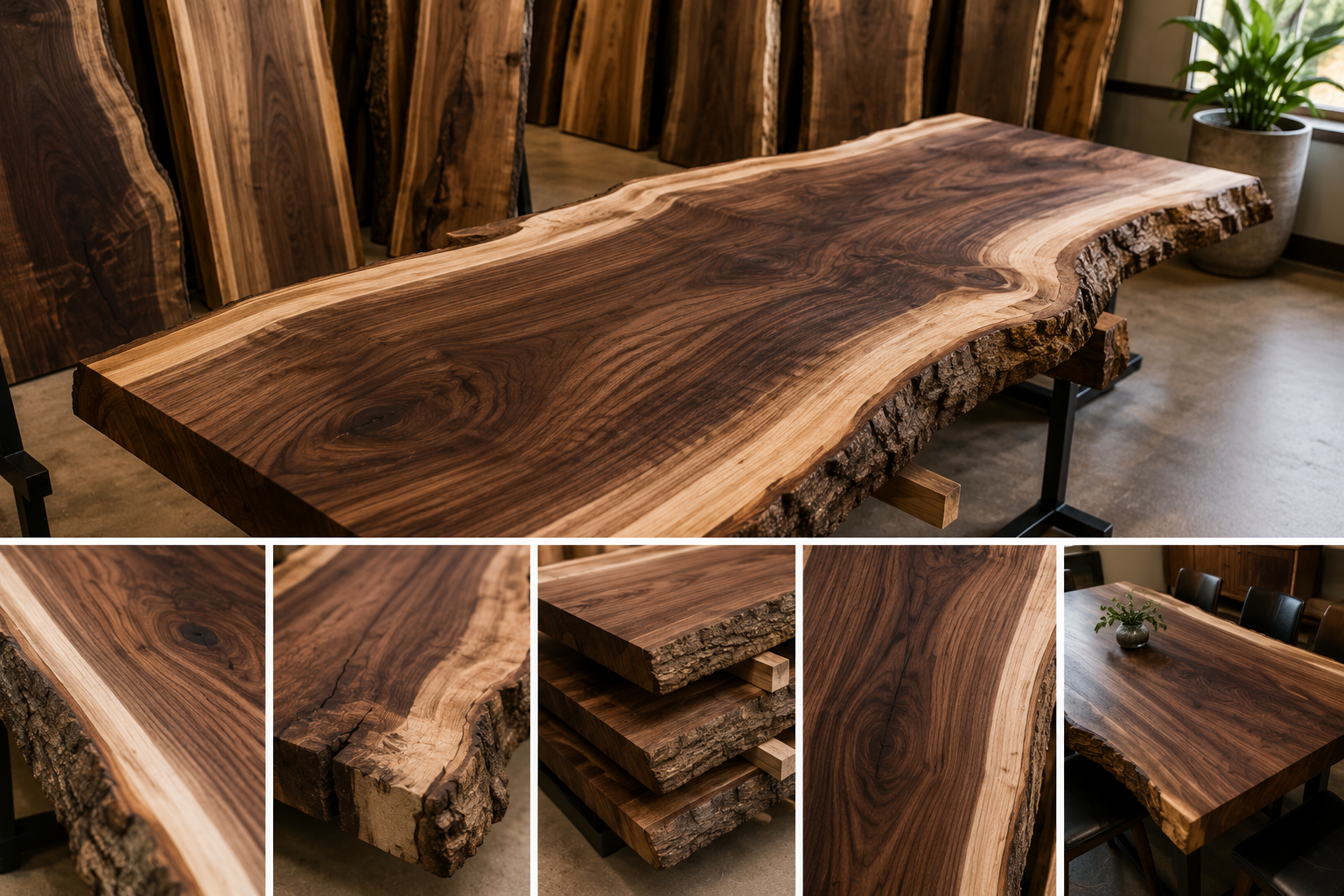
Choosing the perfect black walnut live edge slab starts with understanding your project's size, style, and structural needs. Look for kiln-dried slabs with attractive grain patterns, minimal defects, the appropriate thickness, and stable moisture content. A high-quality black walnut slab offers exceptional beauty, durability, and timeless appeal for everything from dining tables to floating shelves and fireplace mantels.
Why Black Walnut Is One of the Most Popular Hardwoods
Black walnut has earned its reputation as one of North America's most desirable hardwoods.
Its rich chocolate-brown color, distinctive grain, and natural live edge create one-of-a-kind furniture that can't be replicated with manufactured materials.
Whether you're designing a custom dining table, executive desk, coffee table, floating shelf, or fireplace mantel, a black walnut live edge slab adds warmth, character, and long-lasting value to your space.
What Is a Live Edge Slab?
A live edge slab is a wide section of wood that preserves the tree's natural outer edge instead of cutting it into a perfectly straight line.
Rather than hiding nature's imperfections, live edge furniture celebrates them.
Each slab is unique because it retains features such as:
Natural curves
Organic edges
Knots
Grain variation
Color changes
Character markings
No two slabs are exactly alike.
Step 1: Define Your Project
Before selecting a slab, determine exactly what you're building.
Common live edge projects include:
Dining tables
Coffee tables
Conference tables
Kitchen islands
Floating shelves
Fireplace mantels
Bathroom vanities
Console tables
Desk tops
Window benches
Knowing your project's purpose helps determine the ideal slab dimensions and thickness.
Step 2: Choose the Right Size
One of the most important decisions is selecting the correct slab size.
Consider:
Overall length
Maximum width
Minimum width
Finished thickness
Available installation space
Remember to allow room for trimming, flattening, and finishing when planning your final dimensions.
If you're ordering online, confirm whether the listed measurements are rough or finished sizes.
Step 3: Examine the Grain Pattern
Grain is one of the defining features of black walnut.
Look for patterns that match your design style.
Common grain characteristics include:
Straight grain
Cathedral grain
Curly grain
Wavy grain
Feather-like figuring
Burl sections
Some homeowners prefer dramatic grain movement, while others favor a cleaner, more uniform appearance.
Choose a slab that complements the overall style of your room.
Step 4: Evaluate the Live Edge
The live edge should look natural while remaining structurally sound.
Inspect for:
Smooth natural curves
Stable bark removal
Minimal loose material
Consistent edge shape
Attractive natural contours
Some slabs retain portions of the bark, but many woodworkers remove it because bark may loosen over time.
Step 5: Check the Moisture Content
Moisture content has a major impact on long-term stability.
For indoor furniture, kiln-dried slabs are generally recommended because they are less likely to:
Warp
Twist
Shrink
Crack after installation
Ask your supplier whether the slab has been kiln-dried and properly acclimated for interior use.
Step 6: Choose the Right Thickness
The ideal thickness depends on the project.
1¼ Inches
Suitable for:
Floating shelves
Wall décor
Small desks
1½ Inches
Excellent for:
Coffee tables
Console tables
Side tables
2 Inches
A popular choice for:
Dining tables
Kitchen islands
Executive desks
2½ Inches and Thicker
Best for:
Large conference tables
Statement furniture
Heavy-duty installations
Thicker slabs create a bold, substantial appearance while providing excellent strength.
Step 7: Understand Natural Characteristics
Black walnut naturally contains features that enhance its beauty.
These may include:
Small knots
Mineral streaks
Color variation
Sapwood
Tiny surface checks
Figure changes
These characteristics are not flaws—they contribute to the individuality of each slab.
However, large structural cracks or severe twisting should be evaluated carefully before purchase.
Step 8: Decide Whether You Want Sapwood
Sapwood is the lighter-colored wood near the outside of the tree.
Some homeowners love the contrast between the creamy sapwood and dark walnut heartwood.
Others prefer a slab with mostly dark heartwood for a more uniform appearance.
Neither option is right or wrong—it simply depends on your design preferences.
Step 9: Match the Slab to Your Interior Style
Different slab styles complement different homes.
Modern Interiors
Choose slabs with:
Straight grain
Minimal knots
Clean live edges
Matte finishes
Rustic Homes
Look for:
Pronounced grain
Natural imperfections
Character knots
Rich texture
Luxury Interiors
Premium slabs often feature:
Deep chocolate tones
Dramatic figuring
Wide dimensions
Bookmatched pairs
Selecting a slab that complements your décor creates a more cohesive finished space.
Step 10: Buy from a Reputable Supplier
A trusted supplier should provide:
Clear photographs of the actual slab
Accurate measurements
Moisture content information
Wood species verification
Quality packaging
Transparent shipping details
If possible, request additional photos from multiple angles before making a purchase.
Black Walnut vs Other Popular Hardwoods
Wood SpeciesAppearanceDurabilityBest ForBlack WalnutRich dark brown, elegant grainExcellentLuxury furnitureWhite OakLight to medium brown, bold grainExcellentTables, shelving, mantelsMapleLight, smooth grainExcellentContemporary furnitureCherryWarm reddish tonesVery GoodTraditional interiorsAshBold, open grainVery GoodModern rustic furniture
Black walnut stands out for its combination of premium appearance, strength, and timeless elegance.
Tips for Buying Live Edge Slabs Online
When shopping online:
Review detailed photographs.
Confirm the slab dimensions.
Ask whether measurements are rough or finished.
Verify kiln-dried status.
Request close-up images of the live edge.
Ask about flattening or surfacing services.
Understand shipping and delivery timelines.
Taking these steps helps ensure you receive a slab that meets your expectations.
Common Mistakes to Avoid
Choosing Based Only on Color
While color is important, grain pattern, stability, and overall quality matter just as much.
Ignoring Moisture Content
A beautiful slab that hasn't been properly dried can develop movement after installation.
Always prioritize kiln-dried wood for indoor projects.
Buying a Slab That's Too Small
Leave room for trimming and finishing when calculating the required dimensions.
Ordering a slightly larger slab provides greater flexibility.
Overlooking the Live Edge
Every live edge is different.
Examine photos carefully to ensure the natural edge matches your vision for the project.
Frequently Asked Questions
Why is black walnut so popular for live edge furniture?
Black walnut offers rich natural color, exceptional durability, beautiful grain patterns, and a premium appearance that works in both modern and traditional interiors.
Should I choose kiln-dried black walnut?
Yes. Kiln-dried slabs are generally more stable for indoor furniture because they are less likely to warp or crack over time.
What thickness is best for a dining table?
A finished thickness of around 2 inches is one of the most popular choices for live edge dining tables because it provides both strength and visual impact.
Is sapwood considered a defect?
No. Sapwood is a natural part of the tree and is often appreciated for the striking contrast it creates against the darker walnut heartwood.
Conclusion
A black walnut live edge slab is more than just a piece of lumber—it's the foundation of a one-of-a-kind project that showcases the beauty of natural wood. By choosing the right size, evaluating the grain, confirming kiln-dried quality, and selecting a slab that matches your design style, you'll create furniture that is both functional and visually stunning.
Whether you're building a custom dining table, fireplace mantel, floating shelf, executive desk, or coffee table, investing in a high-quality black walnut live edge slab ensures your finished piece will become a lasting centerpiece in your home for generations.
