
How to Choose the Right Black Walnut Board Size for Your Project
How to Choose the Right Black Walnut Board Size for Your Project
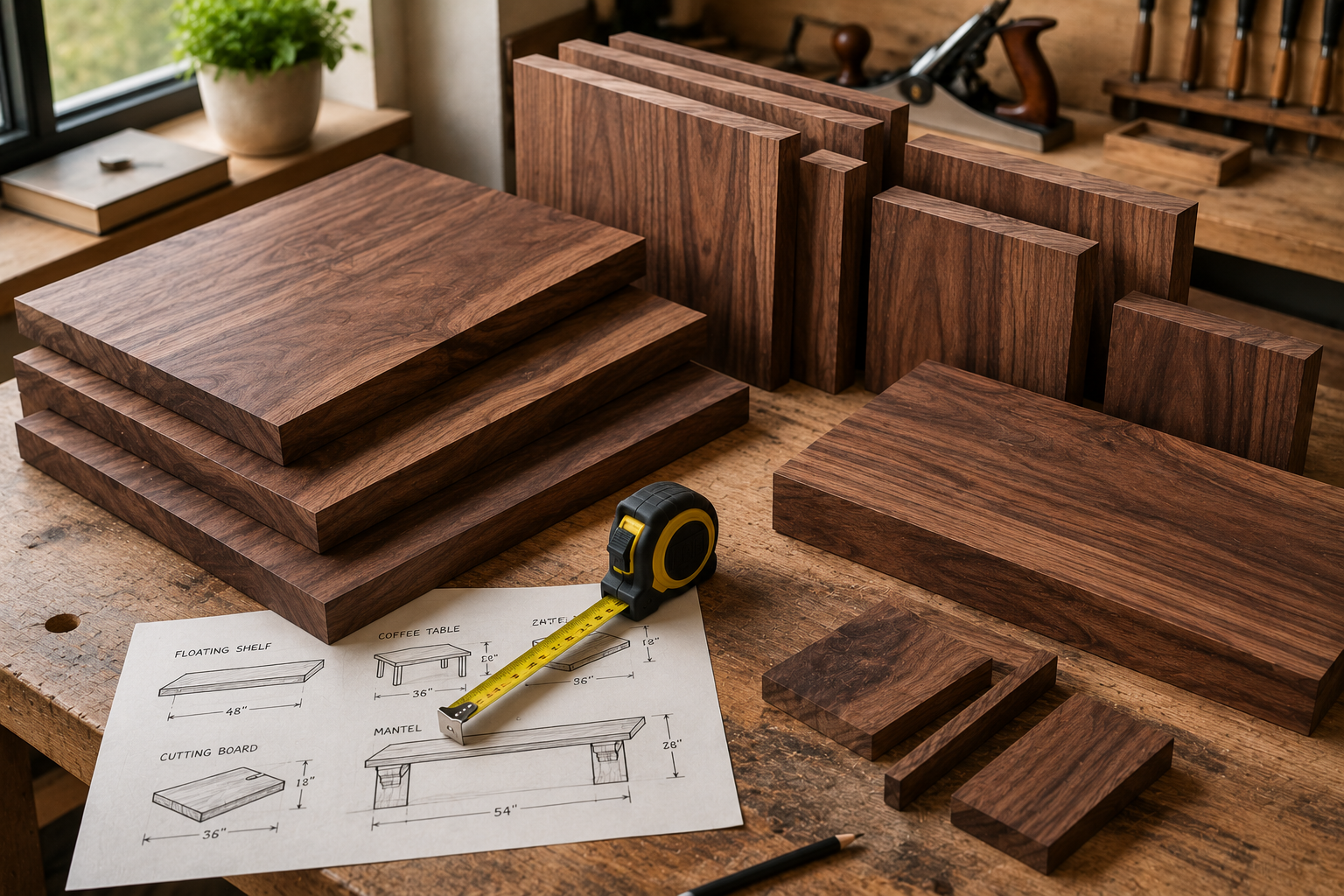
Choosing the right black walnut board size starts with understanding your project's dimensions, weight requirements, and design goals. The ideal board should be long enough to minimize joints, wide enough to reduce glue-ups, and thick enough to provide the strength your project needs. Ordering custom-cut walnut boards can save time, reduce waste, and help you achieve a professional-quality finish.
Why Board Size Matters
Many woodworking projects succeed or fail before the first cut is made.
Choosing the wrong board size can lead to:
Unnecessary waste
Extra labor
More glue joints
Higher costs
Structural issues
Starting with the correct dimensions makes the entire build easier.
Understand the Three Main Dimensions
Every walnut board is measured by:
Length
The distance from one end of the board to the other.
Longer boards are often preferred for:
Floating shelves
Fireplace mantels
Dining tables
Countertops
Whenever possible, choose a board long enough to avoid visible seams.
Width
The width determines how much surface area a single board provides.
Wider boards work well for:
Tabletops
Shelving
Benches
Cabinet tops
For larger projects, multiple boards may need to be joined together.
Thickness
Thickness affects both strength and appearance.
A thicker board generally provides:
Greater rigidity
Higher load capacity
A more substantial look
Choosing the right thickness is especially important for shelves and furniture.
Choosing the Right Size by Project
Floating Shelves
For floating shelves, consider boards that are:
Long enough to span the intended wall space
Wide enough for books, plants, or décor
Thick enough to resist sagging under expected loads
Custom-cut walnut boards help eliminate unnecessary trimming.
Coffee Tables
Look for boards that minimize seams while providing enough width for your tabletop design.
A larger, continuous surface often highlights the natural beauty of walnut grain.
Dining Tables
Dining tables typically benefit from:
Longer boards
Wider stock
Consistent grain patterns
Using fewer joints creates a cleaner, more refined appearance.
Cutting Boards
Smaller projects like cutting boards usually require shorter pieces, making custom-cut lumber an excellent way to avoid buying oversized stock.
Fireplace Mantels
Mantels often become focal points in a room, so selecting the appropriate thickness and length helps achieve a balanced, high-end look.
Don't Buy More Than You Need
One of the most common mistakes is purchasing oversized boards "just in case."
This often leads to:
Expensive offcuts
More storage requirements
Additional cutting
Increased project costs
Buying boards cut to your exact dimensions helps reduce waste and keeps your budget under control.
Think About Grain Direction
Board size isn't the only consideration.
Also look at:
Grain pattern
Grain consistency
Natural color variation
Knots and character
For visible furniture pieces, selecting boards with complementary grain can greatly enhance the finished project.
Live Edge or Straight Edge?
Live Edge
Choose live-edge boards if you want:
Natural character
Organic shapes
Rustic or contemporary statement pieces
Ideal for:
Coffee tables
Console tables
Floating shelves
Benches
Straight Edge
Straight-edge boards are perfect for:
Cabinetry
Built-ins
Modern shelving
Furniture requiring clean lines
Custom-Cut Boards Save Time
Instead of purchasing oversized lumber and resizing it yourself, custom-cut walnut boards arrive much closer to your finished dimensions.
Benefits include:
Less waste
Faster installation
Reduced machining
Fewer cutting errors
Simpler project planning
This is especially valuable for DIYers without professional woodworking equipment.
Questions to Ask Before Ordering
Before placing an order, consider:
What are my finished dimensions?
Do I need extra material for trimming?
Will the board support the intended weight?
Should I choose a live edge or straight edge?
Do I want the board sanded before delivery?
Answering these questions helps ensure you order the right material the first time.
Common Sizing Mistakes
Choosing Thickness Based Only on Appearance
A beautiful shelf still needs enough strength to support its intended load.
Ignoring Final Measurements
Always measure your installation space carefully before ordering custom-cut lumber.
Buying Oversized Boards
Larger isn't always better. Extra material often becomes expensive scrap.
Forgetting About Finish
Some finishes slightly alter the appearance of walnut, so plan your dimensions before applying any protective coating.
Frequently Asked Questions
What thickness of walnut board is best for shelves?
The ideal thickness depends on the shelf's length, depth, and expected load. Longer shelves or heavier loads generally benefit from thicker boards.
Can I order black walnut boards cut to my exact dimensions?
Yes. Many custom woodworking shops offer precision cutting based on your requested length, width, and thickness.
Should I buy wider boards or glue several together?
If your budget allows, wider boards can reduce visible seams and better showcase the natural grain. For larger projects, joining boards is also a common and effective approach.
Is custom-cut walnut worth it?
For many DIY projects, custom-cut boards save time, reduce waste, and eliminate much of the preparation work required with oversized lumber.
Conclusion
Choosing the right black walnut board size is about more than measurements—it's about creating a project that looks beautiful, performs well, and makes efficient use of premium hardwood.
By selecting the proper length, width, and thickness—and ordering boards cut to your exact specifications—you can simplify your build, reduce material waste, and achieve professional-quality results. Whether you're building floating shelves, furniture, mantels, or custom home décor, starting with the right-sized walnut board is one of the smartest decisions you can make.
