
How to Choose the Right Size Reptile Enclosure for Your Snake
How to Choose the Right Size Reptile Enclosure for Your Snake
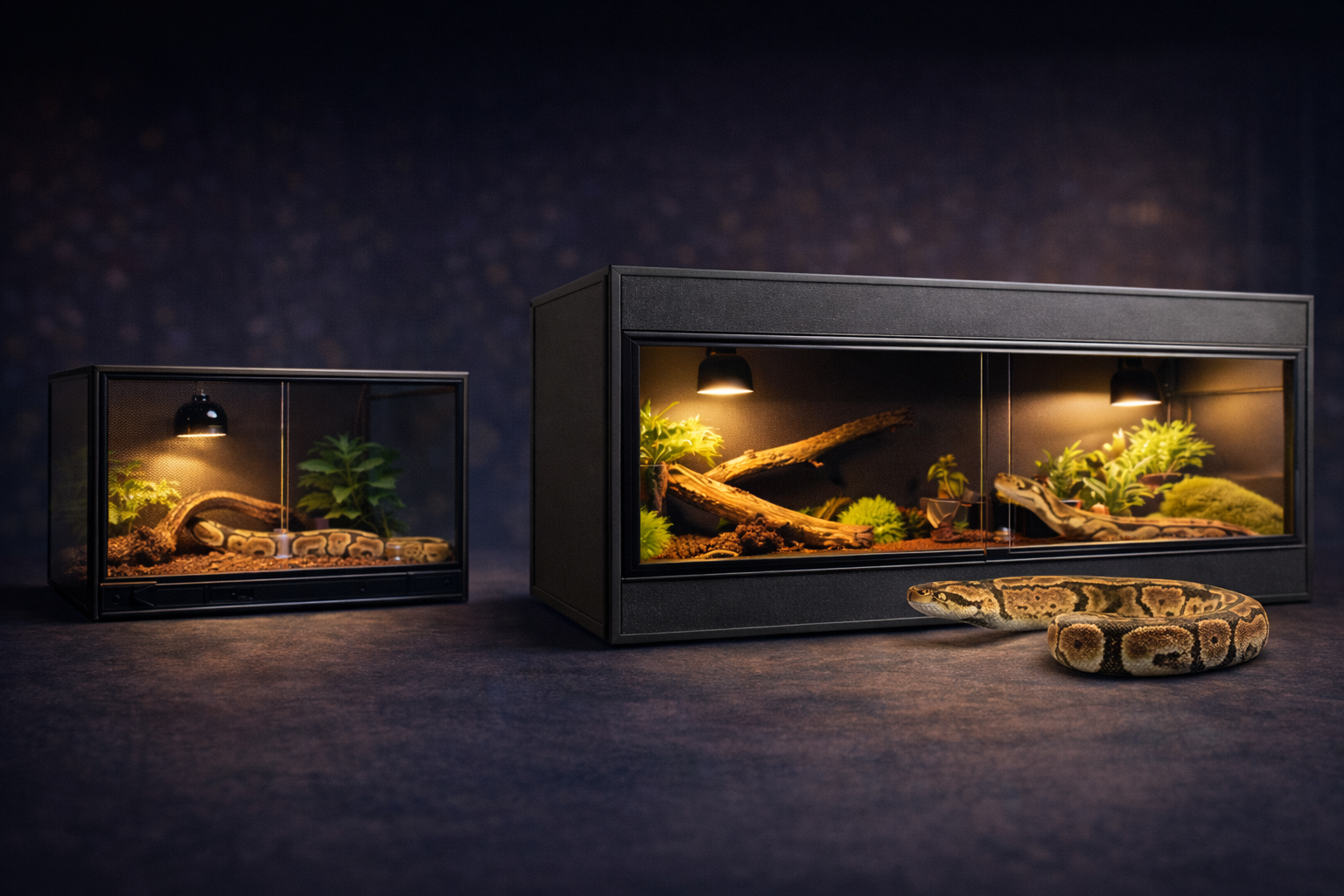
The right enclosure size for a snake should be at least as long as the snake’s body length, with enough width and height for movement and enrichment. For many adult snakes, a 4x2x2 enclosure (120 gallons) is the standard minimum.
If you’re setting up a home for your snake, one of the biggest questions is:
“What size enclosure do I actually need?”
Go too small, and your snake can feel restricted, stressed, and unhealthy.
Go too big without proper setup, and it can feel insecure.
It’s confusing—especially with so many different opinions online.
But once you understand a few key principles, choosing the right size becomes much easier.
Why Enclosure Size Matters
Snakes don’t just need space to exist—they need space to function naturally.
A properly sized enclosure allows for:
Full body stretching
Natural movement
Temperature regulation (warm and cool sides)
Proper feeding and digestion
When the enclosure is too small, it can lead to:
Stress and defensive behavior
Poor appetite
Health issues over time
The Basic Rule (Length Matters Most)
The most widely accepted guideline:
👉 The enclosure length should be at least equal to your snake’s full body length
So if your snake is:
3 ft long → minimum 3 ft enclosure
4 ft long → minimum 4 ft enclosure
5 ft long → ideally 5 ft enclosure (or close equivalent)
Recommended Standard Sizes
Here’s a simple breakdown:
Juvenile Snakes
20–40 gallon equivalent
Smaller, secure spaces
Sub-Adult Snakes
3x2x2 enclosure
Adult Snakes (Most Common)
4x2x2 enclosure (ideal standard)
This size works well for:
Ball pythons
Corn snakes
Kingsnakes
Many boas (depending on size)
Large Species
5–6 ft enclosures or larger
Custom setups may be needed
Why Width and Height Also Matter
Length is the priority—but don’t ignore the other dimensions.
Width (Depth)
Allows:
Turning comfortably
Space for hides and decor
Height
Important for:
Climbing species
Heat gradient setup
Even for ground snakes, some vertical space improves enrichment.
Common Mistakes People Make
Choosing Based on Current Size Only
Buying for a baby snake often leads to upgrading later.
👉 Plan for adult size when possible.
Going Too Small to “Save Space”
This creates long-term issues with health and behavior.
Ignoring Temperature Zones
A proper enclosure needs space for:
Warm side
Cool side
Smaller enclosures make this difficult.
Using Glass Tanks Without Considering Size Efficiency
Glass tanks often limit usable space and heat control.
The Most Practical Long-Term Solution
For most snake owners, a 4x2x2 PVC enclosure is the best balance of:
Space
Temperature control
Ease of setup
It’s widely considered the standard adult enclosure for many species.
Why PVC Enclosures Make Sizing Easier
Choosing the right size isn’t just about dimensions—it’s also about usability.
PVC enclosures help because they:
Hold heat better than glass
Maintain humidity more easily
Provide a stable environment
This means your snake can actually use the full space comfortably, instead of struggling with temperature issues.
Product Integration (Soft Recommendation)
For snake owners looking for a reliable setup, many choose 4x2x2 PVC reptile enclosures as their long-term solution.
These enclosures provide:
Enough room for adult snakes
Proper temperature gradients
A controlled environment for better health
If you’re comparing options, browsing a collection of PVC reptile enclosures can help you find the right size and setup for your species.
You can also explore a related guide on reptile enclosure heat retention to better understand how enclosure size and material work together.
What the Right Enclosure Feels Like
When you choose the correct size enclosure, everything changes.
Your snake:
Moves naturally
Eats more consistently
Shows less stress
Uses both warm and cool sides
Instead of just existing, your snake actually thrives.
Frequently Asked Questions
Is a 4x2x2 enclosure big enough for a ball python?
Yes. It is widely considered the ideal minimum for adult ball pythons.
Can an enclosure be too big?
Not if it’s set up properly with hides and structure.
Should I upgrade as my snake grows?
You can, but many people prefer starting with the adult size.
Do snakes need height in their enclosure?
Some do, especially semi-arboreal species. Ground snakes benefit less but still use vertical space.
Is glass or PVC better for enclosure size?
PVC is better because it maintains temperature and humidity more effectively.
How do I know if my enclosure is too small?
Signs include stress, lack of movement, poor feeding, and constant hiding.
Conclusion
Choosing the right enclosure size is one of the most important decisions you’ll make for your snake.
It directly affects their health, behavior, and overall well-being.
By focusing on length, usable space, and proper setup, you can create an environment where your snake feels secure and comfortable.
If you want a setup that works long-term, choosing the right size—and the right material—is the key to getting it right from the start.
