
How to Create a Cat Climbing Wall in a Small Apartment
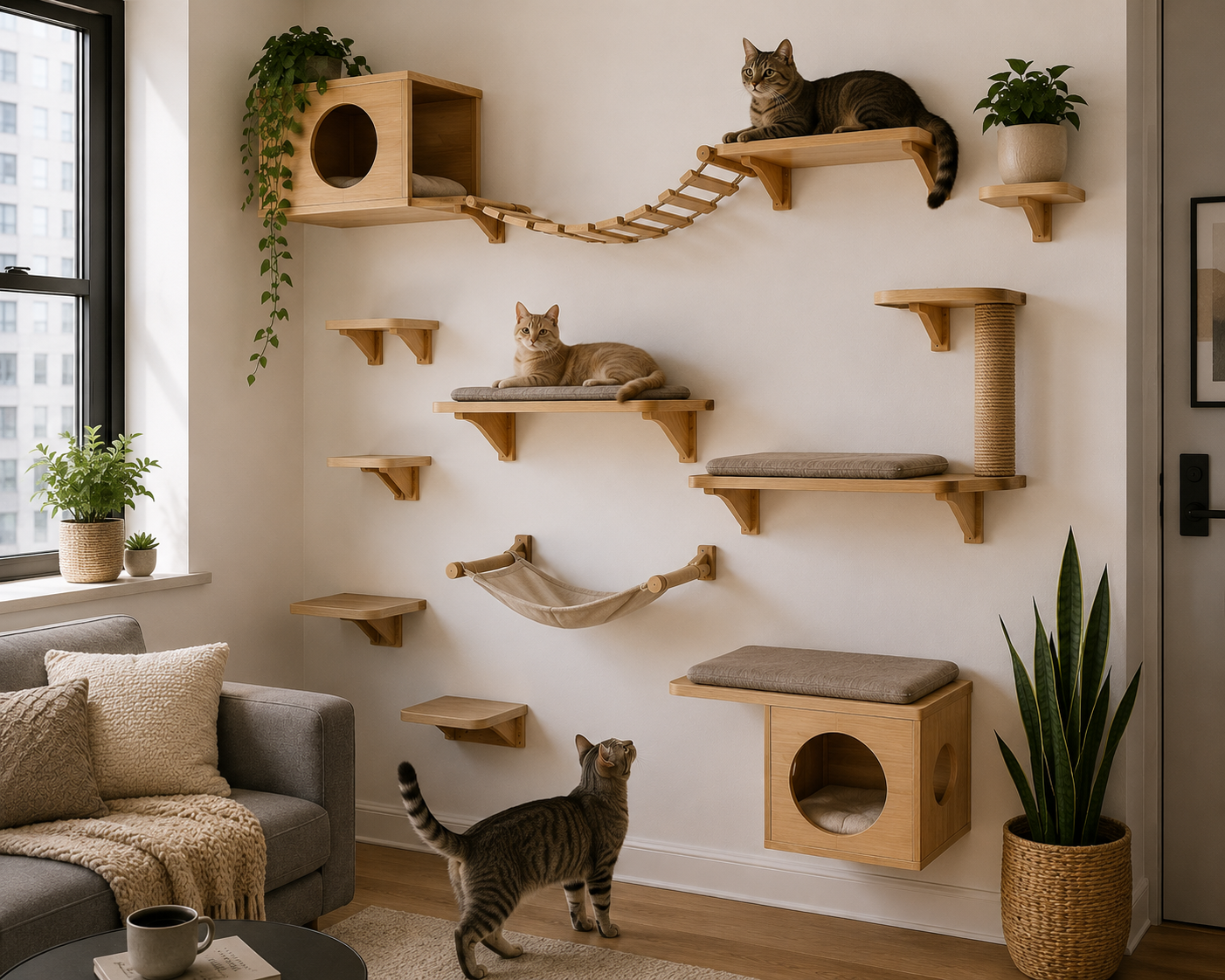
How to Create a Cat Climbing Wall in a Small Apartment
To create a cat climbing wall in a small apartment, use wall-mounted shelves, floating perches, bridges, and vertical pathways to build upward instead of outward. This gives your cat more territory and enrichment without taking up valuable floor space.
Introduction (Problem Hook)
Small apartments can feel limiting for indoor cats.
There’s not much room for zoomies.
Large cat trees take over the space.
And your cat still keeps climbing furniture looking for height.
The good news?
Cats don’t need a bigger apartment—they need better vertical space.
That’s why cat climbing walls have become one of the smartest upgrades for small homes.
Why Vertical Space Matters More Than Floor Space
Cats naturally prefer elevated areas.
In the wild, height helps them:
Observe safely
Escape stress
Create territory
Stay mentally stimulated
That instinct doesn’t disappear indoors.
According to Better Homes & Gardens, vertical climbing systems help indoor cats stay more active and enriched while keeping homes uncluttered.
Why Cat Trees Don’t Always Work in Apartments
Traditional cat trees solve one problem—but create another.
Common Issues
Take up too much floor space
Limit room layout flexibility
Often look bulky or outdated
And in smaller apartments, every square foot matters.
Related Problems People Also Search
If you’re planning a cat wall, you’re probably also searching:
Small apartment cat ideas
Vertical cat space solutions
Wall shelves for cats
Space-saving cat furniture
Cat enrichment for indoor cats
All of these point to one goal:
👉 More cat space without crowding the apartment.
Step 1: Choose the Right Wall
Start with an underused area like:
Hallways
Corners
Above furniture
Around windows
This lets you create vertical movement without interrupting daily living space.
Step 2: Build Upward, Not Outward
The key to small-space cat design is stacking activity vertically.
Great Starter Layout
Lower jump shelf
Mid-level perch
Top resting platform
This creates a climbing path cats naturally enjoy following.
Step 3: Use Floating Cat Shelves
Floating shelves are ideal because they:
Keep the floor clear
Blend into modern interiors
Create flexible climbing routes
Floating shelves are popular in minimalist interiors because their hardware stays hidden, creating a cleaner visual appearance.
Step 4: Add Resting and Observation Spots
Cats don’t just want to climb—they want places to stop and watch.
Best Locations
Near windows
Above desks
Quiet corners
Window-adjacent shelves are especially popular because cats enjoy sunlight and outdoor viewing.
Step 5: Connect the Space
This is what turns shelves into a true climbing wall.
Add:
Bridges
Steps
Pathways
Corner transitions
According to Architectural Digest, connected cat pathways create more natural movement and enrichment than isolated platforms.
Why Cat Climbing Walls Work So Well in Small Homes
The Benefits
Adds territory without taking floor space
Reduces boredom and stress
Encourages exercise
Makes the apartment feel larger for your cat
And unlike bulky furniture, wall systems integrate into the room instead of dominating it.
The Most Practical Long-Term Setup
The best apartment setups combine:
Floating shelves
Perches
Lounging spots
Connected climbing routes
This creates:
Play space
Exercise
Territory
Relaxation zones
All without sacrificing your living area.
Product Integration (Soft Recommendation)
Most apartment cat owners start with one cat tree.
But eventually:
It feels bulky
The cat still wants more height
The room feels crowded
That’s when vertical systems change everything.
Suddenly:
Your cat has more freedom
Your floor space stays open
Your apartment feels cleaner and more intentional
That’s why many cat owners switch to floating cat shelves and modular climbing systems.
They create enrichment without clutter.
If you want to explore modern setups, start here:
→ Floating Cat Shelf Collection
And for full climbing layouts:
→ Wall-Mounted Cat Systems
Visual Example Section
Imagine:
Your cat climbing confidently through the apartment
More enrichment without bulky furniture
A small space that still feels open and modern
That’s what vertical design makes possible.
Frequently Asked Questions (SEO Gold)
Are cat climbing walls good for apartments?
Yes, they provide enrichment while saving floor space.
How much space do cat wall shelves need?
Very little—most systems use unused wall areas.
Are floating cat shelves safe?
Yes, when mounted securely into studs or anchors.
Do cats actually use wall shelves?
Most cats naturally enjoy climbing and elevated resting areas.
Can cat walls replace cat trees?
Yes, especially in smaller homes or apartments.
What is the best layout for a cat wall?
A connected vertical path with climbing and resting spots works best.
Conclusion (Soft Call to Action)
You don’t need a bigger apartment to give your cat a better environment.
You just need to think vertically.
A well-designed climbing wall can transform your cat’s daily life while keeping your home open, modern, and uncluttered.
If you’re ready to create a smarter space for both you and your cat, wall-mounted shelves are one of the best upgrades you can make.
Explore your options here:
→ Floating Cat Shelf Collection
