
How to Help Your Dog Get Up Stairs Without Slipping
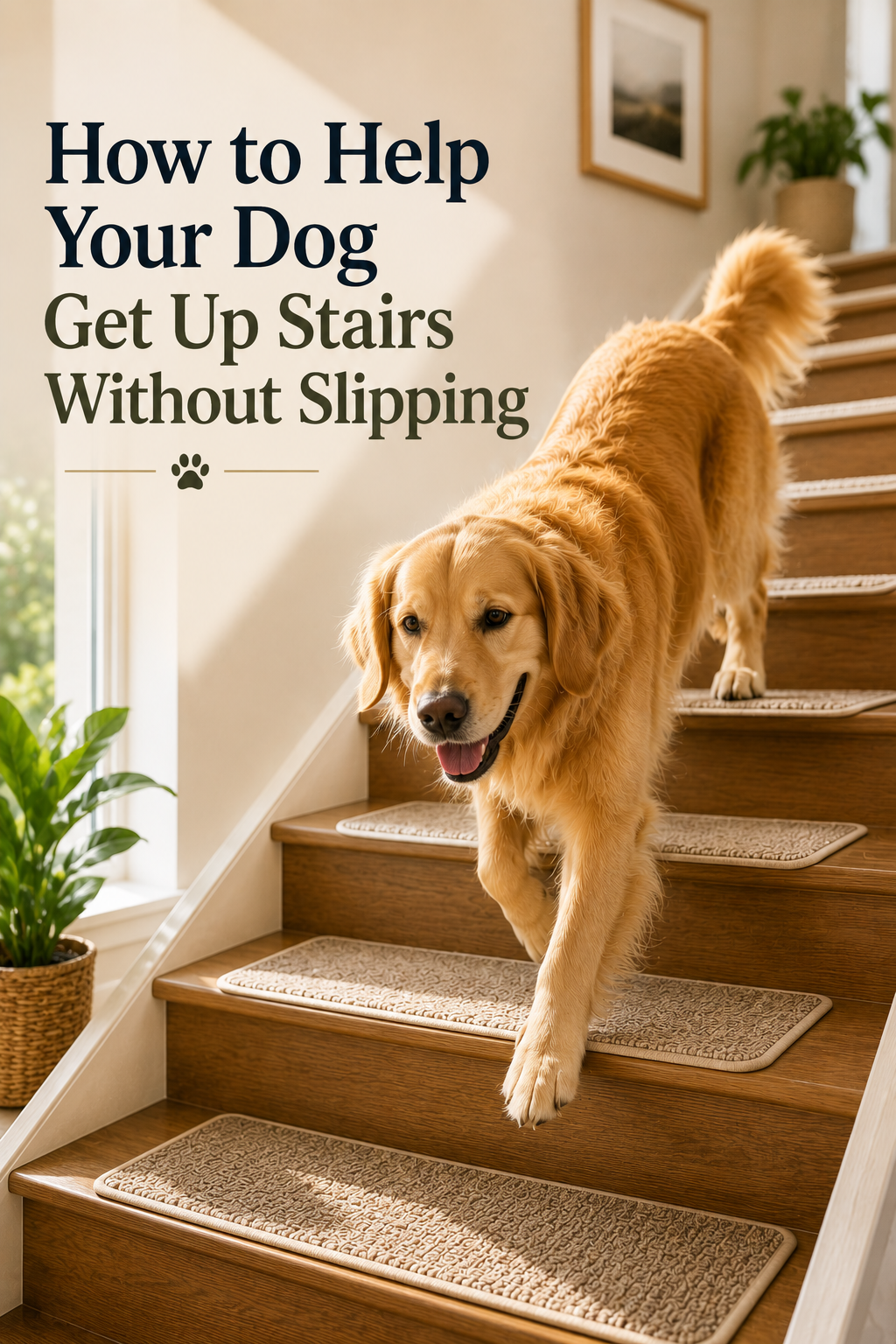
How to Help Your Dog Get Up Stairs Without Slipping
To help your dog get up stairs without slipping, improve traction with stair treads, carpet runners, rubber grip covers, or non-slip surfaces. The best long-term solution is adding a stable, textured surface that gives dogs better footing and confidence while climbing.
Introduction (Problem Hook)
You hear the scramble before you even see it.
Your dog tries to go up the stairs…
their paws slide…
and suddenly they’re nervous about climbing again.
For many dogs—especially puppies, senior dogs, and breeds with joint issues—slippery stairs can quickly become stressful and unsafe.
The good news?
You usually don’t need to rebuild your staircase to fix the problem.
Why Dogs Slip on Stairs
Most indoor stairs are designed for humans—not paws.
Common Causes
Smooth hardwood surfaces
Polished tile or laminate
Lack of traction for claws and paw pads
Steep stair angles
Dogs rely heavily on grip and balance when climbing. Without traction, stairs can feel unpredictable and unsafe.
Dogs Most Likely to Struggle on Stairs
Some dogs are especially prone to slipping:
Senior dogs
Small breeds
Long-bodied breeds (like Dachshunds)
Dogs with arthritis or joint pain
Nervous or recovering dogs
Even healthy dogs can lose confidence after one bad slip.
Common Solutions People Try
1. Telling the Dog to “Go Slow”
Pros:
Encourages caution
Cons:
Doesn’t improve traction
2. Carrying the Dog
Pros:
Prevents slips temporarily
Cons:
Not practical long-term
3. Blocking Stair Access
Pros:
Prevents accidents
Cons:
Limits movement and independence
Related Problems People Also Search
If you’re dealing with this, you’re likely also searching:
How to make stairs safer for dogs
Dog slipping on hardwood stairs
Non-slip stair solutions for pets
Best stair treads for dogs
Senior dog stair safety
All of these point to one thing:
👉 Your dog needs better traction and confidence.
The Best Ways to Make Stairs Safer for Dogs
1. Add Non-Slip Stair Treads
This is the most effective solution for most homes.
Why They Work
Add grip for paws
Reduce slipping instantly
Improve confidence climbing stairs
Non-slip stair treads are commonly recommended because textured surfaces improve traction and reduce fall risk on smooth stairs.
2. Use Carpet Runners
A runner creates a continuous traction path.
Best For
Long staircases
Large dogs
Homes with slippery hardwood stairs
3. Improve Lighting Around Stairs
Dogs can become hesitant if stairs feel visually unclear.
Better lighting helps:
Depth perception
Confidence
Navigation
Especially helpful for older dogs.
4. Keep Nails and Paw Fur Trimmed
Long nails and furry paw pads reduce grip.
Regular grooming improves:
Paw contact with surfaces
Balance and stability
Why Traction Matters More Than Training
Many dogs aren’t refusing the stairs because they’re stubborn.
They’re unsure whether the surface feels safe.
Once traction improves:
Confidence often returns naturally
Hesitation decreases
Movement becomes smoother
The Most Practical Long-Term Solution
The best setup combines:
Non-slip stair treads or runners
Good lighting
Clear stair access
Consistent traction on every step
This creates a safer environment without changing the structure of your stairs.
Product Integration (Soft Recommendation)
Most people don’t realize how stressful slippery stairs can feel for dogs until they see the hesitation start.
But once the stairs feel stable and predictable, the difference is immediate.
Your dog moves more confidently.
There’s less slipping and scrambling.
And the whole home feels safer.
That’s why many pet owners add non-slip stair covers and textured stair surfaces instead of replacing their staircase entirely.
They improve traction while keeping the stairs looking clean and modern.
If you want to explore pet-friendly stair solutions, start here:
→ Non-Slip Stair Cover Collection
And for full stair safety upgrades:
→ Pet-Friendly Stair Solutions
Visual Example Section
Imagine:
Your dog climbing stairs confidently again
No more scrambling or sliding
A safer, calmer environment for both of you
That’s what proper traction can do.
Frequently Asked Questions (SEO Gold)
Why is my dog slipping on stairs?
Smooth surfaces often don’t provide enough traction for paws.
What is the best way to make stairs safer for dogs?
Non-slip stair treads and runners are the most effective solutions.
Are hardwood stairs bad for dogs?
They can be slippery, especially for senior or small dogs.
Do stair treads help dogs?
Yes, they improve grip and confidence significantly.
How can I help an older dog use stairs?
Add traction, improve lighting, and reduce slippery surfaces.
Can dogs become afraid of stairs after slipping?
Yes, one bad experience can reduce confidence temporarily.
Conclusion (Soft Call to Action)
If your dog is struggling on slippery stairs, the problem usually isn’t the stairs themselves—it’s the surface.
Once you improve traction, most dogs feel safer and more confident almost immediately.
If you’re ready to make your stairs safer without a major remodel, non-slip stair covers are one of the smartest upgrades you can make.
Explore your options here:
→ Non-Slip Stair Cover Collection
