
How to Keep Indoor Cats Active and Entertained
How to Keep Indoor Cats Active and Entertained
To keep indoor cats active and entertained, combine vertical climbing space, interactive play, window perches, and rotating enrichment activities. The most effective long-term solution is creating a stimulating environment with wall-mounted shelves and climbing systems.
Introduction (Problem Hook)
Indoor cats may look relaxed most of the day—but boredom builds quietly.
You start noticing:
Late-night zoomies
Counter climbing
Scratching furniture
Constant attention-seeking
And sometimes… your cat just seems restless.
The problem usually isn’t that your cat is “bad.”
It’s that indoor cats need more stimulation than most homes naturally provide.
Why Indoor Cats Get Bored
Outdoor cats naturally spend time:
Climbing
Hunting
Exploring
Observing movement
Indoor cats still have those same instincts—but fewer opportunities to use them.
According to the American Association of Feline Practitioners, environmental enrichment is important for reducing stress and supporting healthy behavior in indoor cats.
Signs Your Indoor Cat Needs More Enrichment
Common signs include:
Excessive counter jumping
Overeating
Destructive scratching
Constant meowing
Sleeping all day with bursts of hyperactivity
Many of these behaviors improve when cats have more mental and physical stimulation.
Related Problems People Also Search
If you’re dealing with this, you’re likely also searching:
Cat enrichment ideas
How to entertain indoor cats
Vertical space for cats
Cat exercise ideas for apartments
Wall shelves for cats
All of these point to one thing:
👉 Indoor cats need more usable territory and stimulation.
The Best Ways to Keep Indoor Cats Active
1. Create Vertical Space
This is the single biggest upgrade for most indoor cats.
Why It Works
Cats naturally enjoy:
Climbing
Perching
Observing from above
Vertical space increases activity while also reducing boredom and stress.
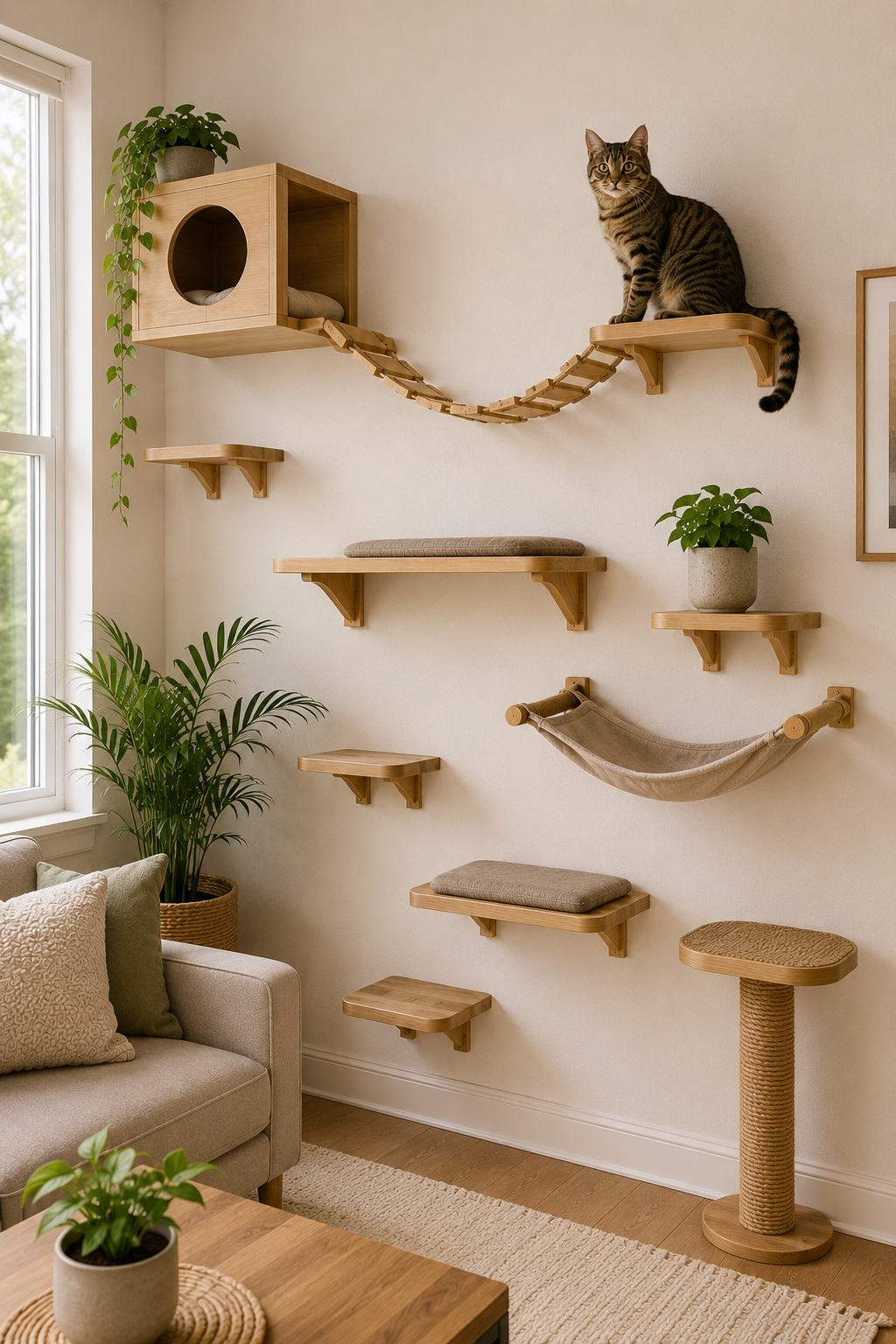
Floating Cat Shelves & Climbing Walls
Wall-mounted shelves create:
Exercise paths
Elevated resting zones
Exploration opportunities
And unlike bulky cat trees, they don’t take up floor space.
2. Add Window Perches
Cats love visual stimulation.
A good window perch provides:
Bird watching
Sunlight
Movement and entertainment
Even a simple perch can dramatically increase engagement during the day.
3. Rotate Toys Instead of Leaving Everything Out
Too many toys at once can actually reduce interest.
Better Approach
Rotate toys weekly
Introduce “new” items periodically
Use wand toys for interactive play
4. Encourage Hunting Behavior
Cats enjoy chasing and searching.
Try:
Treat puzzles
Food-dispensing toys
Hide-and-seek feeding
This creates mental stimulation, not just physical activity.
5. Create Multiple Levels and Paths
Cats enjoy moving through spaces—not just sitting in them.
Connected shelves, bridges, and climbing routes create:
Exploration
Exercise
Territory
According to Better Homes & Gardens, cat wall systems are becoming increasingly popular because they encourage natural movement behaviors indoors.
Why Vertical Cat Systems Work So Well
The Benefits
Encourage movement naturally
Reduce boredom and stress
Create more usable territory
Keep cats mentally engaged
And in smaller homes, they improve enrichment without creating clutter.
The Most Practical Long-Term Setup
The best indoor cat environments combine:
Wall-mounted shelves
Climbing paths
Window observation areas
Interactive play zones
This creates a home that supports natural cat behavior every day.
Product Integration (Soft Recommendation)
Most people try adding more toys first.
But toys alone don’t create territory.
The real transformation happens when cats finally have space to climb, perch, and explore vertically.
Suddenly:
They move more
They seem calmer
Problem behaviors often decrease naturally
That’s why many cat owners switch to floating cat shelves and wall-mounted climbing systems.
They create real enrichment without filling the room with bulky furniture.
If you want to explore modern setups, start here:
→ Floating Cat Shelf Collection
And for complete climbing layouts:
→ Wall-Mounted Cat Systems
Visual Example Section
Imagine:
Your cat climbing, exploring, and staying active daily
More stimulation without more clutter
A calmer, happier indoor environment
That’s what enrichment-focused design creates.
Frequently Asked Questions (SEO Gold)
How do I keep an indoor cat entertained?
Use climbing space, interactive play, and enrichment activities.
Do indoor cats need vertical space?
Yes, climbing and elevated territory are important for mental stimulation.
What are signs of boredom in indoor cats?
Counter jumping, excessive meowing, and destructive behavior can all be signs.
Are wall-mounted cat shelves worth it?
Yes, they encourage movement while saving floor space.
How often should I play with my cat?
Short daily interactive sessions are ideal.
What is the best enrichment for apartment cats?
Vertical climbing systems and window perches work especially well.
Conclusion (Soft Call to Action)
Indoor cats don’t just need food and naps—they need stimulation, movement, and territory.
Once you create an environment that supports those instincts, everything changes.
If you’re ready to make your home more enriching for your cat without sacrificing your own space, vertical climbing systems are one of the smartest upgrades you can make.
Explore your options here:
→ Floating Cat Shelf Collection
