
How to Keep Pets Out of Certain Rooms Without Permanent Doors
How to Keep Pets Out of Certain Rooms Without Permanent Doors
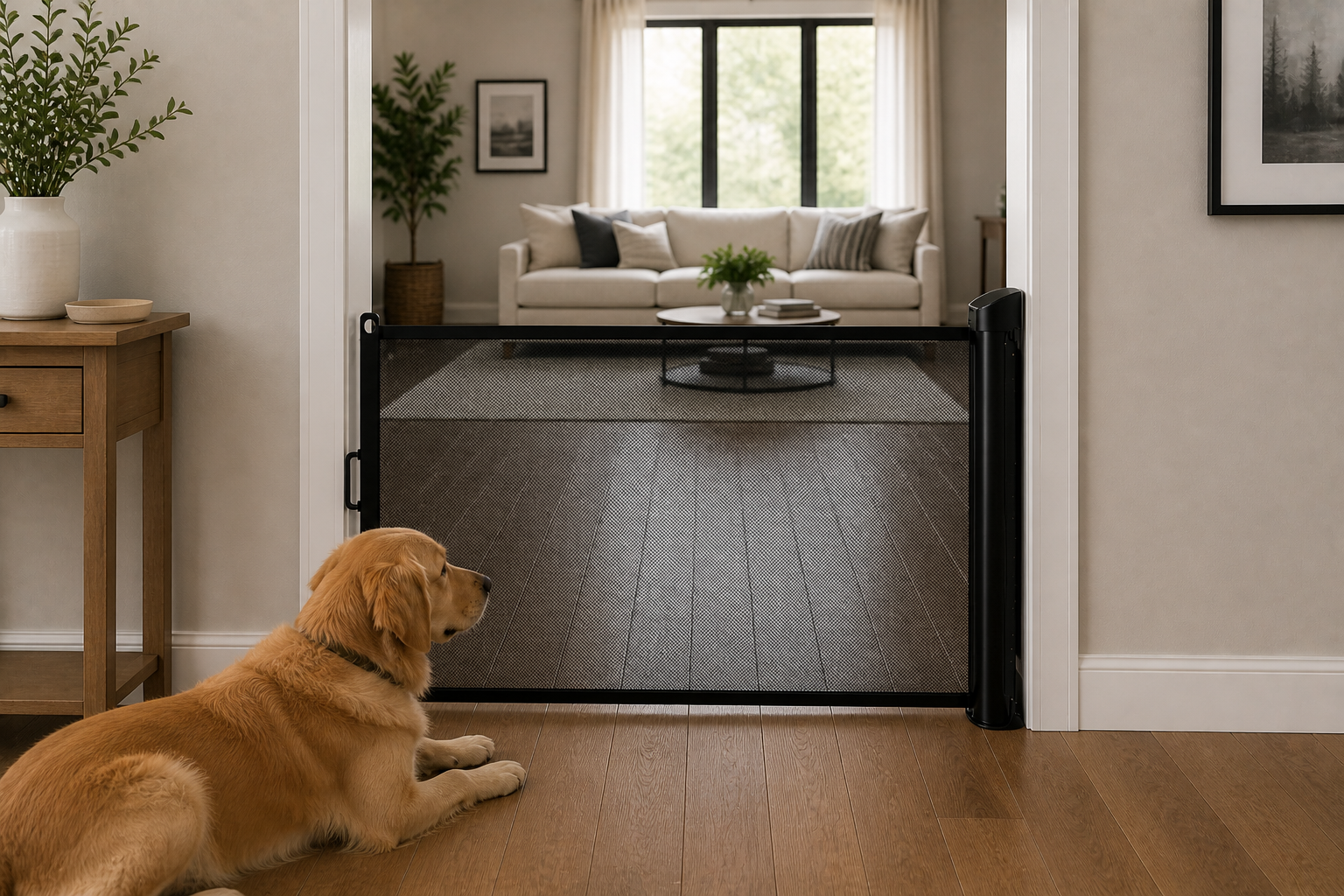
To keep pets out of certain rooms without installing permanent doors, use a sliding pocket gate, retractable mesh gate, or pressure-mounted pet gate. These options create a secure barrier without structural changes and keep your walkway clear when not in use.
Introduction (Problem Hook)
You love your pet—but there are still places they just shouldn’t go.
Maybe it’s the nursery. The kitchen. A freshly cleaned room. Or a space filled with things you don’t want knocked over, chewed, or covered in fur.
The problem is, not every home has doors where you need them.
And installing permanent doors? That’s expensive, time-consuming, and often unnecessary.
So how do you keep pets out of certain rooms without turning your home into a construction project?
Why This Problem Happens
Modern homes are designed to feel open and connected.
That’s great for aesthetics—but not always great for boundaries.
Common Layout Challenges
Open-plan living areas
Wide doorways without doors
Archways or pass-through spaces
Rooms that were never meant to be closed off
Without a physical barrier, pets naturally wander wherever they want.
And training alone isn’t always reliable—especially with curious or energetic animals.
Common Solutions People Try
1. Training and Commands
Pros:
No installation needed
Cons:
Takes time
Not always consistent
2. Closing Existing Doors
Pros:
Simple
Cons:
Only works where doors already exist
3. Makeshift Barriers
Using furniture, boxes, or objects to block entry.
Pros:
Quick fix
Cons:
Unstable
Easy for pets to move
Looks messy
4. Installing Permanent Doors
Pros:
Fully blocks access
Cons:
Expensive
Requires construction
Not flexible
Related Problems People Also Search
If you’re dealing with this issue, you’re likely also searching for:
How to block a doorway without a door
Pet gate alternatives for open spaces
How to keep dogs out of rooms without doors
Temporary room dividers for pets
How to block wide openings without installing doors
All of these come down to one thing:
👉 You need a flexible barrier, not a permanent wall.
The Most Practical Types of Pet Barriers
Instead of installing doors, there are better options designed for this exact problem.
1. Pressure-Mounted Pet Gates
These fit between two walls and are easy to install.
Best for:
Standard doorways
Limitations:
Requires two walls
Often includes a bottom bar
2. Retractable Mesh Gates
These roll out when needed and retract when not in use.
Best for:
Temporary barriers
High-traffic areas
Limitations:
Less rigid than solid gates
3. Sliding Pocket Gates (Best Long-Term Solution)
Sliding gates are designed to solve both access control and space limitations at the same time.
Why Sliding Gates Work So Well
Unlike traditional gates, sliding systems:
Move side-to-side instead of blocking your path
Don’t require a bottom bar
Can be installed from one side (great for open layouts)
Stay out of sight when not in use
What This Means
You can block access instantly
You can walk freely when it’s open
Your space stays clean and uncluttered
Instead of adding a permanent structure, you’re adding a flexible solution.
The Most Practical Long-Term Solution
For homeowners who want a balance between control and convenience, sliding pocket gates are one of the most effective options.
They:
Work in doorways, hallways, and open spaces
Don’t require remodeling
Blend into your home’s design
Provide a strong, reliable barrier
They solve the problem without changing your home permanently.
Product Integration (Soft Recommendation)
Most people start with temporary fixes—training, furniture, or basic gates.
But over time, those solutions either fail or become frustrating.
That’s usually when they switch to something more permanent without actually installing a door.
The difference is noticeable right away.
You can move freely through your home without interruption.
Your pet still stays exactly where they’re supposed to.
And your space doesn’t feel blocked or cluttered.
That’s why many homeowners choose sliding pocket gates for pet control in open spaces.
If you want to explore available options, you can start here:
→ Sliding Pocket Gate Collection
And for specific designs and configurations:
→ Sliding Pocket Gates
Visual Example Section
imagine:
Keeping pets out of certain rooms without closing off your home
Walking through spaces freely without stepping over anything
Maintaining a clean, open layout while still having control
That’s what a flexible barrier makes possible.
Frequently Asked Questions (SEO Gold)
How do I keep my dog out of a room without a door?
Using a pet gate or sliding barrier is the most effective solution.
Are pet gates better than installing doors?
For flexibility and cost, yes. They provide control without permanent changes.
What works best for open floor plans?
Sliding gates are ideal because they don’t require full wall support.
Can I block a wide opening without a door?
Yes, sliding or retractable gates can cover wide spaces effectively.
Do pet gates damage walls?
Pressure-mounted options don’t, while mounted gates require minimal installation.
Are sliding gates safe for large dogs?
Yes, when properly installed, they provide strong and reliable containment.
Conclusion (Soft Call to Action)
You don’t need to install permanent doors just to keep pets out of certain rooms.
With the right solution, you can create boundaries that work with your space—not against it.
If you want something flexible, clean, and easy to live with, a sliding barrier is one of the smartest choices you can make.
Explore your options here:
→ Sliding Pocket Gate Collection
