
How to Reduce Reptile Stress With the Right Enclosure
How to Reduce Reptile Stress With the Right Enclosure
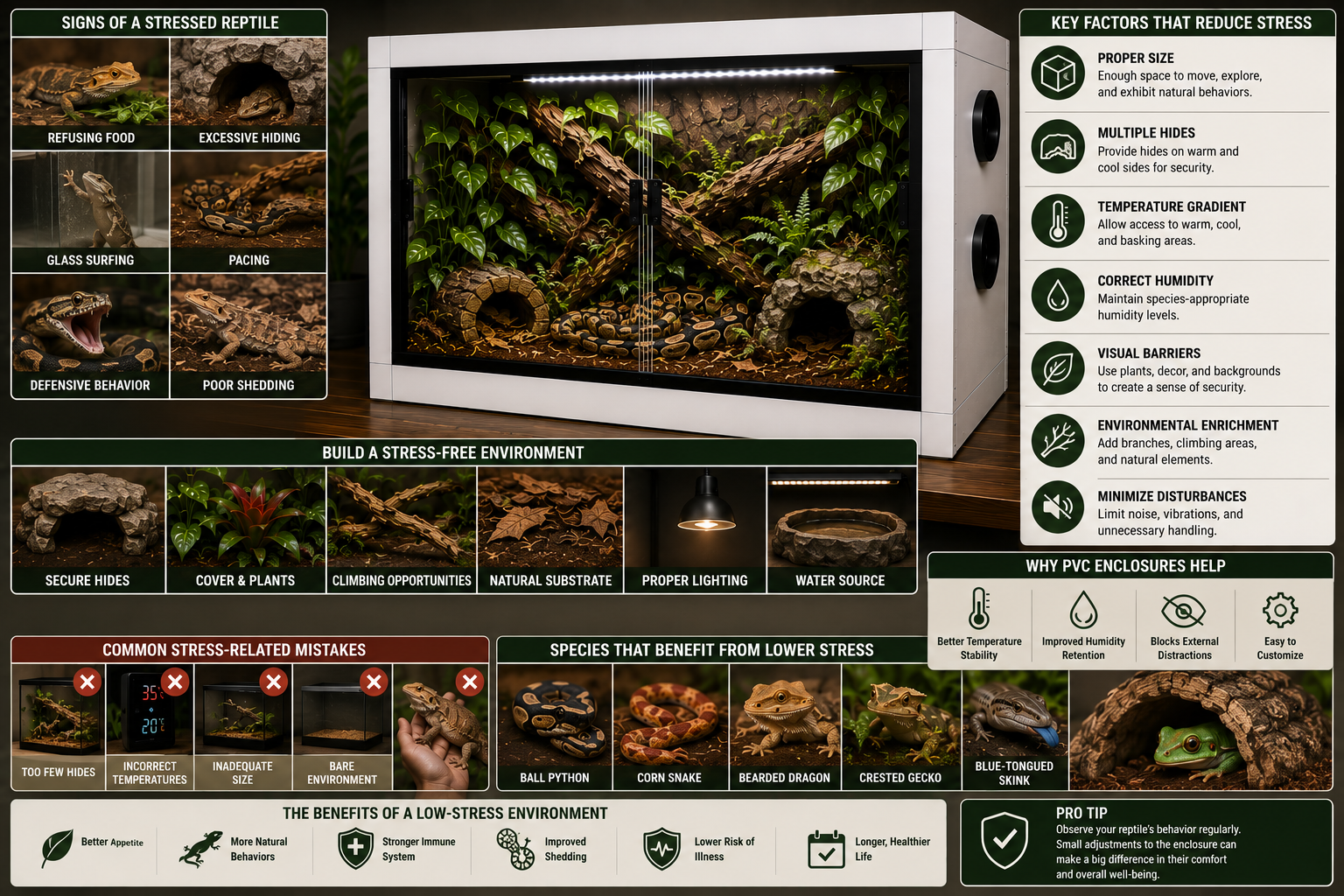
One of the most effective ways to reduce reptile stress is to provide an enclosure that meets the animal's physical and behavioral needs. Proper enclosure size, secure hiding places, correct temperatures, humidity control, and environmental enrichment all help reptiles feel safe and comfortable.
A well-designed PVC reptile enclosure can make it easier to create these stable conditions and support long-term well-being.
Why Stress Matters in Reptiles
Reptiles may not show stress the same way dogs or cats do, but chronic stress can affect:
Feeding behavior
Activity levels
Shedding quality
Immune function
Overall health
Reducing stress should be a major goal of enclosure design.
Signs of a Stressed Reptile
Depending on the species, common signs may include:
Refusing food
Excessive hiding
Constant pacing
Glass surfing
Frequent escape attempts
Defensive behavior
Poor shedding
Occasional stress is normal, but persistent stress often points to husbandry issues.
Start With the Right Enclosure Size
An enclosure should provide enough space for natural movement and behaviors.
Examples include:
Ball Python
Corn Snake
Bearded Dragon
Blue-Tongued Skink
A properly sized enclosure allows reptiles to:
Explore
Thermoregulate
Climb when appropriate
Hide comfortably
Provide Multiple Hiding Places
Security is one of the most important factors in stress reduction.
Most reptiles benefit from:
Warm-Side Hide
Provides security while allowing access to warmth.
Cool-Side Hide
Allows the reptile to feel secure while thermoregulating.
Additional Cover
Plants, cork bark, and décor can help reduce feelings of exposure.
Create a Proper Temperature Gradient
Reptiles need temperature choices.
A good enclosure should include:
Warm side
Cool side
Appropriate basking area
Without a thermal gradient, reptiles may struggle to regulate body temperature effectively.
Maintain Proper Humidity
Incorrect humidity can contribute to stress and health problems.
Species such as:
Ball Python
Crested Gecko
Boa Constrictor
often require stable humidity levels.
PVC enclosures are particularly useful because they help retain moisture more effectively than many alternatives.
Reduce Excessive Exposure
Many reptiles feel vulnerable in overly open environments.
You can increase security by adding:
Plants
Branches
Cork bark
Backgrounds
Visual barriers
This helps create a more natural habitat.
Add Environmental Enrichment
Enrichment encourages natural behaviors and reduces boredom.
Depending on the species, enrichment may include:
Climbing Opportunities
Useful for:
Corn Snake
Crested Gecko
Burrowing Opportunities
Useful for:
Blue-Tongued Skink
Exploration Areas
Logs, branches, and varied terrain encourage activity.
Minimize Frequent Disturbances
Stress can increase when reptiles experience:
Constant handling
Excessive enclosure rearrangement
Loud vibrations
Frequent interruptions
Allow your reptile time to establish a routine.
Use Appropriate Lighting
Proper lighting supports natural activity cycles.
Consider:
UVB lighting when required
Daylight illumination
Consistent day-night schedules
Stable lighting routines help many reptiles feel more secure.
Why PVC Enclosures Help Reduce Stress
PVC enclosures offer several advantages:
Better Temperature Stability
Helps maintain consistent environmental conditions.
Improved Humidity Retention
Beneficial for tropical and humidity-dependent species.
Reduced External Disturbances
Many PVC designs offer solid sides that can help limit visual stressors.
Easy Customization
Supports naturalistic décor, backgrounds, and enrichment.
Common Stress-Related Enclosure Mistakes
Too Few Hides
A reptile should never feel exposed at all times.
Incorrect Temperatures
Poor temperature control is one of the most common husbandry issues.
Inadequate Enclosure Size
Space restrictions can limit natural behaviors.
Bare Enclosures
Lack of enrichment and cover may increase stress.
Constant Handling
New reptiles often need time to adjust before frequent interaction.
Species That Benefit From Naturalistic Setups
Naturalistic habitats are often popular for:
Ball Python
Corn Snake
Boa Constrictor
Bearded Dragon
Crested Gecko
These setups often provide more opportunities for natural behavior and environmental choice.
Visual Example
A secure, enriched, and properly designed enclosure helps reptiles feel safer and display more natural behaviors.
Frequently Asked Questions
What causes stress in reptiles?
Common causes include improper temperatures, lack of hiding places, incorrect humidity, inadequate enclosure size, and excessive disturbance.
Do reptiles need hides?
Yes. Most reptiles rely on secure hiding spots to feel safe.
Can enclosure size affect stress?
Absolutely. A properly sized enclosure allows natural movement and behavior.
Do PVC enclosures reduce stress?
They can help by providing stable environmental conditions and supporting naturalistic enclosure designs.
Are naturalistic setups better for reptiles?
Many reptiles benefit from naturalistic environments that provide cover, enrichment, and behavioral opportunities.
Conclusion
Reducing reptile stress starts with creating an enclosure that meets the animal's physical and behavioral needs. Proper temperatures, humidity, hiding places, enrichment, and environmental stability all play important roles in helping reptiles feel secure.
PVC reptile enclosures are particularly well-suited for stress reduction because they support consistent environmental conditions while allowing keepers to create highly customized, natural-looking habitats. By focusing on the reptile's natural behaviors and needs, you can build an enclosure that promotes comfort, health, and long-term well-being.
