
How to Turn Cheap Wire Shelves Into Solid Storage Space
How to Turn Cheap Wire Shelves Into Solid Storage Space
Shelves Into Solid Storage Space
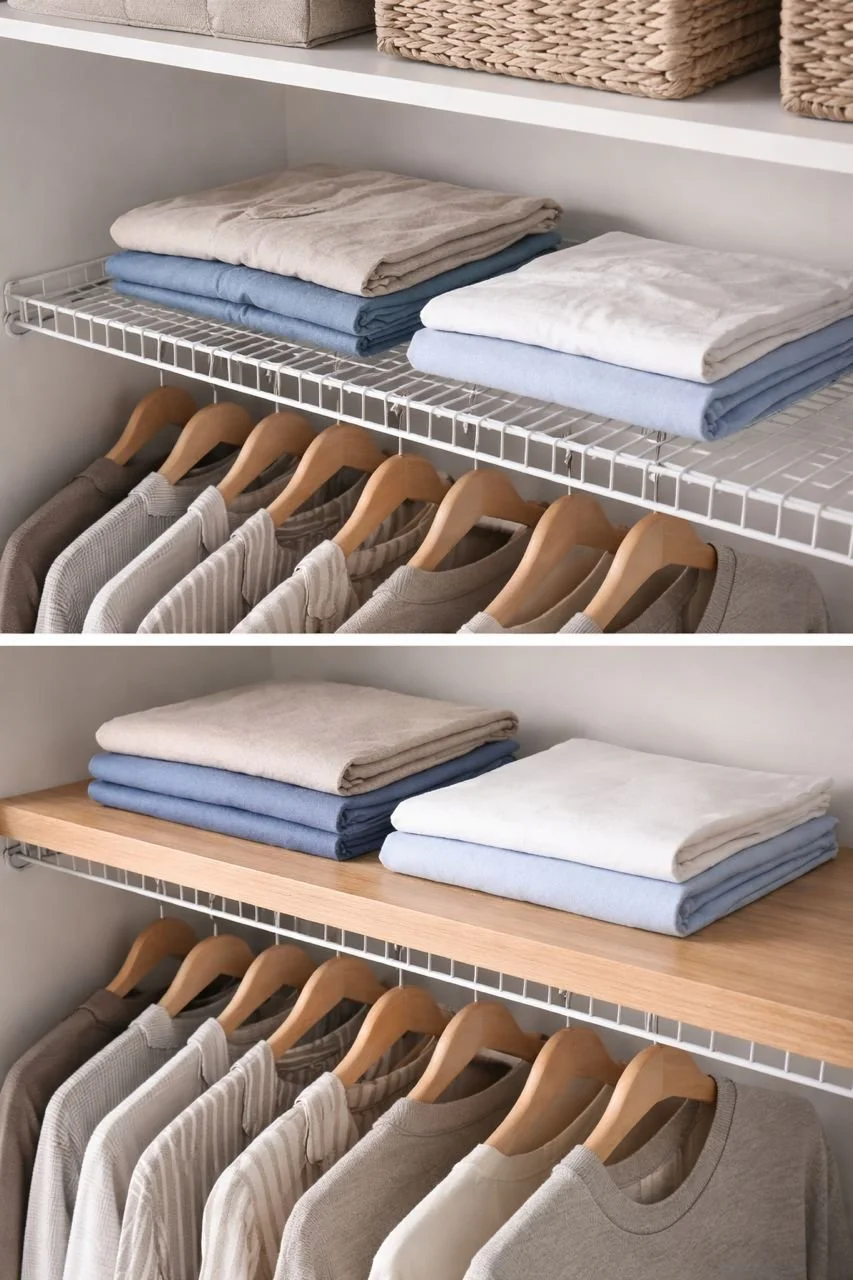
You can turn cheap wire shelves into solid storage by adding a flat surface on top—such as wood shelf covers or custom inserts. This eliminates gaps, prevents clothing damage, and creates a stable surface for organizing items without replacing your shelves.If your closet shelves leave dents in your clothes or make it impossible to stack items neatly, the problem isn’t your organization—it’s the shelving itself.
Wire shelves are installed in many homes because they’re affordable and easy to set up. But once you start using them daily, the issues become obvious.Clothes sag between the wires, folded stacks lose their shape, and delicate fabrics can even get stretched or marked.Over time, your closet starts to feel messy no matter how often you organize it.The good news is you don’t need to rip everything out and start over. With the right approach, you can turn those cheap wire shelves into solid, functional storage.
Why Wire Shelves Damage Clothes and Ruin Organization
Wire shelving isn’t designed for storing folded clothing or delicate fabrics.
Gaps Between Wires
The open grid design means clothes don’t have a flat surface to rest on. Instead, fabric dips into the gaps, creating visible lines and wrinkles.
Uneven Pressure on Fabric
When clothes sit on narrow metal wires, pressure is concentrated on small points. This can lead to:
Creases and dents in clothing
Fabric stretching over time
Misshaped folded stacks
Unstable Storage
Because the surface isn’t flat, stacks of clothing shift easily. This makes it harder to maintain a neat, organized closet.
Constant Reorganizing
Even after folding clothes neatly, they quickly lose structure due to the uneven surface.
This is why many people search for ways to turn cheap wire shelves into solid storage space.
Common Fixes People Try
Before finding a long-term solution, most homeowners try quick fixes.
Shelf Liners
Thin liners placed over the wires.
Pros
Easy to install
Low cost
Cons
Still uneven
Doesn’t stop fabric dents
Can slide out of place
Cardboard or DIY Covers
Using cardboard or foam board to create a flat surface.
Pros
Cheap
Quick fix
Cons
Bends easily
Looks temporary
Not durable
Plywood Panels
Placing a piece of wood over the shelf.
Pros
Creates a flat surface
Stronger support
Cons
Requires cutting and measuring
Can look unfinished
Doesn’t always fit well
These methods can help temporarily, but they often don’t provide a clean or lasting solution.
A Better Way to Create Solid Storage
Instead of patching the problem, the goal is to eliminate it completely.
The most effective way to do this is by adding a solid surface over your wire shelves.
This transforms the shelf from a flexible, uneven grid into a stable platform.
Once the surface is solid:
Clothes sit flat
Fabric stays protected
Stacks remain neat
Storage becomes easier
Why Solid Shelf Covers Work
The issue with wire shelving isn’t just the gaps—it’s how those gaps affect weight and pressure.
A solid cover fixes this by:
Distributing weight evenly across the shelf
Removing pressure points on fabric
Preventing sagging
Creating a smooth surface for stacking
This turns wire shelving into something that behaves like a traditional wooden shelf.
The Most Practical Long-Term Solution
For a clean and durable upgrade, many homeowners use wooden wire shelf covers.
These are designed to fit directly over existing wire shelves, instantly creating a flat, solid surface without replacing the entire system.
Once installed, the difference is immediate:
Clothes no longer develop dents or creases
Folded stacks hold their shape
Items stay in place
The closet looks more polished
They are commonly used in:
Bedroom closets
Linen storage
Laundry rooms
Pantries
If you want a simple way to upgrade your closet, exploring wire shelf cover options can help you turn cheap shelving into something that actually works.
How Your Closet Improves After the Upgrade
Clothing Protection
Delicate fabrics stay smooth and wrinkle-free without pressure from wires.
Better Organization
Stacks of clothes remain neat and stable, making your closet easier to manage.
More Usable Space
You can store a wider variety of items without worrying about them falling through or shifting.
Cleaner Appearance
A solid surface gives your closet a finished, intentional look instead of a temporary feel.
Frequently Asked Questions
Why do wire shelves leave marks on clothes?
Because the weight of the clothing rests on narrow wires, creating pressure points that leave dents or creases.
Can you turn wire shelves into solid shelves?
Yes. Adding a solid cover on top is one of the easiest and most effective ways.
Do shelf liners protect clothes?
Not fully. They reduce friction but don’t eliminate pressure points or sagging.
What is the best material for shelf covers?
Wood is commonly used because it is durable and provides even support.
Do I need to replace my closet system?
No. You can upgrade your existing shelves without removing them.
Are shelf covers easy to install?
Yes. Most simply sit on top of the shelf and require no tools.
Conclusion
Wire shelving may be affordable, but it often creates problems when it comes to storing clothing and keeping a closet organized.
Instead of dealing with sagging stacks, fabric damage, and constant rearranging, adding a solid surface can completely transform your storage space.
By turning your wire shelves into a flat, stable platform, you protect your clothes and make your closet easier to maintain.
If you’re tired of fighting with your shelving, upgrading it with a simple cover is one of the easiest ways to create a more functional and organized space.
