
How to Make Builder-Grade Cabinets More Functional
Builder-grade cabinets are common in kitchens, bathrooms, laundry rooms, and garages because they provide basic storage without the cost of custom cabinetry. They may look perfectly fine when you first move in, but after living with them for a while, you start noticing the problems.
Deep shelves swallow small items. Pots and pans pile up in awkward stacks. Cleaning supplies get pushed to the back of a cabinet, and the space beneath the sink becomes a jumble of bottles, sponges, and spare supplies. Even a cabinet that looks spacious from the outside can feel frustratingly inefficient once you start using it every day.
The good news is that you don't need to replace your cabinets to make them work better. With a few thoughtful upgrades, you can improve accessibility, create useful storage zones, and make inexpensive cabinetry feel more intentional.
From simple shelf dividers to handcrafted wooden organizers, the right improvements can help you get more out of the cabinets you already own. And when standard organizers don't fit your needs, custom woodworking from a business like Stumps Custom Wood offers another way to bring practical storage and natural character into your home.
1. Add Pull-Out Organizers to Deep Cabinets
Deep cabinets are useful until something gets pushed to the back and disappears. A bottle of cooking oil, a spare cleaning product, or a small kitchen appliance can sit untouched for months simply because reaching it means moving everything in front.
Pull-out organizers solve much of this problem by bringing stored items toward you instead of forcing you to reach into the cabinet.
Depending on the cabinet and its contents, you can use pull-out baskets, sliding shelves, or appropriately sized organizers. They work especially well in lower kitchen cabinets, pantry cabinets, and utility cupboards.
Before buying anything, measure the cabinet's interior width, depth, and height. Check for hinges, plumbing, and other obstructions, and confirm that the organizer can support the intended load.
For a simpler alternative, use removable bins to group related products together. You can pull out one container to reach what you need without rearranging the entire shelf.
2. Divide Shelves to Stop Items From Piling Up
A single large cabinet shelf often encourages messy stacking. Baking trays lean against one another, cutting boards slide into a pile, and food containers become difficult to separate.
Shelf dividers turn that open area into smaller, more useful sections.
Consider using dividers for:
Cutting boards, baking sheets, and serving trays
Pot lids and shallow pans
Food storage containers and their matching lids
Plates, bowls, and lightweight kitchen accessories
Folded towels and linens in bathroom or laundry cabinets
Vertical dividers are especially useful because they allow you to retrieve one item without lifting an entire stack.
For homeowners who prefer natural materials, wooden dividers can offer a more finished appearance than generic plastic organizers. A carefully fitted wooden insert can help an ordinary cabinet feel purpose-built while making everyday items easier to access.
3. Make Better Use of Vertical Cabinet Space
Many builder-grade cabinets have fixed shelves with generous gaps above the items stored on them. That empty vertical space is often wasted.
If you have tall glasses on a shelf, for example, you may still have enough room above them for another level of lightweight storage. A shelf riser or small secondary shelf can create an additional surface without requiring you to remodel the cabinet.
This approach works well for mugs, small bowls, spices, bathroom products, and folded washcloths.
Measure the clearance carefully before adding another shelf. Make sure you can still remove items comfortably and that the new level won't interfere with cabinet doors.
If the cabinet needs a more tailored solution, a custom-sized wooden shelf may be worth considering. Instead of trying to fit a standard organizer into an unusual opening, you can plan storage around the actual dimensions and the items you want to keep there.
4. Turn the Space Under the Sink Into Useful Storage
The cabinet beneath a kitchen or bathroom sink is often one of the most awkward places to organize. Plumbing takes up valuable space, bottle shapes vary, and small supplies can easily become scattered.
Start by removing everything and grouping items by purpose. In the kitchen, you might separate dishwashing products, spare sponges, and rubbish bags. In a bathroom, you might organize cleaning supplies, spare toiletries, and replacement products.
Then choose storage that works around the plumbing.
A two-tier organizer with an opening for the pipes may help, while small bins can keep related supplies together. Use the remaining side space for taller bottles or items you reach for frequently.
Avoid overcrowding the cabinet or storing products in a way that makes leaks difficult to spot. Keep chemicals in their original containers, follow their storage instructions, and secure them away from children and pets.
The aim is to make everything visible and accessible without sacrificing the space needed for plumbing maintenance.
5. Upgrade Drawers With Simple Dividers
Cabinet drawers can become cluttered even when the cabinets themselves are in good condition. Utensils tangle together, measuring spoons disappear, and small household tools end up mixed with unrelated items.
Drawer dividers create separate compartments for the things you use most.
In a kitchen, they can organize cutlery, cooking utensils, measuring tools, and small accessories. In a bathroom, they can separate grooming products and daily essentials. In a garage or utility room, they can keep screwdrivers, tape measures, and other small tools from becoming one tangled collection.
Adjustable dividers are convenient, but a fitted wooden organizer can offer a cleaner, more cohesive look. The advantage of custom sizing is that the compartments can be designed around your actual belongings rather than the dimensions of a mass-produced insert.
This is where thoughtful woodworking can make a noticeable difference. The organizer doesn't need to be elaborate; it simply needs to fit well and make the drawer easier to use.
6. Use Cabinet Doors for Additional Storage
The inside of a cabinet door is often unused, even though it can provide valuable storage for small, lightweight items.
Depending on the cabinet, you might add a suitable rack for pot lids, hooks for measuring cups, or a holder for small cleaning accessories. In a bathroom cabinet, the inside of the door may accommodate a compact organizer for everyday products.
Before installing anything, check that the cabinet door can close fully and that the added weight won't strain the hinges. Avoid placing heavy objects on the door or storing items where they can fall when it opens.
For rental homes or cabinets you don't want to modify permanently, removable organizers may be a better choice.
The goal is to reclaim overlooked space without making the cabinet difficult to open, close, or maintain.
7. Add Pull-Out Waste and Recycling Storage
A rubbish bin sitting in the middle of a kitchen can make the room feel crowded. Placing it inside a cabinet may create a cleaner appearance, but only if the cabinet is designed or adapted to accommodate it safely and conveniently.
A pull-out waste bin can keep rubbish and recycling tucked away while allowing easy access during meal preparation.
Before installing one, measure the cabinet opening and interior dimensions. Account for the door, hinges, plumbing if present, and the clearance needed for the bin to slide out. Choose a system suitable for the cabinet's construction and the weight it will carry.
If a pull-out system isn't practical, a compact, well-fitting bin inside an existing cabinet can still improve organization.
Remember that convenience matters more than appearance alone. The best waste-storage arrangement is one you can use easily and clean without difficulty.
8. Create Dedicated Zones Inside Kitchen Cabinets
A cabinet becomes much easier to use when its contents have a clear purpose.
Instead of spreading items across every available shelf, group them according to how you use them. Keep cooking essentials near the preparation area, everyday dishes near the dishwasher or dining space, and baking supplies together.
A simple cabinet layout might include:
Cooking zone: Pots, pans, lids, and frequently used utensils.
Food-storage zone: Containers, matching lids, and wraps.
Serving zone: Serving boards, platters, and tableware.
Baking zone: Measuring tools, mixing bowls, and baking accessories.
Your exact arrangement will depend on your kitchen layout and habits. The important thing is to reduce unnecessary movement and make frequently used items easy to reach.
Wooden organizers can help give these zones a consistent appearance. A wooden divider, fitted shelf, or dedicated storage piece can make even standard cabinets feel more considered and functional.
9. Make Builder-Grade Cabinets More Attractive With Wood Accents
Functionality is the priority, but small upgrades can also improve how your cabinets look and feel.
Builder-grade cabinetry often has simple finishes and standard hardware. Adding thoughtful organization inside the cabinets can make a difference, while carefully chosen wood accents can bring warmth to the surrounding space.
For example, a natural wooden shelf can introduce texture to a kitchen with painted cabinets. A wooden drawer organizer can give everyday utensils a more orderly home. In a laundry room or pantry, a fitted wooden shelf can make basic storage look more intentional.
Stumps Custom Wood is a family-owned woodworking business based in Shelby, Ohio, offering wooden products and custom woodworking for people who appreciate practical pieces with natural character.
If your existing cabinets have unusual dimensions or wasted space, consider whether a custom wooden insert or shelf could solve a specific problem. The best improvement is not necessarily the most expensive one. It's the piece that fits your space, supports your routine, and makes the cabinet easier to use every day.
10. Improve Bathroom Cabinets Without Adding More Clutter
Bathroom cabinets often have to accommodate an assortment of small items: toiletries, spare towels, grooming tools, cleaning supplies, and personal-care products.
Without a plan, these items quickly become mixed together, making it difficult to find what you need during a busy morning.
Use small containers to group similar items and place everyday essentials at the front. Reserve higher or less accessible shelves for spare supplies, and avoid storing products in damp areas where packaging or materials may deteriorate.
If you have a vanity with deep shelves, consider a pull-out organizer or separate bins that can be removed easily. A shallow tray can also keep frequently used items together.
Wooden storage accents can introduce a warmer, more natural look, but choose materials and finishes suitable for the room's moisture levels. Keep wooden pieces away from persistent water exposure and follow the maker's care recommendations.
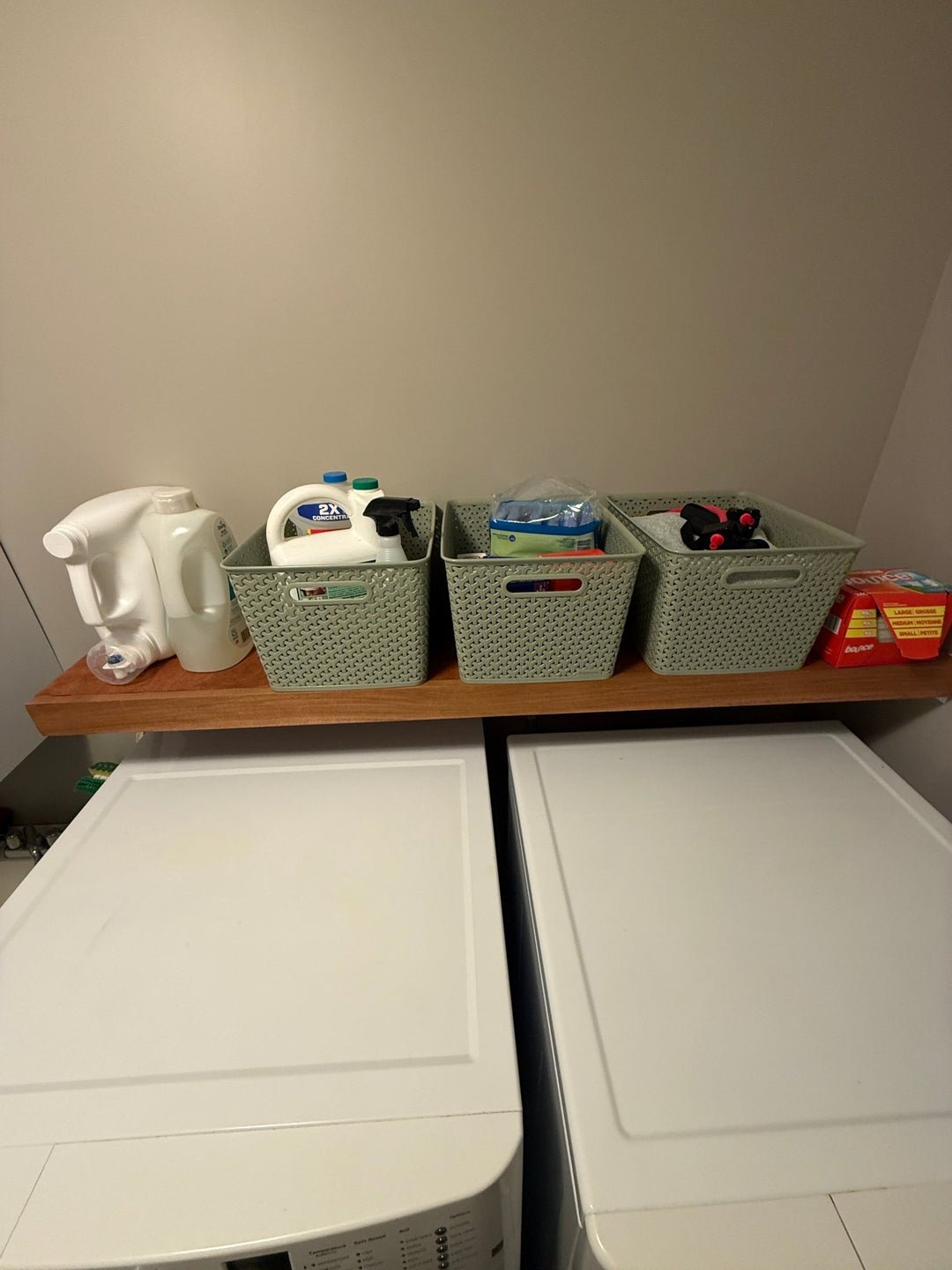
11. Make Laundry and Utility Cabinets Easier to Use
Laundry and utility cabinets frequently store a mixture of detergents, cleaning cloths, spare household supplies, and miscellaneous items. Because many of these products come in different shapes and sizes, the available space can be difficult to manage.
Start by assigning each shelf a purpose. Keep laundry products together, household cleaners in a separate area, and spare supplies in labeled containers.
Use a removable bin for small items such as clothespins, lint rollers, or cleaning accessories. A shelf divider can prevent bottles from crowding one another, while a shallow organizer can make it easier to retrieve smaller products.
If the cabinet is unusually narrow or tall, measure before purchasing organizers. A custom-sized wooden shelf or divider may be a practical alternative when standard products leave too much unused space.
Keep the layout simple enough that everyone in the household can return items to the right place. Organization works best when it remains easy to maintain after the initial cleanup.
12. Know When a Custom Storage Upgrade Makes Sense
Not every cabinet problem can be solved with another plastic bin. Sometimes the shelf is too tall, the opening is unusually narrow, or the space has an obstruction that makes standard organizers awkward to use.
In those cases, custom storage may be the more practical solution.
A properly sized wooden shelf can divide a tall cabinet into useful levels. A fitted divider can keep trays upright. A purpose-designed drawer insert can separate tools or utensils that never seem to stay organized.
Before commissioning a custom piece, identify the problem you want to solve. Measure the space, note any obstructions, and list the items the organizer needs to hold. Also consider moisture, cleaning requirements, and the expected weight.
Stumps Custom Wood offers a natural option for homeowners exploring handcrafted wooden products and custom woodworking. Rather than replacing perfectly usable cabinets, you can focus on targeted improvements that make your existing storage work harder.
The value is in the fit and purpose: a well-designed piece can turn a frustrating cabinet into a space that supports your daily routine.
Make Your Existing Cabinets Work Harder
Builder-grade cabinets don't have to remain basic or frustrating. Pull-out organizers can make deep shelves accessible, dividers can prevent messy stacks, and dedicated storage zones can help every item find its place. Small improvements inside the cabinets can save time and reduce clutter without the cost and disruption of a complete renovation.
For a more tailored result, consider wooden organizers and custom shelving that make better use of your specific cabinet dimensions. Natural wood brings warmth and craftsmanship to practical storage, turning an ordinary cabinet into something that feels more thoughtfully designed.
Stumps Custom Wood helps bring that handcrafted perspective to home projects through wooden products and custom woodworking. If you're ready to get more from the cabinets you already own, explore the possibilities for wooden storage pieces that combine useful design with natural character.
Start with one cabinet that frustrates you most. Clear it out, measure the available space, and choose an improvement that solves a real problem. With a few deliberate changes, your existing cabinets can become more organized, more accessible, and much more functional.
