
What’s the Safest Way to Block Stairs for Toddlers?
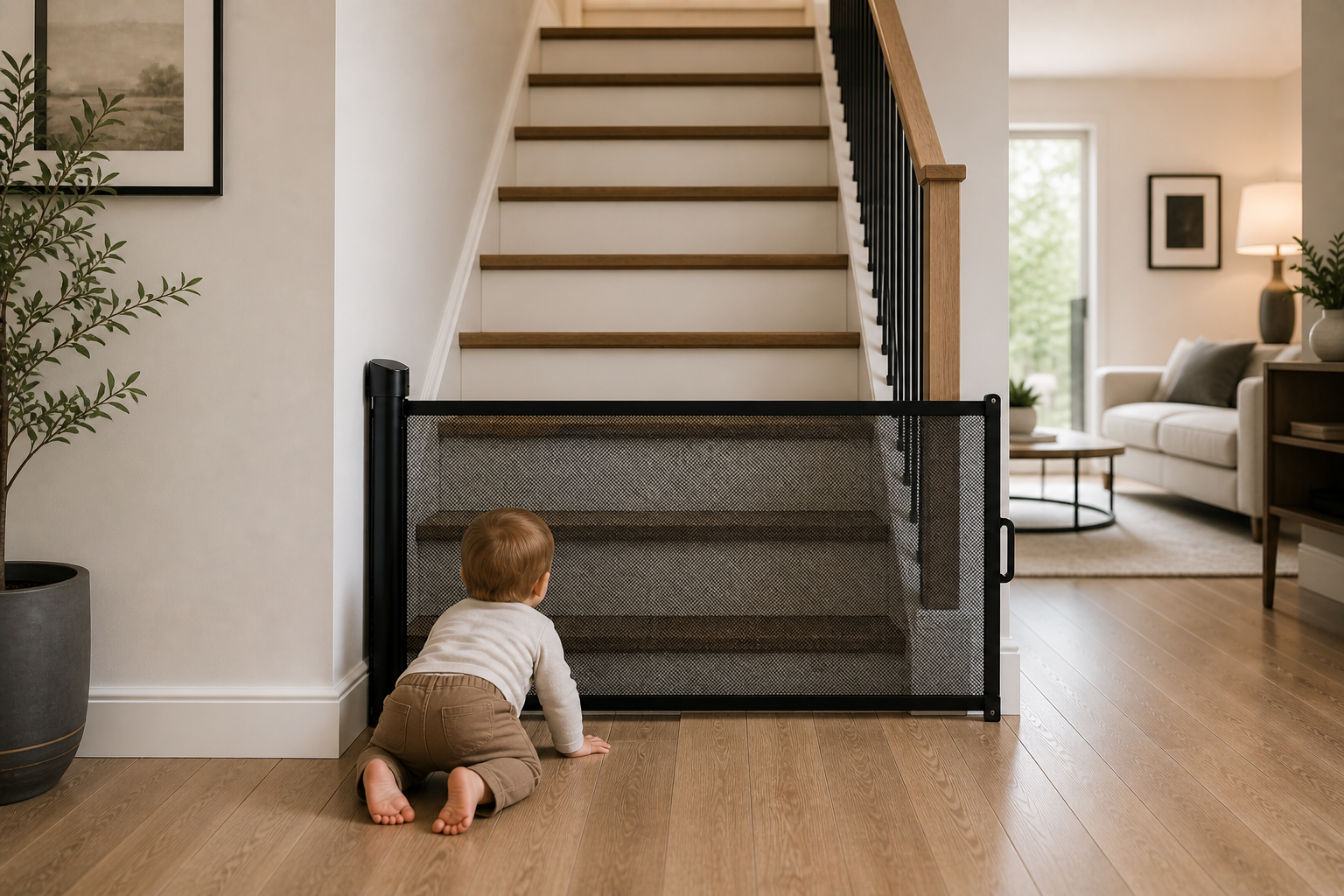
What’s the Safest Way to Block Stairs for Toddlers?
The safest way to block stairs for toddlers is to use a hardware-mounted gate or a sliding pocket gate installed securely into wall studs. These options provide strong, reliable barriers without the risk of slipping or dislodging, and they avoid bottom bars that can cause tripping.
Introduction (Problem Hook)
Stairs are one of the most dangerous areas in a home for toddlers.
And once your child starts crawling or walking, blocking access becomes urgent—not optional.
But here’s where many parents get stuck:
Most gates feel either bulky, inconvenient, or not as secure as they should be.
You want something that’s safe first—but also something you can live with every day.
So what’s the safest way to block stairs without creating new problems in the process?
Why Stair Safety Is Different
Not all baby gates are created equal—especially when it comes to stairs.
What Makes Stairs Risky
Height + hard surfaces increase injury risk
Frequent use means gates are opened and closed often
Limited space can make bulky gates dangerous
The Key Safety Rule
👉 The top of stairs requires a secure, mounted gate—not a pressure-mounted one.
Pressure gates can shift or dislodge under force, making them unsafe in this location.
Common Mistakes to Avoid
1. Using Pressure-Mounted Gates at the Top of Stairs
Problem: Can move or fall under pressure
Risk: Serious falls
2. Choosing Gates with Bottom Bars
Problem: Creates a tripping hazard
Risk: Especially dangerous when carrying a child
3. Installing Gates Incorrectly
Problem: Weak mounting
Risk: Reduced effectiveness
4. Leaving Gaps or Improper Fit
Problem: Toddlers can squeeze through or climb
Related Problems People Also Search
If you’re researching this, you’re likely also asking:
What type of baby gate is safest for stairs?
Can I use a pressure gate on stairs?
How to childproof stairs without drilling
Best stair gate for small spaces
Baby gate alternatives for stairs
All of these lead to the same goal:
👉 Maximum safety with minimal risk.
Why No-Threshold, Mounted Gates Work Best
The safest designs remove unnecessary hazards while maintaining strength.
What to Look For
Secure mounting into walls or studs
No bottom bar (especially at the top of stairs)
Strong locking mechanism
Stable frame that won’t shift over time
This combination ensures both structural safety and everyday usability.
The Most Practical Long-Term Solution
For many homes, the best solution is a secure, wall-mounted gate system—especially one that doesn’t interfere with movement.
Why Sliding Pocket Gates Stand Out
No bottom threshold → safer footing
Wall-mounted stability → no shifting or slipping
No swing clearance needed → ideal for tight stair areas
Smooth operation → easy to use with one hand
They combine the safety of hardware-mounted gates with a more practical design.
Product Integration (Soft Recommendation)
Most parents start with whatever gate is easiest to install.
But when it comes to stairs, safety quickly becomes more important than convenience.
That’s usually when they upgrade.
The difference is immediate.
No wobble.
No stepping over anything.
No awkward movement at the top of the stairs.
Just a secure barrier that works exactly as it should.
That’s why many homeowners choose sliding pocket gates for stair safety—they offer a safer, more reliable alternative to traditional designs.
If you want to explore your options, start here:
→ Sliding Pocket Gate Collection
And for specific configurations:
→ Sliding Pocket Gates
Visual Example Section
Imagine:
A staircase that feels safe and secure
No tripping hazards when walking through
A barrier that works without getting in your way
That’s what the right setup provides.
Frequently Asked Questions (SEO Gold)
What type of gate is safest for stairs?
Hardware-mounted or sliding gates are the safest options.
Can I use a pressure-mounted gate on stairs?
No, they are not recommended for the top of stairs due to safety risks.
Should a stair gate have a bottom bar?
No, it’s best to avoid bottom bars to reduce tripping hazards.
Where should stair gates be installed?
At both the top and bottom of stairs for maximum safety.
Are sliding gates safe for toddlers?
Yes, when properly installed, they provide a secure barrier.
Do stair gates require drilling?
For maximum safety, yes—secure mounting is recommended.
Conclusion (Soft Call to Action)
When it comes to stairs, safety isn’t something to compromise on.
The right gate doesn’t just block access—it protects your child while making your home easier to move through.
If you’re looking for a safer, more practical solution, upgrading to a mounted, no-threshold gate can make all the difference.
Explore your options here:
→ Sliding Pocket Gate Collection
