
PVC Reptile Enclosure Buyer's Guide: Sizes, Species, Heat, Humidity, and Setup
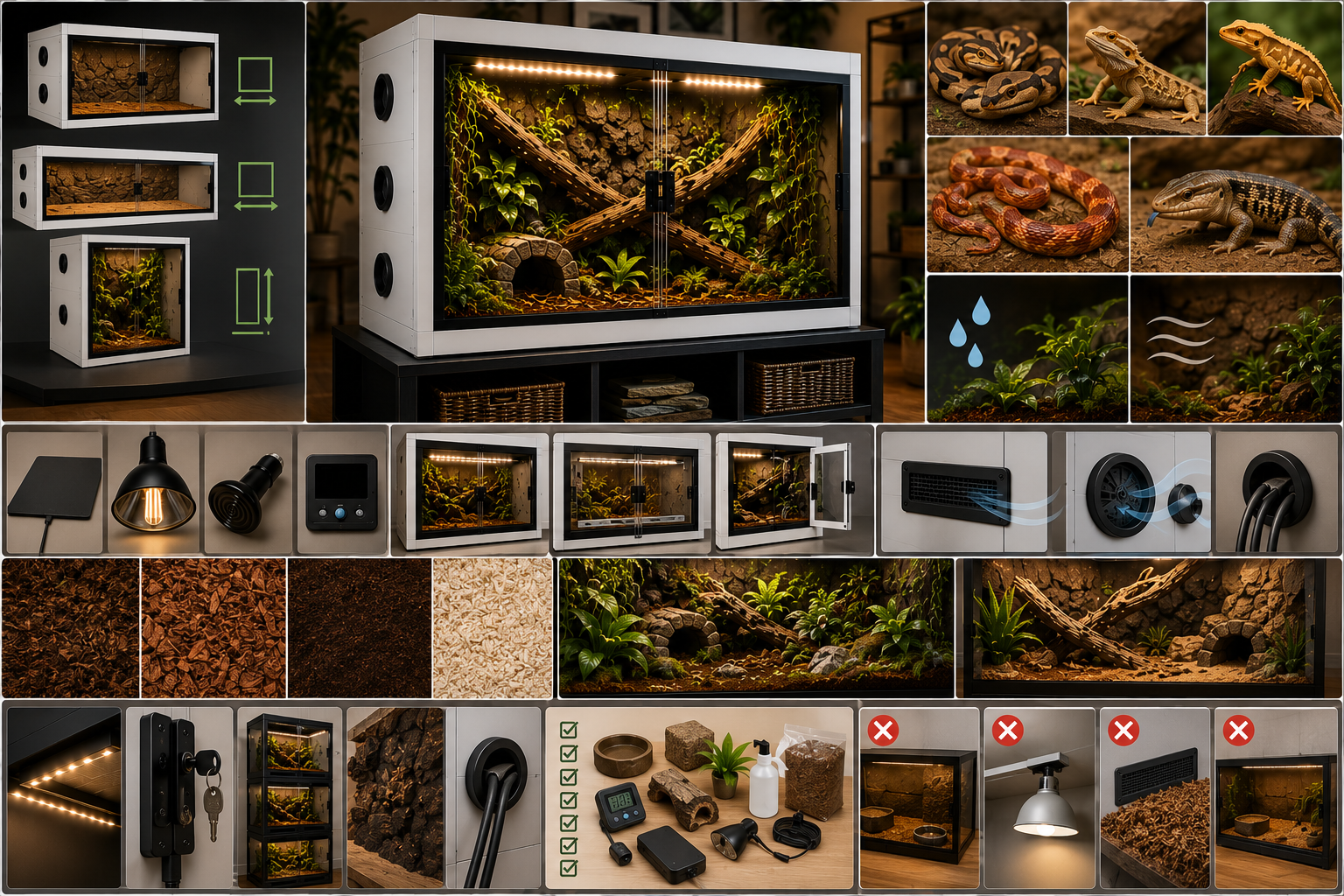
PVC Reptile Enclosure Buyer's Guide: Sizes, Species, Heat, Humidity, and Setup
PVC reptile enclosures are among the most popular reptile housing options because they provide excellent insulation, humidity retention, durability, and customization. When choosing a PVC enclosure, focus on five key factors:
Appropriate size
Species requirements
Heating setup
Humidity control
Enclosure features
Choosing the right combination of these elements helps create a safe, healthy, and long-lasting habitat.
Why Choose a PVC Reptile Enclosure?
PVC has become the preferred enclosure material for many reptile keepers because it offers:
✅ Excellent heat retention
✅ Strong humidity control
✅ Easy cleaning
✅ Long lifespan
✅ Moisture resistance
✅ Customization options
PVC works well for both beginner and advanced reptile keepers.
Step 1: Choose the Right Enclosure Size
Size is the most important factor when selecting an enclosure.
Always choose based on the reptile's adult size.
Common PVC Enclosure Sizes
4x2x2 PVC Enclosure
One of the most popular sizes available.
Suitable for:
Ball Python
Bearded Dragon
Blue-Tongued Skink
Benefits:
Excellent floor space
Easy heating management
Good room for enrichment
6x2x2 PVC Enclosure
Ideal for larger reptiles such as:
Boa Constrictor
Benefits:
Increased movement opportunities
Better exercise space
More decorating options
Vertical PVC Enclosures
Best for climbing species including:
Crested Gecko
Gargoyle Gecko
Benefits:
Maximizes climbing opportunities
Uses vertical space efficiently
Step 2: Match the Enclosure to Your Species
Different reptiles have different environmental needs.
Ball Pythons
Ball Python
Common requirements:
Moderate to high humidity
Secure hides
Strong heat retention
PVC performs exceptionally well for these needs.
Bearded Dragons
Bearded Dragon
Require:
Strong basking temperatures
UVB lighting
Adequate ventilation
Crested Geckos
Crested Gecko
Need:
Vertical climbing space
Humidity control
Plant-friendly environments
Corn Snakes
Corn Snake
Benefit from:
Climbing opportunities
Secure hides
Stable temperatures
Step 3: Understand Heating Options
Proper heating is essential for reptile health.
Radiant Heat Panels
Popular in PVC enclosures because they:
Save space
Provide even heating
Work well with thermostats
Heat Lamps
Commonly used for:
Basking species
High-temperature reptiles
Such as:
Bearded Dragon
Ceramic Heat Emitters
Provide heat without visible light.
Often used for supplemental heating.
Thermostats
A thermostat is one of the most important pieces of equipment in any reptile setup.
It helps maintain safe temperatures and prevents overheating.
Step 4: Understand Humidity Requirements
Humidity varies by species.
High-Humidity Species
Examples:
Ball Python
Crested Gecko
Boa Constrictor
PVC excels because it reduces moisture loss.
Lower-Humidity Species
Examples:
Bearded Dragon
Proper ventilation becomes especially important.
Step 5: Choose the Right Door Style
Front-Opening Doors
Most popular option.
Benefits:
✅ Easier cleaning
✅ Better access
✅ Reduced stress during interaction
✅ Improved display appearance
Sliding Doors
Excellent for:
Small rooms
Apartment setups
Space-saving designs
Swinging Doors
Offer wide access but require additional clearance.
Step 6: Consider Substrate Options
Popular substrate choices include:
Coconut Husk
Excellent for humidity retention.
Cypress Mulch
Popular for tropical species.
Bioactive Substrates
Ideal for naturalistic habitats.
Paper-Based Substrates
Useful for quarantine and easy cleaning.
Step 7: Decide on Bioactive vs Traditional Setup
Traditional Setup
Benefits:
Easier maintenance
Lower startup cost
Simpler husbandry
Bioactive Setup
Benefits:
Natural appearance
Live plants
Increased enrichment
Ecosystem support
PVC is one of the best materials for bioactive habitats.
Step 8: Look for Premium Features
Popular upgrades include:
Built-In Lighting
Creates a cleaner appearance.
Lockable Doors
Improves security.
Adjustable Ventilation
Helps fine-tune environmental conditions.
Stackable Design
Excellent for multiple reptiles.
Custom Backgrounds
Improve aesthetics and usable climbing space.
Common Buying Mistakes
Choosing an Enclosure That's Too Small
Always plan for adult size.
Ignoring Future Upgrades
Consider future lighting, heating, and décor plans.
Focusing Only on Price
Long-term value is often more important than initial cost.
Underestimating Humidity Needs
Environmental control directly impacts reptile health.
Recommended Setup Checklist
Before your reptile arrives, make sure you have:
✅ PVC enclosure
✅ Thermostat
✅ Heating equipment
✅ Lighting system
✅ Appropriate substrate
✅ Water bowl
✅ Hides
✅ Thermometer
✅ Hygrometer
✅ Enrichment items
Visual Guide
PVC enclosures provide a flexible foundation for creating habitats tailored to a wide range of reptile species and husbandry styles.
Frequently Asked Questions
What size PVC enclosure should I buy?
Choose based on your reptile's adult size and species requirements.
Are PVC enclosures better than glass tanks?
Many keepers prefer PVC because of its superior insulation, humidity retention, and durability.
Can PVC enclosures support bioactive setups?
Yes. PVC is one of the best materials for bioactive habitats.
Do PVC enclosures hold heat better?
Generally, yes. PVC offers excellent insulation compared to many alternative materials.
Are PVC reptile enclosures worth the investment?
For most long-term reptile keepers, the durability, environmental control, and ease of maintenance make them a worthwhile investment.
Conclusion
Buying a PVC reptile enclosure is one of the most important decisions you'll make as a reptile keeper. By selecting the correct size, matching the enclosure to your species, planning for heating and humidity needs, and choosing useful features, you can create a habitat that supports your reptile's health for years to come.
Whether you're housing a ball python, bearded dragon, crested gecko, corn snake, or another species, a quality PVC enclosure provides the flexibility, durability, and environmental control needed for successful reptile care.
