
Solid Wood Barn Doors vs Hollow Core Barn Doors: What's the Difference?
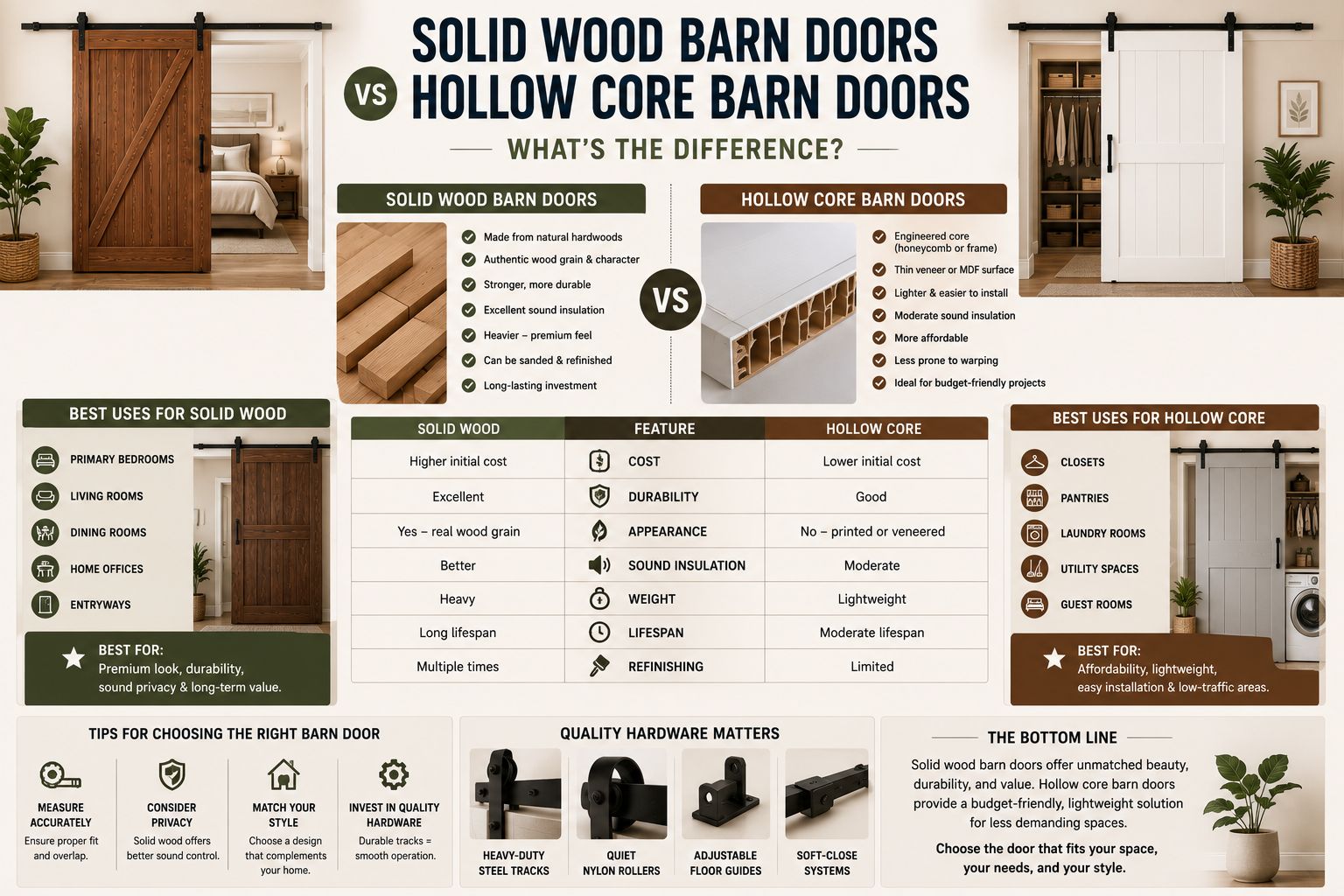
Solid Wood Barn Doors vs Hollow Core Barn Doors: What's the Difference?
The biggest difference between solid wood barn doors and hollow core barn doors is their construction. Solid wood doors are made from natural hardwood or softwood, offering superior durability, strength, sound reduction, and a premium appearance. Hollow core doors are lighter, more affordable, and easier to install, making them a practical option for budget-conscious homeowners. The best choice depends on your budget, design goals, and how the door will be used.
Understanding the Two Types of Barn Doors
Although they may look similar from the outside, solid wood and hollow core barn doors are built very differently.
Solid Wood Barn Doors
Solid wood doors are made from natural lumber such as:
White oak
Red oak
Walnut
Maple
Pine
Alder
Because they're constructed from real wood, each door features unique grain patterns, natural color variations, and authentic character.
Hollow Core Barn Doors
A hollow core barn door typically consists of:
A lightweight internal frame
Honeycomb cardboard or engineered core
Thin wood veneer or MDF outer panels
This construction keeps the door lightweight while reducing manufacturing costs.
Appearance
Solid Wood
Solid wood doors provide a rich, natural appearance that improves with age.
Benefits include:
Genuine wood grain
Natural texture
Premium craftsmanship
Unique character in every door
No two solid wood doors are exactly alike.
Hollow Core
Modern hollow core doors can closely resemble solid wood, especially when painted or finished with quality veneers.
However, they generally lack:
Deep natural grain
Authentic wood texture
Individual character
For homeowners seeking a luxury appearance, solid wood is often the preferred option.
Durability
Solid Wood
Solid wood doors are known for their long lifespan.
Advantages include:
Excellent structural strength
Resistance to everyday impacts
Ability to be refinished
Long-term durability
With proper care, a quality solid wood barn door can last for decades.
Hollow Core
Hollow core doors are durable enough for many residential applications but are generally more susceptible to:
Dents
Surface damage
Moisture-related issues (depending on materials)
Wear from heavy daily use
They usually cannot be refinished as many times as solid wood.
Weight
Solid Wood
Solid wood doors are significantly heavier.
Benefits include:
Premium feel
Smooth operation with quality hardware
Greater stability
Because of their weight, they require heavy-duty tracks and rollers.
Hollow Core
Hollow core doors are much lighter.
Advantages include:
Easier handling
Simpler installation
Reduced stress on hardware
Lower shipping costs
They're a practical choice for DIY installations.
Sound Insulation
One of the biggest differences is acoustic performance.
Solid Wood
Solid wood naturally blocks more sound because of its dense construction.
It's often a better choice for:
Bedrooms
Home offices
Bathrooms
Media rooms
Hollow Core
Because the interior is largely hollow, these doors typically allow more sound to pass through.
They're often better suited for spaces where sound privacy is less important, such as closets, pantries, or laundry rooms.
Maintenance
Solid Wood
Solid wood requires occasional maintenance to preserve its appearance.
This may include:
Cleaning
Refinishing when needed
Protecting the finish from excessive moisture
With proper care, it continues to age beautifully.
Hollow Core
Hollow core doors require minimal routine maintenance.
However, deep scratches or dents may be more difficult to repair because of their construction.
Cost Comparison
FeatureSolid Wood Barn DoorHollow Core Barn DoorInitial CostHigherLowerDurabilityExcellentGoodNatural Wood GrainYesUsually NoSound ReductionBetterModerateWeightHeavyLightweightLifespanLongModerateRefinishingMultiple TimesLimited
While solid wood doors typically cost more upfront, many homeowners view them as a long-term investment because of their durability and timeless appearance.
Best Applications
Choose a Solid Wood Barn Door If You Want:
Premium craftsmanship
Authentic wood grain
Better sound reduction
Long-term durability
A luxury custom appearance
A focal point in your home
Ideal for:
Primary bedrooms
Living rooms
Dining rooms
Home offices
Entryways
Choose a Hollow Core Barn Door If You Want:
A lower-cost option
Lightweight construction
Easier installation
Simple operation
A painted contemporary finish
Ideal for:
Closets
Pantries
Laundry rooms
Utility spaces
Guest rooms
Why Custom Solid Wood Barn Doors Stand Out
Custom-built solid wood barn doors offer advantages beyond appearance.
They provide:
Exact sizing for your doorway
Choice of wood species
Custom stains and finishes
Better overall craftsmanship
Premium hardware compatibility
Greater long-term value
A custom door can transform an ordinary opening into a distinctive architectural feature.
Common Buying Mistakes
Choosing Based Only on Price
The least expensive option may not provide the durability or appearance you want over the long term.
Ignoring Door Weight
Solid wood doors require hardware that is rated to support their weight safely and smoothly.
Forgetting About Room Usage
Consider how often the door will be used and whether privacy, sound reduction, or durability is important for that space.
Buying Standard Sizes for Unique Openings
A custom-sized door creates a cleaner fit, improved proportions, and a more polished appearance.
Frequently Asked Questions
Are solid wood barn doors worth the extra cost?
For many homeowners, yes. Solid wood doors offer superior durability, authentic beauty, better sound reduction, and the ability to be refinished over time.
Are hollow core barn doors durable?
Yes. Hollow core doors are suitable for many interior spaces, particularly closets, pantries, and laundry rooms, although they are generally less resistant to impacts than solid wood doors.
Which is better for bedrooms?
Solid wood barn doors are often the better choice because they provide improved durability and better sound insulation.
Can both types be customized?
Yes. Both solid wood and hollow core barn doors are available in a variety of sizes, finishes, colors, and panel styles, though custom solid wood doors typically offer the greatest flexibility and craftsmanship.
Conclusion
Both solid wood barn doors and hollow core barn doors have their place in today's homes. Hollow core doors are lightweight, budget-friendly, and well suited to low-traffic areas, while solid wood doors offer unmatched durability, authentic natural beauty, improved sound reduction, and long-lasting value.
If you're looking for a statement piece that enhances your home's character and stands the test of time, a custom solid wood barn door is an investment that combines exceptional craftsmanship with everyday functionality. For homeowners seeking a balance of quality, style, and longevity, solid wood remains the gold standard.
