Top 20 Russian Tortoise FAQs (part 1)
1. What enclosure size does a Russian tortoise need?
A single adult needs at least a 4×2×2 ft enclosure. Our 4×2×2 Black PVC Enclosure delivers optimal floor space, insulation, and easy cleaning in one durable package.
2. Should I keep my Russian tortoise indoors or outdoors?
Indoors offers climate control; outdoors provides natural UVB. If indoors, use full-spectrum lighting and heat mats. Outdoors, ensure secure fencing and shaded areas.
3. What substrate is best for Russian tortoises?
A mix of topsoil and play sand (50/50) drains well and holds humidity. Avoid loose sand alone, which risks impaction.
4. What temperature gradient do they require?
Basking spot: 95–100 °F; cool side: 75–85 °F. Night temps can drop to 65 °F. Use thermostats and digital probes to maintain these zones.
5. Do Russian tortoises need UVB lighting?
Yes. Provide a 10.0 UVB bulb on a 12–14-hour day cycle to prevent metabolic bone disease and support calcium metabolism.
6. How often should I feed my Russian tortoise?
Juveniles: daily feeding of dark leafy greens. Adults: every other day. Always remove uneaten food after 2 hours to maintain hygiene.
7. What should a Russian tortoise diet include?
70–80% dark leafy greens (dandelion, kale), 10–15% vegetables (squash, bell pepper), tiny amounts of fruit, and calcium powder dusting.
8. How much water do they need?
Provide a shallow water dish large enough for soaking. Change daily. Soak hatchlings weekly for 15–20 minutes to ensure hydration.
9. How do I recognize a healthy Russian tortoise?
Clear eyes, firm shell, active during the day, and regular eating and defecating patterns signal good health.
10. How do I handle hibernation?
Only healthy tortoises over 2 years old should hibernate. Gradually cool enclosure over weeks to 50–55 °F, maintain low humidity, then warm slowly in spring.
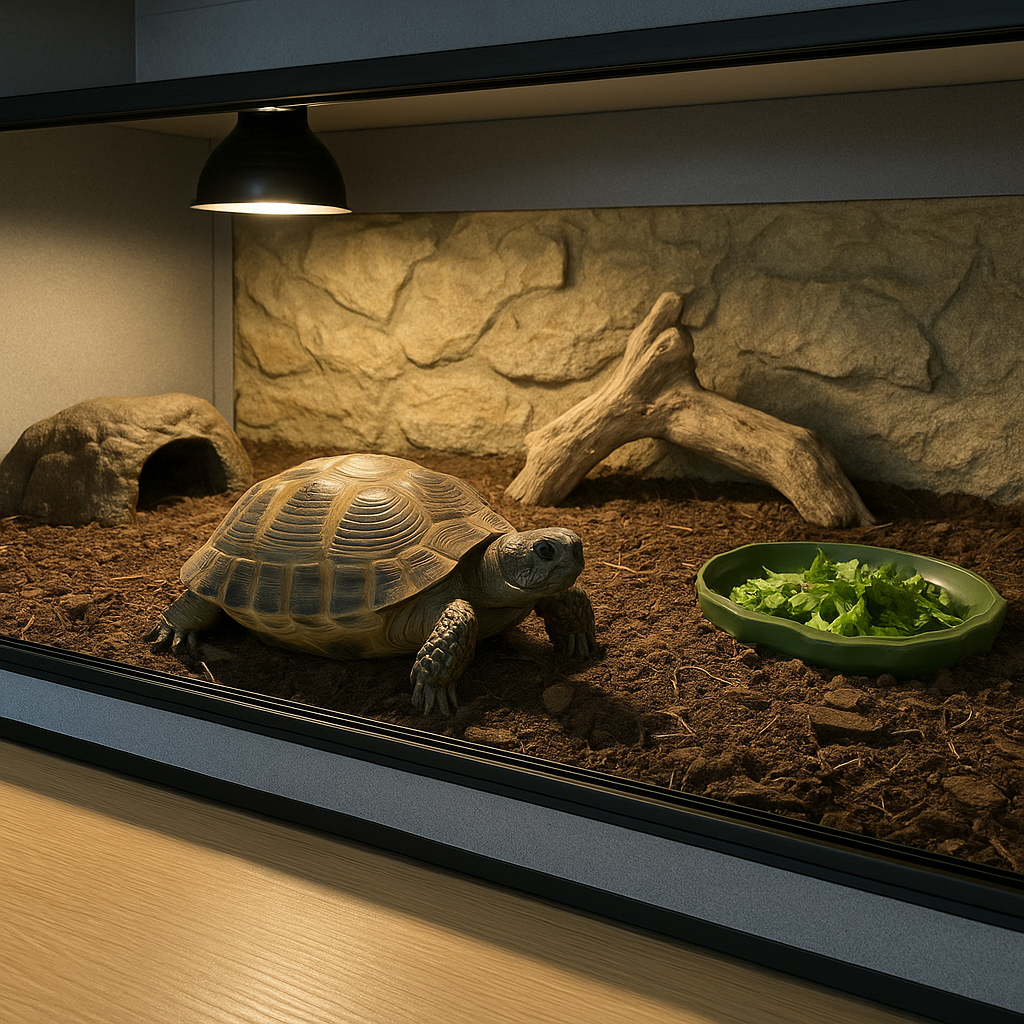
A Russian tortoise basks comfortably in a spacious 4×2×2 PVC reptile enclosure. The enclosure features a textured faux rock background, loose soil substrate, a shallow dish filled with fresh leafy greens, a driftwood log for enrichment, and a hollow hide. A heat lamp casts a soft, warm glow, highlighting the tortoise’s rugged shell and creating a cozy, naturalistic habitat.
11. What are common health issues?
Respiratory infections (runny nose, wheezing), shell rot (soft, discolored shell), and parasitic infections. Seek a reptile vet at the first sign.
12. How do I prevent shell pyramiding?
Offer high-fiber, low-protein diets, proper UVB exposure, and maintain adequate humidity to support normal shell growth.
13. How often should I clean the enclosure?
Spot-clean daily; deep clean monthly with reptile-safe disinfectant. The smooth PVC surface wipes down quickly and resists bacteria buildup.
14. Can Russian tortoises be housed together?
Generally no—males fight and females compete for food. If you do, ensure very large enclosures and monitor closely.
15. What enrichment do they need?
Provide hiding spots, shallow dips in substrate for digging, flat rocks for basking, and safe plants for exploration.
16. How do I set up a proper humidity level?
Maintain 40–60% humidity by misting twice a week and using substrate that holds moisture. Monitor with a hygrometer.
17. Do they need seasonal light changes?
Yes. Mimic natural daylight cycles: 14 hours light in summer, 10–12 hours in winter.
18. How do I introduce a new tortoise?
Quarantine new arrivals for 30 days. Observe eating, pooping, and any signs of illness before mixing enclosures.
19. What vet care do they require?
Annual check-ups recommended. Bring your own enclosure photos and care logs to help the vet assess husbandry.
20. How long do Russian tortoises live?
With proper care, 40–50 years is common—some live over 70 years, making them a lifelong companion.
Product Spotlight – Why Our 4×2×2 Black PVC Enclosure Is Ideal
For many of these FAQs—especially question #1—our 4×2×2 Black PVC Enclosure offers the perfect solution. It ships in under 45 days, features built-in ventilation, front-sliding doors for easy access, and holds heat and humidity more efficiently than glass. Give your tortoise the spacious, secure, and hygienic environment it deserves.
Where to Buy
Stumps Custom Wood – 4×2×2 Black PVC Reptile Enclosure
Reptiles Magazine – Russian Tortoise Care
Tortoise Trust – Species Profiles

All our bioactive reptile enclosures use high quality PVC & top of the line ball bearing tempered glass rolling doors. Each 48 series measures 48" long and comes in a variety of widths and depths. Everything we offer can be customized if desired!
The cage itself is made from 1/2" PVC plastic, while the doors are made from 1/4 clear plexiglass and/or tempered Glass. All panels are laser cut and assembled by hand. The joints are sealed with silicone and will arrive fully assembled. It holds heat and humidity very well. This cage is ideal for many species
of small to medium sized snakes and lizards. Available in several color options. Options include screen cutout, heat tape, lighting, vents,
casters, and door style.
Benefits to PVC Enclosures:
-PVC is 75% lighter than wood & alternatives
-PVC is water proof
-PVC holds temperature & humidity to perfect conditions
-PVC is not reflective the way typical big box glass enclosures
-PVC is also chemical resistant so it can withstand cleaning with ease and not degrade over time
This cage is ideal for snakes, lizards, frogs, and invertebrates!
*Light Options
-Single or dual 6" screen cutouts. Cutouts will allow you to place a heat dome that measures 5.5" or less(not included).
-Ceiling Mounted 24" or 48" t5 HO grow light with UVB capabilities
Heat Options
-11"x16" heat tape
-Radiant Heat Panels (28W, 40W, 80W, & 120W)
*All cages are built to order and are subject to current lead times.*
*You must use a thermostat with the optional heat tape or heat pads. All American Cages and Custom Enclosures is not responsible for damages caused by heating elements!
Links
Link to Complete Tortoise Enclosure Setup Guide (Indoor & Outdoor Tips)
Link to PVC vs Glass Reptile Enclosures: Which One is Better for Your Pet?
Link to 10 DIY Enrichment Ideas for Russian Tortoises (Fun & Affordable)
Reptiles Magazine – Russian Tortoise Care
Tortoise Trust – Russian Tortoises
The Spruce Pets – Russian Tortoise Guide