
What Enclosure Setup Do You Need for a Beginner Reptile Owner
What Enclosure Setup Do You Need for a Beginner Reptile Owner?
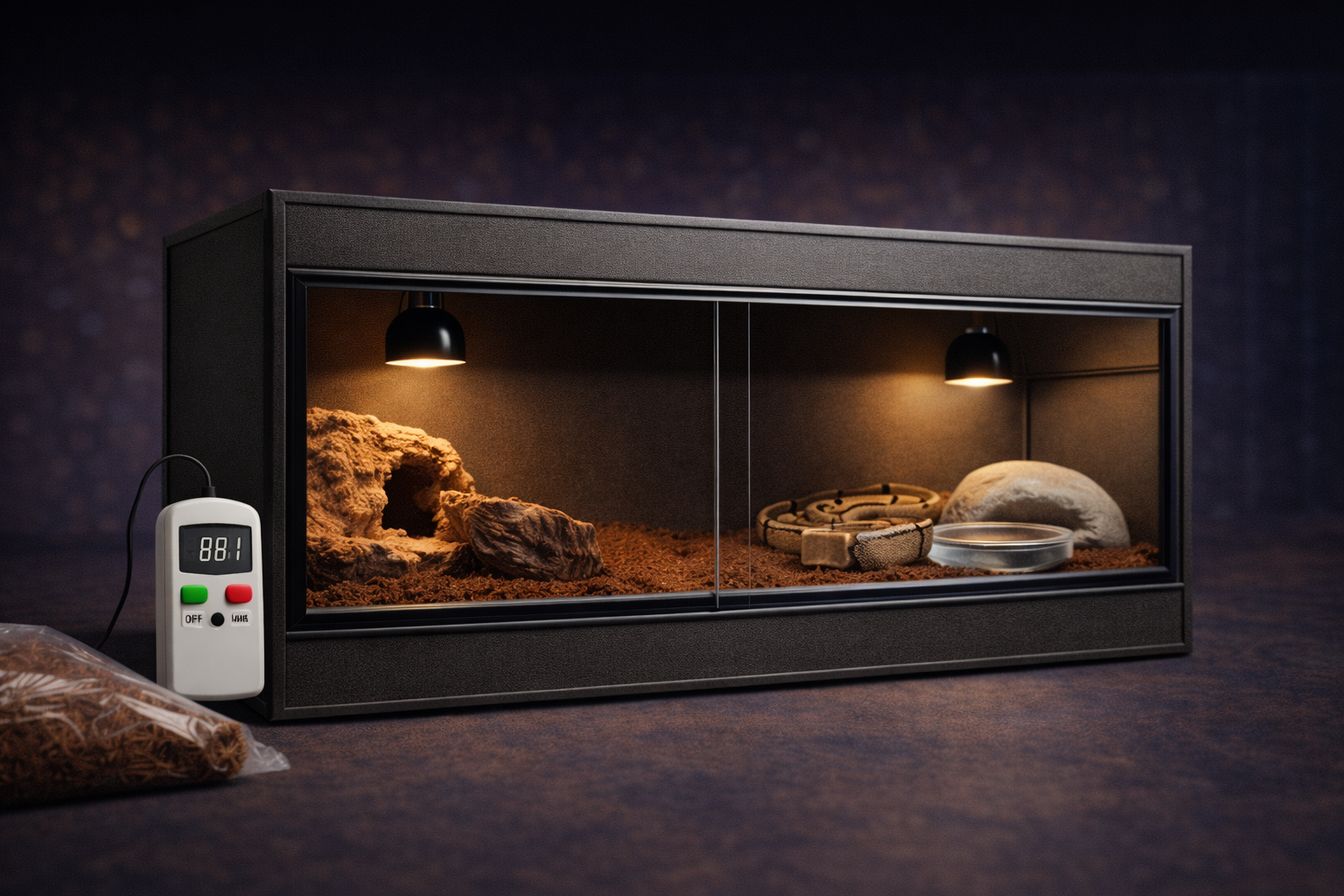
A beginner reptile setup should include a PVC or glass enclosure, heat source, thermostat, substrate, hides, and water dish. The easiest and most reliable option is a PVC enclosure setup, because it holds heat and humidity better and requires less maintenance.
If you’re just getting started with reptiles, the setup can feel overwhelming.
You’ll see lists of equipment, different enclosure types, heating options—and suddenly it feels complicated.
But here’s the truth:
👉 You don’t need anything fancy to start
👉 You just need the right essentials set up correctly
Once you understand the basics, it becomes simple.
Why Setup Matters for Beginners
Reptiles rely entirely on their environment.
Unlike pets like cats or dogs, they can’t regulate their own body temperature. So your enclosure becomes:
Their home
Their climate
Their survival system
A proper setup ensures:
Stable temperature
Correct humidity
Low stress
Healthy feeding and behavior
The 6 Essential Things Every Beginner Needs
No matter the reptile, every beginner setup includes these basics.
1. Enclosure (The Foundation)
This is the most important decision.
Best beginner options:
PVC enclosure (recommended)
Glass tank (budget option)
👉 PVC enclosures are popular because they retain heat better and provide a stable environment (Zen Habitats)
2. Heat Source
Reptiles need external heat to survive.
Common options:
Heat lamps
Ceramic heat emitters
Heat mats (for some species)
3. Thermostat (Critical)
This controls your heat source.
Without it:
Temperatures can spike dangerously
Your reptile can get burned
👉 Always use a thermostat—this is non-negotiable.
4. Substrate (Flooring)
This lines the bottom of the enclosure.
Examples:
Coconut fiber (humidity-friendly)
Aspen bedding (dry setups)
Paper towels (for beginners/quarantine)
5. Hides (Security)
Reptiles need places to feel safe.
You should have:
One hide on the warm side
One hide on the cool side
6. Water Dish
Simple but essential.
Provides hydration
Helps with humidity (in some setups)
Common Beginner Mistakes
Most beginners don’t get everything wrong—they just miss a few key details.
Choosing the Wrong Enclosure Type
Glass tanks are common, but they:
Lose heat quickly
Lose humidity fast
Skipping the Thermostat
This is one of the biggest mistakes—and can be dangerous.
Not Creating Temperature Zones
Your enclosure should always have:
Warm side
Cool side
This allows your reptile to regulate itself.
Overcomplicating the Setup
You don’t need:
Fancy decorations
Complex systems
Start simple. Upgrade later.
The Easiest Setup for Beginners
If you want the least stress and easiest maintenance, this is the best route:
👉 PVC enclosure + basic heating + simple substrate
Why this works:
Holds heat and humidity better
Requires less daily adjustment
Easier to clean
More forgiving for beginners
Many starter kits today even include:
Enclosure
Lighting
Thermostat
Substrate
👉 These bundles are designed to provide a complete, beginner-friendly setup with compatible components (REPTICUBE)
What a Simple Beginner Setup Looks Like
Imagine opening your enclosure and seeing:
A warm side with a hide
A cool side with another hide
Stable temperature throughout
Clean, simple layout
No constant adjusting. No confusion.
Just a system that works.
Beginner Setup by Reptile Type (Quick Guide)
Snakes (Ball Python, Corn Snake)
4x2x2 enclosure (adult size)
Heat mat or overhead heat
Medium humidity
Lizards (Bearded Dragon)
Strong heat + UVB lighting
Dry substrate
Basking area
Geckos (Leopard Gecko)
Smaller enclosure
Heat mat
Low humidity
Why PVC Makes Life Easier for Beginners
Most experienced keepers recommend PVC because it removes common beginner problems.
PVC enclosures:
Maintain heat better
Keep humidity stable
Reduce daily adjustments
Last longer than glass
👉 Larger PVC setups also allow better temperature gradients and usable space (Zen Habitats)
Frequently Asked Questions
What is the best reptile for beginners?
Ball pythons, corn snakes, and leopard geckos are great beginner choices.
Do I need a thermostat?
Yes. It’s essential for safe temperature control.
Is PVC better than glass?
Yes—especially for heat and humidity stability.
Can I buy a complete starter kit?
Yes. Many kits include everything needed for a basic setup.
How much does a beginner setup cost?
Typically $150–$400 depending on enclosure type and size.
Should I start with a big enclosure?
Yes, especially if your reptile will grow quickly.
Conclusion
Setting up your first reptile enclosure doesn’t have to be complicated.
Focus on the essentials:
Proper enclosure
Controlled heat
Simple, functional layout
If you get those right, everything else becomes much easier.
For most beginners, choosing a setup that maintains stability—like a PVC enclosure—makes the biggest difference.
It reduces mistakes, saves time, and helps your reptile thrive from day one.
