
What Is the Difference Between Cheap and High-Quality Barn Doors?
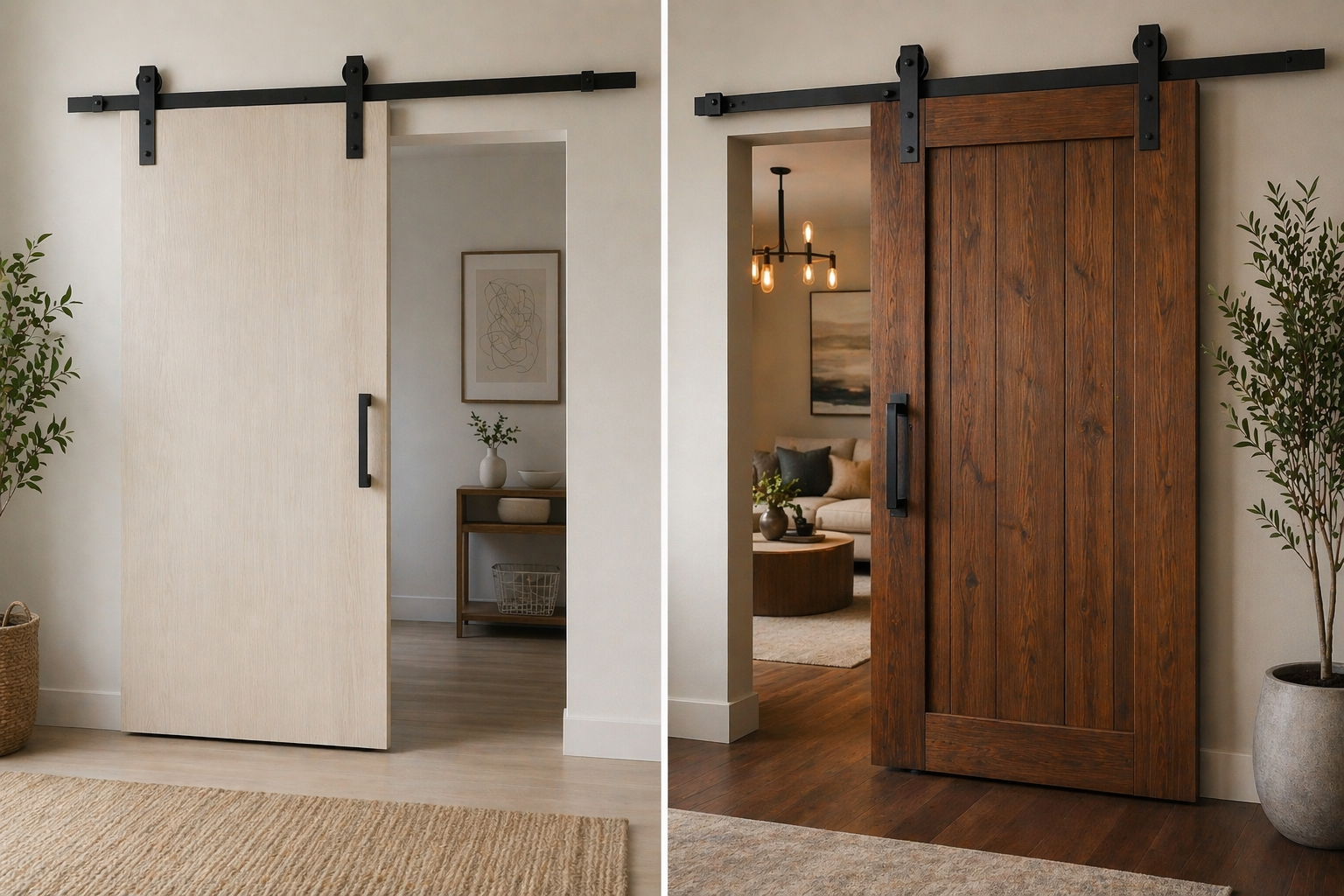
What Is the Difference Between Cheap and High-Quality Barn Doors?
The main difference between cheap and high-quality barn doors comes down to materials, construction, hardware quality, and long-term durability. High-quality doors use solid wood and heavy-duty hardware, while cheaper options often use hollow cores, thinner materials, and lower-grade components.
If you’ve been shopping for a barn door, you’ve probably noticed something confusing:
👉 One door costs $150
👉 Another costs $900+
And they look similar.
So what’s the actual difference?
The truth is—what you’re paying for isn’t just the look.
It’s how the door feels, functions, and lasts over time.
The Core Difference (What Really Separates Them)
At a high level:
Cheap barn doors = lower upfront cost, lower durability
High-quality barn doors = higher upfront cost, long-term value
But let’s break it down properly.
1. Material Quality (Biggest Difference)
Cheap Barn Doors
Hollow-core or MDF construction
Thin wood veneer
Lightweight
High-Quality Barn Doors
Solid wood (pine, oak, alder, walnut)
Thicker panels
Heavier and more durable
👉 High-quality barn doors are typically made from solid wood and premium materials built to last (Rustica)
Why It Matters
Solid wood = stronger + longer lifespan
Cheap materials = easier to damage, wear, or warp
2. Construction & Craftsmanship
Cheap Doors
Basic assembly
Staples or glue joints
Less precision
High-Quality Doors
Precision-cut panels
Strong joinery
Better finishing
👉 Premium doors often use precision craftsmanship and engineered construction for durability and smooth operation (Urban Woodcraft)
3. Hardware Quality (Huge Impact on Daily Use)
Cheap Hardware
Thin tracks
Noisy rollers
Rough sliding
High-Quality Hardware
Heavy-duty steel track
Smooth-glide rollers
Quiet operation
👉 Quality kits include durable rollers and track systems designed for long-term performance (Homacer)
Why This Matters
You use the hardware every day.
Bad hardware = frustrating experience
Good hardware = smooth, effortless movement
4. Weight & Feel
Cheap Doors
Lightweight
Can feel “flimsy”
High-Quality Doors
Heavier
Solid, sturdy feel
Example of a solid door:
👉 Solid wood doors are noticeably heavier and more stable, which improves performance and longevity (Wayfair)
5. Longevity (Short-Term vs Long-Term)
Cheap Doors
May last a few years
More wear and tear
May need replacement
High-Quality Doors
Built to last 10–20+ years
Better resistance to damage
Holds appearance over time
6. Appearance Over Time
Cheap Doors
Finish may fade or chip
Veneer can peel
High-Quality Doors
Natural wood ages well
Can be refinished
Maintains premium look
📊 Direct Comparison
FeatureCheap Barn DoorHigh-Quality Barn DoorMaterialHollow/MDFSolid woodDurabilityLow–MediumHighHardwareBasicHeavy-duty steelSlidingCan be roughSmooth & quietLifespanShort-termLong-termFeelLightweightSolid & sturdy
The Most Practical Choice
Here’s the real-world truth:
👉 Cheap doors are fine for:
Temporary setups
Low-traffic areas
Tight budgets
👉 High-quality doors are better for:
Daily use
Main living spaces
Long-term value
Product Integration (Soft Recommendation)
Many homeowners choose solid wood barn door kits with included hardware because they offer:
Better durability
Smoother operation
Fewer issues over time
If you’re comparing options, browsing a collection of solid wood barn doors can help you find a balance between quality and price.
You can also explore a related guide on are real wood barn doors better than hollow ones to go deeper into material differences.
Real-Life Experience Difference
Cheap Door Experience
Looks good initially
Feels lighter
May need adjustments
High-Quality Door Experience
Feels solid immediately
Slides smoothly every time
Holds up for years
Frequently Asked Questions
Are expensive barn doors worth it?
Yes—if you want durability, smoother operation, and long-term value.
Can cheap barn doors still work?
Yes, but they may not last as long or feel as sturdy.
What is the biggest upgrade factor?
Material (solid wood) and hardware quality.
Do all barn doors use the same hardware?
No. Higher-quality doors use stronger, smoother systems.
How long should a barn door last?
High-quality doors can last 10–20+ years.
Is solid wood always better?
In most cases, yes—especially for durability and appearance.
Conclusion
The difference between cheap and high-quality barn doors comes down to more than just price.
It’s about how the door performs every day—and how long it lasts.
Cheap options can work in the short term, but high-quality barn doors offer better materials, smoother operation, and long-term reliability.
If you want something that feels solid, looks premium, and lasts for years, investing in quality is usually the smarter choice.
