
What to Look for Before Buying a PVC Reptile Enclosure
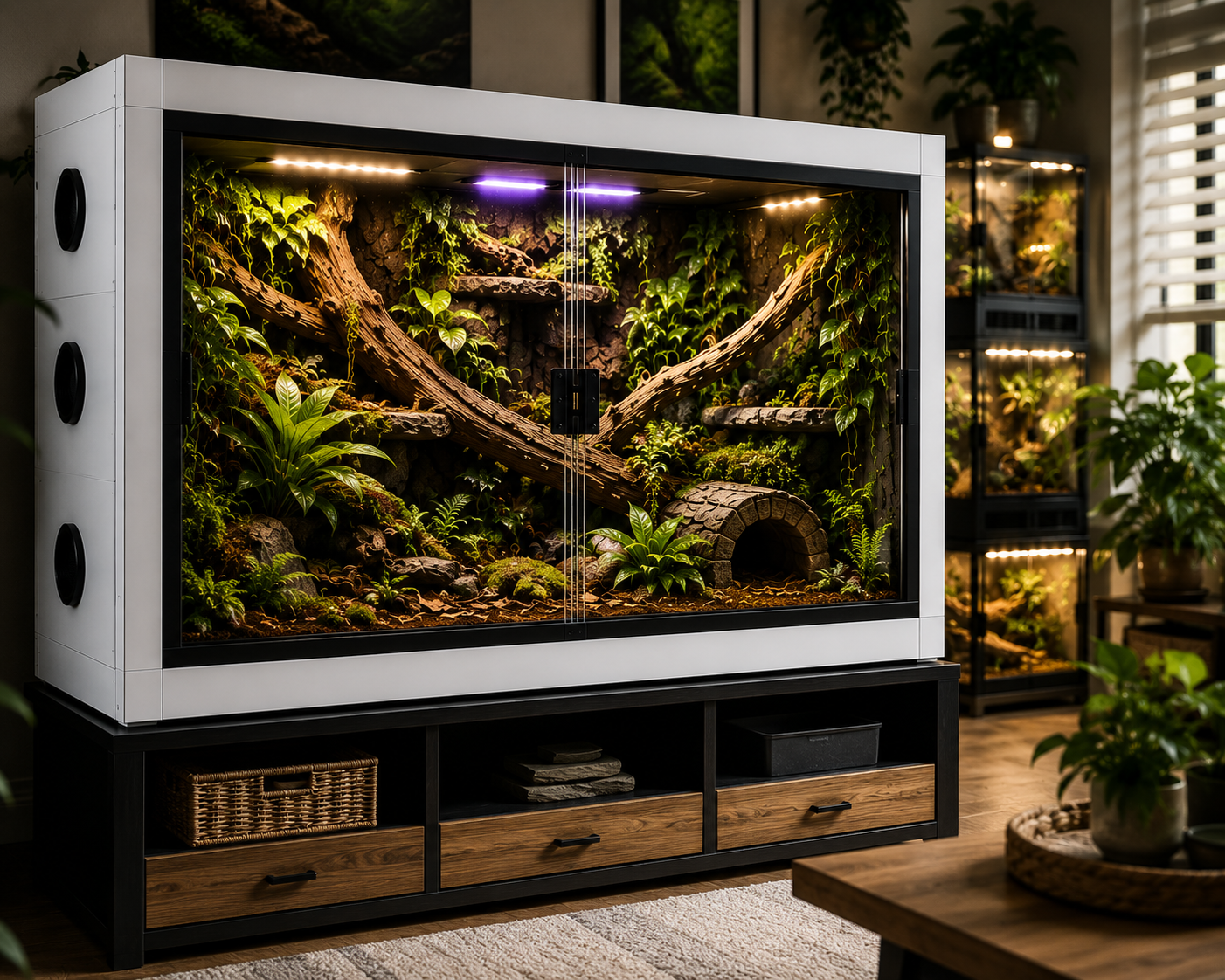
What to Look for Before Buying a PVC Reptile Enclosure
Before buying a PVC reptile enclosure, focus on the factors that directly affect your reptile's health and your long-term experience as a keeper. The most important considerations include enclosure size, build quality, ventilation, door design, heating compatibility, humidity retention, and ease of maintenance.
Choosing the right enclosure from the beginning can save money, reduce future upgrades, and provide a better habitat for your reptile.
1. Choose the Right Size
The first thing to consider is whether the enclosure will meet your reptile's adult needs.
Many keepers make the mistake of purchasing based on the reptile's current size rather than its future size.
Examples include:
Ball Python
Bearded Dragon
Blue-Tongued Skink
These species are commonly housed in 4x2x2 PVC enclosures as adults.
2. Check the Quality of the PVC
Not all PVC enclosures are built the same.
Look for:
Thick PVC panels
Strong structural support
Quality hardware
Durable construction
Higher-quality PVC generally provides better insulation and longevity.
3. Consider Front-Opening Doors
Front-opening enclosures are often preferred because they offer:
Easier maintenance
Better access
Less stressful interaction for reptiles
Improved enclosure usability
Most premium PVC enclosures use front-opening designs.
4. Evaluate Door Materials
Glass Doors
Benefits include:
Excellent visibility
Scratch resistance
Premium appearance
Acrylic Doors
Benefits include:
Lightweight construction
Impact resistance
Lower cost
Choose the material that best matches your priorities.
5. Examine Ventilation Design
Ventilation affects:
Airflow
Humidity
Temperature stability
Look for a design that matches your species' environmental needs.
Species such as:
Crested Gecko
Ball Python
often require a balance between humidity retention and airflow.
6. Verify Heating Compatibility
Your enclosure should accommodate the heating equipment required by your reptile.
Common options include:
Radiant heat panels
Heat lamps
Ceramic heat emitters
Other species-appropriate heating systems
Make sure the enclosure design supports safe installation.
7. Think About Humidity Requirements
PVC is known for excellent humidity retention, but enclosure design still matters.
If you keep tropical species such as:
Boa Constrictor
Crested Gecko
consider ventilation placement and moisture management features.
8. Decide Between Standard and Custom Sizes
Standard Enclosures
Best for:
Faster delivery
Lower cost
Popular reptile species
Custom Enclosures
Best for:
Unusual dimensions
Specialized habitats
Display installations
Bioactive projects
9. Consider Future Upgrades
Ask yourself:
Will you add UVB lighting?
Will you install built-in LEDs?
Do you want a bioactive setup?
Will you need additional climbing structures?
Planning ahead can prevent costly modifications later.
10. Check Cleaning and Maintenance Features
A good enclosure should be easy to maintain.
Look for:
Smooth surfaces
Accessible corners
Easy-to-clean door tracks
Durable finishes
PVC is already one of the easiest enclosure materials to clean.
11. Review Security Features
Security is critical for preventing escapes.
Look for:
Secure door tracks
Reliable locks
Tight panel fitment
Quality hardware
This is especially important for strong or curious reptiles.
12. Consider Flat-Pack vs Fully Assembled
Flat-Pack Enclosures
Benefits:
Lower shipping costs
Easier transportation
More affordable delivery
Fully Assembled Enclosures
Benefits:
Ready to use
No assembly required
Maximum convenience
Choose the option that fits your budget and space.
13. Bioactive Compatibility
If you plan to create a naturalistic habitat, look for features such as:
Drainage support
Lighting compatibility
Moisture resistance
Plant-friendly design
PVC performs exceptionally well in bioactive environments.
Common Buying Mistakes
Buying Based on Price Alone
The cheapest enclosure is not always the best value.
Choosing an Enclosure That Is Too Small
Always plan for adult size.
Ignoring Ventilation
Humidity and airflow must work together.
Forgetting Future Needs
Many keepers upgrade sooner than expected because they didn't plan ahead.
Buyer Checklist
Before purchasing, make sure your enclosure offers:
Appropriate size
Quality PVC construction
Secure front-opening doors
Proper ventilation
Heating compatibility
Easy cleaning features
Reliable locks
Adequate space for enrichment
Long-term durability
Visual Example
A well-designed PVC enclosure can provide years of reliable service while creating a safe and comfortable home for your reptile.
Frequently Asked Questions
What is the most important thing to consider when buying a PVC enclosure?
Size is usually the most important factor, followed by build quality and environmental control.
Are front-opening enclosures better?
Many keepers prefer them because they provide easier access and less stressful interaction.
Is thicker PVC better?
Generally, yes. Thicker panels often improve durability and insulation.
Should I choose a custom enclosure?
Custom enclosures are ideal when standard sizes do not meet your needs.
Are PVC enclosures worth the investment?
Many reptile keepers consider them worthwhile because of their durability, humidity retention, and long lifespan.
Conclusion
Buying a PVC reptile enclosure is a long-term investment, so it's worth taking the time to evaluate size, construction quality, ventilation, door design, heating compatibility, and future upgrade potential.
A well-chosen enclosure can provide a secure, comfortable, and easy-to-maintain habitat for many years. By focusing on your reptile's needs rather than price alone, you'll be more likely to select an enclosure that supports both excellent husbandry and long-term value.
