
Best Enclosure Size for Tegus, Monitors, Boas, and Large Reptiles
Best Enclosure Size for Tegus, Monitors, Boas, and Large Reptiles
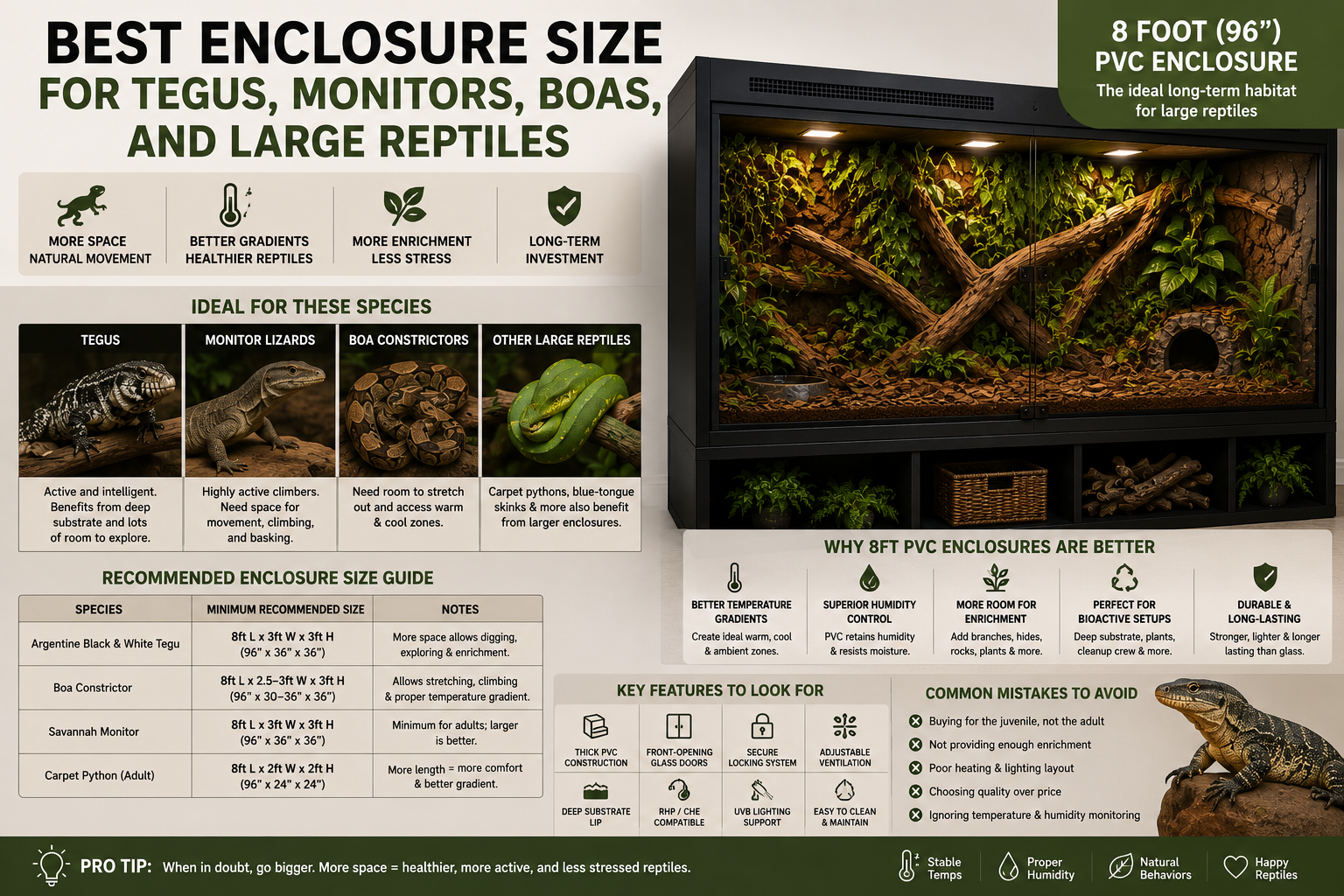
Large reptiles need enclosures that provide enough room to move, thermoregulate, explore, and display natural behaviors. While exact requirements vary by species and individual size, many experienced keepers consider an 8-foot (96-inch) PVC enclosure an excellent long-term option for large reptiles such as tegus, boa constrictors, and several monitor lizard species. Always base enclosure size on your reptile's adult size, activity level, and husbandry requirements.
Why Enclosure Size Is So Important
A large reptile spends its entire life inside its enclosure, so space affects far more than appearance.
An appropriately sized enclosure helps provide:
Freedom of movement
Natural exercise
Better temperature gradients
Multiple hiding areas
Environmental enrichment
Reduced stress
Planning for an animal's adult size helps avoid costly upgrades later.
General Size Guidelines
There is no single enclosure size that fits every species, but larger and more active reptiles generally benefit from larger habitats.
When selecting an enclosure, consider:
Adult body length
Activity level
Climbing or burrowing behavior
Environmental requirements
Available floor space
Whenever possible, choose the largest enclosure you can reasonably provide.
Tegus
Popular species such as the:
Argentine Black and White Tegu
are active, intelligent lizards that benefit from spacious enclosures.
An 8-foot enclosure offers room for:
Digging
Exploring
Multiple hides
Large basking areas
Enrichment items
Deep substrate is especially valuable for tegus that enjoy burrowing.
Monitor Lizards
Many monitor species require substantial space because of their activity level.
Examples include:
Savannah Monitor
Large PVC enclosures provide room for:
Climbing structures
Heavy-duty basking platforms
Natural décor
Environmental enrichment
Very large monitor species may require enclosures larger than 8 feet, depending on their adult size and husbandry needs.
Boa Constrictors
Boa Constrictor
need enough space to stretch out comfortably while accessing warm and cool areas within the enclosure.
An 8-foot PVC enclosure provides:
Strong humidity retention
Excellent insulation
Multiple hiding places
Space for climbing branches and enrichment
It also allows for better environmental stability than many smaller enclosures.
Other Large Reptiles
Depending on the species, large enclosures may also suit:
Carpet Python
Blue-Tongued Skink (for keepers wanting generous space)
Other large snakes and lizards with similar husbandry needs
Always research the specific requirements of your reptile before making a final decision.
Why Many Keepers Choose an 8-Foot PVC Enclosure
A 96-inch PVC enclosure offers several advantages.
Better Temperature Gradient
The additional length makes it easier to establish:
Warm basking zones
Ambient areas
Cool retreats
This allows reptiles to thermoregulate naturally.
Improved Humidity Control
PVC construction helps retain humidity while resisting moisture damage, making it suitable for species that require stable environmental conditions.
More Enrichment Opportunities
Additional space allows for:
Larger branches
Rock formations
Live or artificial plants
Multiple hides
Feeding stations
A more complex habitat encourages natural behaviors.
Bioactive Compatibility
Large PVC enclosures work well with bioactive setups because they provide enough room for:
Deep substrate
Drainage layers
Live plants
Cleanup crews
Natural landscaping
Features to Look For
When purchasing a large reptile enclosure, consider:
Thick PVC construction
Front-opening glass doors
Secure locking system
Adjustable ventilation
Deep substrate lip
Radiant heat panel compatibility
UVB lighting support
These features make long-term care easier and more efficient.
Common Mistakes to Avoid
Buying for the Juvenile Instead of the Adult
Many reptiles grow much larger than new keepers expect.
Plan for adult size whenever practical.
Prioritizing Price Over Space
A larger, well-built enclosure often provides better long-term value than upgrading multiple times.
Forgetting Enrichment
Large reptiles need more than empty floor space.
Include climbing structures, hides, basking platforms, and other habitat features.
Poor Heating Layout
Plan heating and lighting before installing décor to create effective environmental gradients.
Frequently Asked Questions
Is an 8-foot enclosure large enough for a tegu?
For many adult tegus, an 8-foot enclosure is considered a solid long-term option, though individual needs and husbandry goals should always be considered.
Can a boa constrictor live in an 8-foot enclosure?
Many keepers use enclosures of this size for adult boa constrictors because they provide room for stretching, climbing, and environmental gradients.
Do monitor lizards need larger enclosures?
Some monitor species can require habitats larger than 8 feet, especially as adults. Research the needs of your specific species before purchasing.
Why is PVC preferred over glass?
PVC generally provides better insulation, improved humidity retention, lighter weight, and greater durability than glass, making it well suited for large custom enclosures.
Conclusion
Choosing the right enclosure size is one of the most important decisions you'll make for a large reptile. Spacious habitats support natural behaviors, make it easier to maintain proper temperature and humidity, and provide room for meaningful environmental enrichment.
For many keepers, a 96-inch PVC enclosure offers an excellent balance of space, durability, and environmental control for tegus, boa constrictors, and many monitor lizards. By planning for your reptile's adult size and selecting a high-quality enclosure, you'll create a habitat that supports its health and well-being for years to come.
