
How to Set Up an 8ft Bioactive Reptile Enclosure
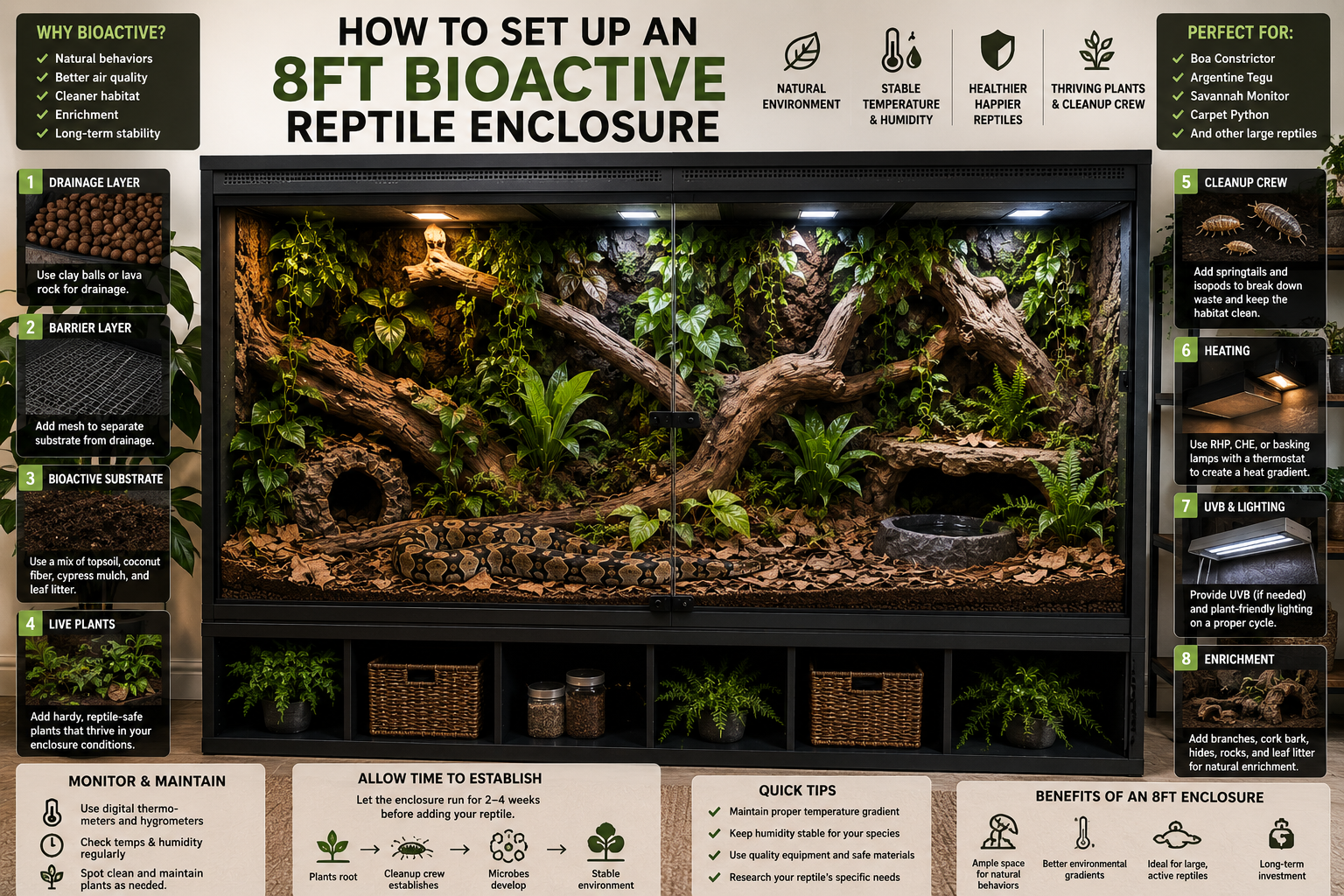
How to Set Up an 8ft Bioactive Reptile Enclosure
An 8ft bioactive reptile enclosure combines natural substrate, live plants, beneficial cleanup crews, proper lighting, and stable heating to create a self-sustaining habitat. A large PVC enclosure is an excellent choice because it retains heat and humidity, resists moisture damage, and provides ample space for natural behaviors, making it ideal for larger reptiles and complex bioactive setups.
Why Choose an 8ft Bioactive Enclosure?
An 8-foot enclosure provides enough space to create multiple environmental zones that closely resemble a reptile's natural habitat.
Benefits include:
More room for exploration
Natural basking and cooling areas
Deep substrate for burrowing
Larger live plants
Better temperature gradients
More realistic habitat design
For many large reptiles, the extra space improves both enrichment and long-term welfare.
Why PVC Is the Best Choice
PVC has become the preferred material for large bioactive habitats because it offers:
Excellent insulation
Superior humidity retention
Waterproof construction
Easy cleaning
Long-lasting durability
Unlike wood, PVC won't rot when exposed to moisture, making it ideal for planted enclosures.
Step 1: Install a Drainage Layer
A drainage layer helps prevent water from collecting in the substrate.
Common materials include:
Expanded clay balls
Lava rock
Plastic drainage panels
This layer allows excess water to drain away from plant roots and helps reduce the risk of waterlogged soil.
Step 2: Add a Barrier Layer
Place a mesh barrier over the drainage layer.
This prevents substrate from mixing into the drainage material while still allowing water to pass through.
Step 3: Add Bioactive Substrate
A quality bioactive substrate should:
Hold moisture
Support plant roots
Encourage beneficial microorganisms
Allow natural digging behavior
Many keepers use a blend of:
Organic topsoil
Coconut fiber
Cypress mulch
Sand (where appropriate for the species)
Leaf litter
The ideal mix depends on your reptile's natural habitat.
Step 4: Add Live Plants
Choose hardy plants that match your reptile's environmental needs.
Popular choices include:
Pothos
Snake plants
Spider plants
Philodendrons
Bromeliads (for tropical setups)
Live plants help improve humidity, provide cover, and create a more natural-looking enclosure.
Step 5: Introduce the Cleanup Crew
Bioactive habitats rely on beneficial invertebrates to break down organic waste.
Common cleanup crew members include:
Springtails
Isopods
They consume decaying organic matter and help maintain a healthier substrate ecosystem.
Step 6: Install Heating
Create a proper thermal gradient by placing the primary heat source at one end of the enclosure.
Popular heating options include:
Radiant heat panels
Ceramic heat emitters
Basking lamps (when appropriate)
Always control heating equipment with a quality thermostat.
Step 7: Add UVB and Lighting
Many reptiles benefit from UVB lighting, while live plants require appropriate light for healthy growth.
A typical lighting setup may include:
UVB fixture (if required by the species)
LED grow lighting for plants
Daylight cycle timer
Position fixtures to provide even coverage while maintaining natural basking areas.
Step 8: Create Natural Enrichment
A bioactive enclosure should encourage natural behaviors.
Include:
Cork bark hides
Large branches
Climbing structures
Rocks
Leaf litter
Elevated basking platforms
These features increase usable space and reduce boredom.
Step 9: Monitor Temperature and Humidity
Use reliable equipment to monitor environmental conditions.
Recommended tools include:
Digital thermometers
Hygrometers
Thermostat-controlled heating
Check readings regularly and make gradual adjustments as needed to suit your reptile's requirements.
Step 10: Let the Enclosure Establish
Before introducing your reptile, allow the bioactive system time to stabilize.
This gives:
Plants time to root
Cleanup crews time to establish
Microbial activity time to develop
Environmental conditions time to become consistent
A mature bioactive setup is generally more stable and easier to maintain.
Best Reptiles for an 8ft Bioactive Enclosure
An 8-foot enclosure is well suited for larger species such as:
Boa Constrictor
Argentine Black and White Tegu
Savannah Monitor
Carpet Python
Always research the specific care requirements of your chosen species before designing the habitat.
Common Mistakes to Avoid
Using Shallow Substrate
Deep substrate supports plant roots, beneficial organisms, and natural digging behaviors.
Overwatering
Too much water can overwhelm the drainage layer and harm plants or cleanup crews.
Adding Animals Too Soon
Give the enclosure time to establish before introducing your reptile.
Choosing Delicate Plants
Select hardy, reptile-safe species that can tolerate the activity level of your animal.
Ignoring Environmental Monitoring
Regularly check temperature and humidity to keep conditions stable and appropriate for your species.
Frequently Asked Questions
Why is PVC better for bioactive enclosures?
PVC is moisture-resistant, retains heat and humidity efficiently, and is easy to clean, making it an excellent material for long-term bioactive habitats.
How deep should the substrate be?
The ideal depth depends on the species and whether it naturally burrows, but it should be deep enough to support plant roots and the bioactive ecosystem.
Do bioactive enclosures smell?
When properly maintained, a healthy bioactive enclosure should have a natural, earthy smell rather than an unpleasant odor.
Is an 8ft enclosure too large?
For many large snakes and lizards, an 8-foot enclosure provides the space needed for natural movement, enrichment, and proper environmental gradients.
Conclusion
An 8ft bioactive reptile enclosure provides the space needed to create a thriving, natural ecosystem that benefits both your reptile and the environment inside the enclosure. By combining deep substrate, live plants, beneficial cleanup crews, stable heating, and proper lighting, you can build a habitat that encourages natural behaviors while reducing routine maintenance.
Starting with a high-quality PVC enclosure gives you the durability, humidity control, and flexibility needed to enjoy a successful bioactive setup for years to come.
