
Best Lighting Setup for PVC Reptile Enclosures
Best Lighting Setup for PVC Reptile Enclosures
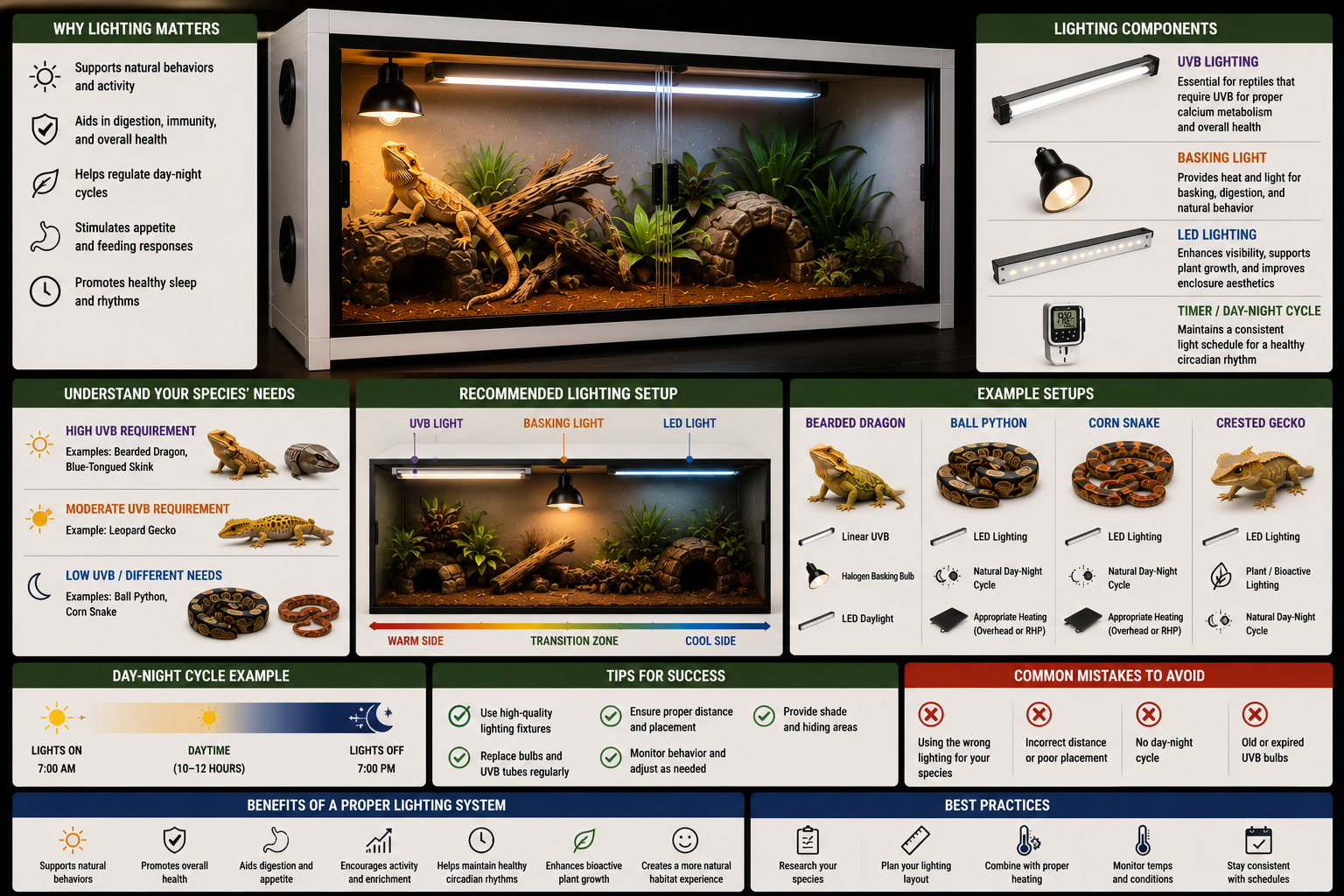
The best lighting setup for a PVC reptile enclosure depends on the species you're keeping, but most setups include a combination of:
Appropriate UVB lighting (for species that require it)
A basking or heat source
Daylight LED lighting
A consistent day-night schedule
PVC enclosures are ideal for lighting systems because they are easy to customize and help maintain stable environmental conditions.
Why Lighting Matters
Proper lighting does more than make an enclosure look attractive.
It helps support:
Natural behaviors
Activity cycles
Feeding responses
Basking habits
Overall health
For many reptiles, lighting is just as important as heating.
Step 1: Understand Your Species' Needs
Different reptiles require different lighting setups.
High UVB Requirement Species
Examples include:
Bearded Dragon
Blue-Tongued Skink
These reptiles typically need strong UVB exposure alongside basking heat.
Moderate UVB Requirement Species
Examples include:
Leopard Gecko
Lighting requirements vary depending on husbandry style and enclosure design.
Low UVB or Different Lighting Needs
Examples include:
Ball Python
Corn Snake
These species generally benefit from a natural day-night cycle even if their UVB requirements differ.
Step 2: Choose the Right UVB Lighting
For reptiles that require UVB, linear UVB fixtures are often preferred over compact bulbs.
Benefits of Linear UVB Fixtures
Wider coverage
More even light distribution
Better habitat illumination
Proper UVB exposure helps reptiles utilize dietary calcium and maintain healthy biological functions.
Step 3: Add a Basking Light
Many reptiles benefit from a dedicated basking area.
Common choices include:
Halogen Basking Bulbs
Benefits:
Natural heat production
Strong basking temperatures
Encourages natural basking behavior
Frequently used for:
Bearded Dragon
Blue-Tongued Skink
Step 4: Consider LED Lighting
LED lighting is often added to improve visibility and enhance enclosure aesthetics.
Benefits include:
Bright daytime illumination
Energy efficiency
Support for live plants in bioactive setups
LEDs are commonly used in naturalistic and display-oriented enclosures.
Step 5: Establish a Day-Night Cycle
Reptiles benefit from predictable lighting schedules.
A typical setup includes:
Lights on during the day
Lights off at night
Timers can help automate the process and maintain consistency.
Why PVC Enclosures Work Well With Lighting Systems
PVC enclosures offer several advantages:
Easy Fixture Installation
Many PVC habitats support:
Internal lighting mounts
UVB fixtures
LED systems
Heat lamps
Better Environmental Stability
PVC helps retain heat, making lighting and heating systems more efficient.
Cleaner Appearance
Lighting can often be integrated neatly into the enclosure design.
Example Lighting Setups by Species
Bearded Dragon Setup
Bearded Dragon
Typically includes:
Linear UVB fixture
Halogen basking bulb
Daylight LED lighting
Ball Python Setup
Ball Python
Typically includes:
Daylight LED lighting
Natural day-night cycle
Appropriate heating source
Corn Snake Setup
Corn Snake
Commonly includes:
LED lighting
Day-night schedule
Species-appropriate heating
Crested Gecko Setup
Crested Gecko
Often includes:
LED lighting
Bioactive plant lighting
Controlled photoperiod
Common Lighting Mistakes
Using Lighting Without Researching Species Needs
Not all reptiles require the same lighting intensity or UVB exposure.
Poor Fixture Placement
Lighting should cover the areas where the reptile naturally spends time.
Ignoring the Day-Night Cycle
Constant light exposure can disrupt normal behavior.
Choosing Weak UVB Coverage
Large enclosures often benefit from full-length UVB fixtures.
Lighting Components at a Glance
Lighting TypePrimary PurposeUVB FixtureSpecies-specific UVB exposureHalogen BulbBasking heat and lightLED LightingDaytime illuminationTimerConsistent day-night schedule
Together, these components help create a more natural environment.
Visual Example
A well-designed lighting system supports natural behaviors, proper basking opportunities, and a healthy daily routine.
Frequently Asked Questions
Do all reptiles need UVB lighting?
No. UVB requirements vary by species, so research your reptile's specific needs.
Can lighting be mounted inside a PVC enclosure?
Yes. Many PVC enclosures are designed to support internal lighting systems.
Are LEDs enough for reptiles?
LEDs provide visible light but do not replace species-specific UVB or heating requirements.
How long should enclosure lights stay on?
Most reptiles benefit from a consistent daily light cycle that mimics natural daylight hours.
Do PVC enclosures work well with bioactive lighting setups?
Yes. PVC habitats are commonly used for naturalistic and bioactive enclosures.
Conclusion
The best lighting setup for a PVC reptile enclosure combines the right mix of UVB lighting, basking illumination, LED daylight lighting, and a consistent day-night cycle based on your reptile's specific needs.
Because PVC enclosures are highly customizable and retain environmental conditions well, they provide an excellent platform for creating professional-quality lighting systems that support healthy reptile behavior and long-term well-being.
