
Can You Use Under-Tank Heating With a PVC Reptile Enclosure?
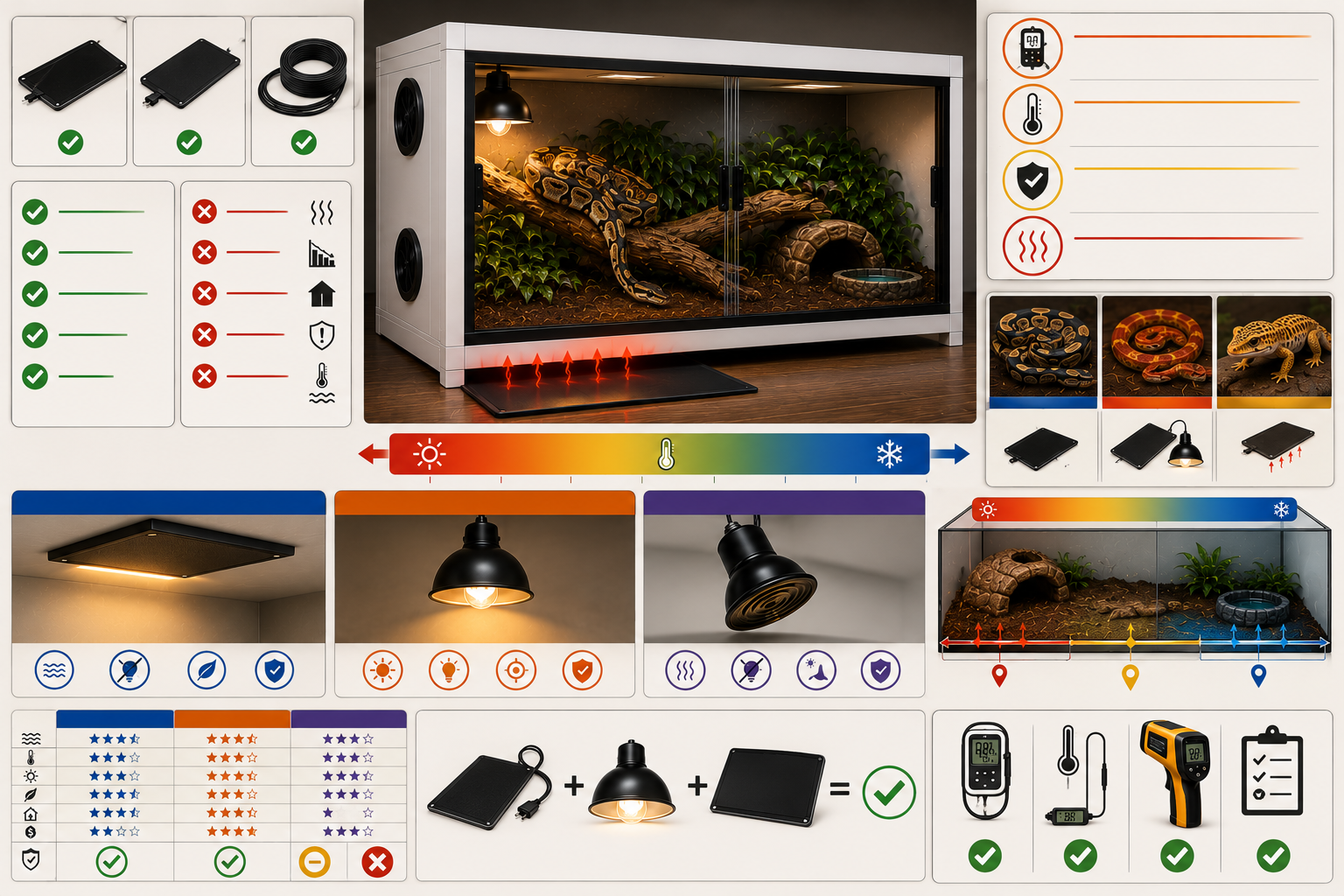
Can You Use Under-Tank Heating With a PVC Reptile Enclosure?
Yes, you can use under-tank heating (UTH) with some PVC reptile enclosures, but it is generally not the preferred primary heat source for most modern PVC setups. Many reptile keepers now favor overhead heating methods such as radiant heat panels, halogen heat lamps, or deep heat projectors because they create more natural temperature gradients and warm the enclosure more effectively.
If you choose to use under-tank heating, it must always be connected to a thermostat and installed according to the enclosure manufacturer's recommendations.
What Is Under-Tank Heating?
Under-tank heating typically refers to:
Heat mats
Heat pads
Heat tape systems
These heating devices produce warmth from below the enclosure floor.
They are designed to create a localized warm area that reptiles can access when needed.
Can PVC Enclosures Use Heat Mats?
The answer depends on the enclosure design.
Some PVC enclosures are built specifically to accommodate:
Heat mats
Heat tape
External belly heat systems
Others are not designed for direct under-enclosure heating.
Before installation, always verify the manufacturer's guidelines.
Why Many Keepers Prefer Overhead Heating Today
Modern reptile husbandry has shifted toward overhead heating because it more closely mimics how reptiles experience heat in nature.
Heat from above:
Warms the air
Heats surfaces
Creates natural basking opportunities
Encourages normal behavior
This approach is commonly used for both reptiles and amphibians.
Advantages of Under-Tank Heating
Simple Installation
Heat mats are generally easy to install and use.
Affordable
They are often less expensive than larger heating systems.
Localized Warm Spot
Can create a specific heated area for reptiles that prefer belly warmth.
Supplemental Heating Option
Many keepers successfully use heat mats as part of a larger heating system.
Drawbacks of Under-Tank Heating in PVC Enclosures
Limited Ambient Heating
Heat mats primarily warm the surface directly above them.
They do not effectively heat:
Air temperatures
Large enclosures
Multiple temperature zones
Less Natural Heat Distribution
Most reptiles experience heat from above in the wild.
Heat from below does not always encourage natural thermoregulatory behavior.
Reduced Effectiveness in Larger Enclosures
In habitats such as:
4x2x2 PVC enclosures
6x2x2 PVC enclosures
heat mats alone often struggle to maintain proper enclosure temperatures.
Safety Concerns
Improper installation can lead to overheating.
A thermostat is essential.
Species Commonly Associated With Under-Tank Heating
Historically, keepers often used heat mats with species such as:
Ball Pythons
Ball Python
Many modern ball python keepers now prefer radiant heat panels or overhead heat sources.
Corn Snakes
Corn Snake
Can use under-tank heating, but overhead systems are increasingly common.
Leopard Geckos
Leopard Gecko
Historically associated with belly heat, though many keepers now utilize overhead heating systems as well.
Better Alternatives for PVC Enclosures
Radiant Heat Panels (RHP)
Popular for:
Ball Python
Boa Constrictor
Corn Snake
Benefits:
Even heat distribution
Excellent ambient warmth
No visible light
Halogen Heat Lamps
Popular for:
Bearded Dragon
Blue-Tongued Skink
Benefits:
Strong basking heat
Natural heating method
Deep Heat Projectors
Provide:
Infrared heat
No visible light
Day or night operation
Suitable for many species.
If You Use Under-Tank Heating, Follow These Rules
Always Use a Thermostat
Never run a heat mat without one.
Monitor Temperatures Regularly
Use:
Digital thermometers
Temperature probes
Infrared temperature guns
Follow Manufacturer Recommendations
Not all PVC enclosures are designed for under-floor heating.
Avoid Making It the Only Heat Source
For medium and large PVC habitats, supplemental overhead heating is often beneficial.
Heat Mats vs Overhead Heating
FeatureUnder-Tank HeatingOverhead HeatingSurface WarmthExcellentGoodAmbient HeatLimitedExcellentNatural Heating StyleLimitedExcellentLarge Enclosure PerformanceLimitedExcellentTemperature Gradient CreationModerateExcellentPopularity in Modern PVC SetupsModerateHigh
Visual Example
Many modern PVC enclosure setups rely on overhead heating systems that provide more natural and effective temperature gradients.
Frequently Asked Questions
Can I use a heat mat with a PVC enclosure?
Yes, if the enclosure design supports it and the manufacturer approves its use.
Are heat mats enough for a 4x2x2 PVC enclosure?
For many species, heat mats alone are not sufficient as the primary heat source.
Do heat mats need a thermostat?
Yes. A thermostat is essential for safety and temperature control.
What is the best heating option for PVC enclosures?
Many keepers prefer radiant heat panels, halogen bulbs, or deep heat projectors depending on the species.
Do snakes need belly heat?
Snakes need access to appropriate temperatures. Modern husbandry increasingly focuses on overall thermal gradients rather than relying solely on belly heat.
Conclusion
Under-tank heating can be used with some PVC reptile enclosures, but it is often best viewed as a supplemental heating option rather than the primary source of warmth.
Modern reptile care increasingly favors overhead heating methods because they provide more natural heat distribution, better ambient temperatures, and improved thermal gradients.
If you choose to use a heat mat, always pair it with a thermostat, monitor temperatures carefully, and ensure your enclosure is designed to support under-tank heating safely.
