
Best PVC Enclosure for High-Humidity Reptiles
Best PVC Enclosure for High-Humidity Reptiles
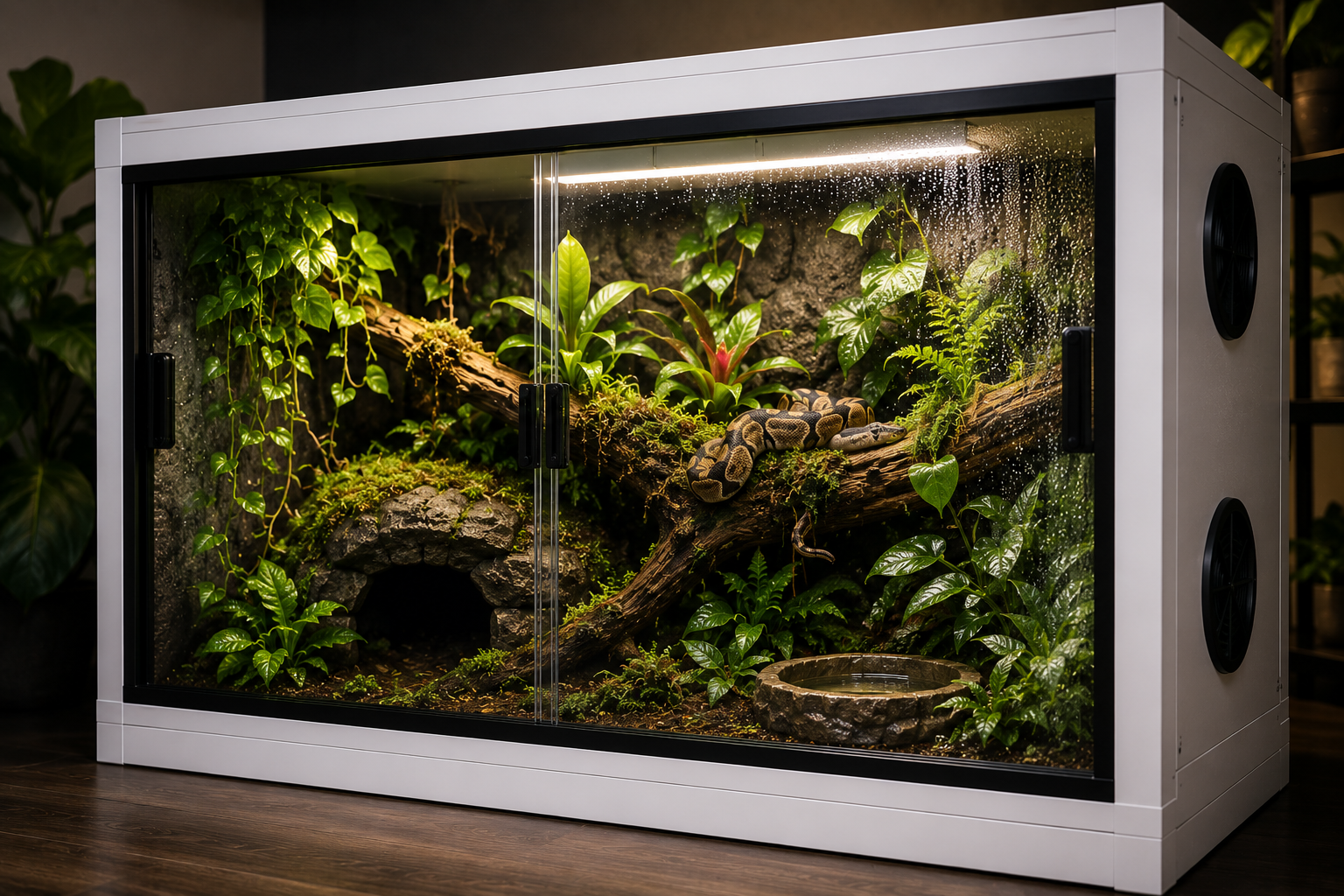
The best PVC enclosure for high-humidity reptiles is a well-insulated PVC habitat with front-opening doors, controlled ventilation, secure construction, and enough space to create stable environmental conditions. PVC is often preferred over glass because it retains both heat and moisture more effectively, making humidity management significantly easier.
Why High-Humidity Reptiles Need Specialized Enclosures
Many reptiles come from tropical and subtropical environments where humidity levels remain relatively stable year-round.
In captivity, maintaining proper humidity helps support:
Healthy shedding
Hydration
Respiratory health
Natural behavior
Overall well-being
An enclosure that loses moisture too quickly can make husbandry much more difficult.
Why PVC Is Ideal for Humidity Control
Better Insulation
PVC naturally holds heat better than glass.
This helps create a more stable environment and reduces the rapid humidity fluctuations often seen in traditional tanks.
Reduced Moisture Loss
Unlike many glass enclosures with large screen tops, PVC habitats typically feature:
Solid walls
Controlled ventilation
Reduced airflow
This helps retain moisture for longer periods.
Stable Environmental Conditions
Humidity and temperature work together.
PVC makes it easier to maintain both, creating a healthier habitat overall.
Features to Look For in a High-Humidity PVC Enclosure
Front-Opening Doors
Front-opening enclosures provide:
Easier maintenance
Better accessibility
Reduced disturbance during cleaning
Many premium PVC habitats use sliding glass or acrylic doors.
Controlled Ventilation
Proper airflow is important, but excessive ventilation can dry out the enclosure.
Look for designs with:
Adjustable vents
Strategically placed airflow
Balanced humidity retention
Deep Substrate Area
Many humidity-loving reptiles benefit from moisture-retaining substrates.
A deeper substrate layer can help maintain humidity more consistently.
Quality Construction
Well-built PVC enclosures typically offer:
Tight seams
Secure door tracks
Better environmental control
Poorly sealed enclosures may lose humidity more quickly.
Reptiles That Benefit From High-Humidity PVC Enclosures
Ball Pythons
Ball Python
One of the most popular reptiles housed in PVC enclosures due to their humidity requirements.
Boa Constrictors
Boa Constrictor
Benefit from stable environmental conditions and moderate humidity levels.
Crested Geckos
Crested Gecko
Require regular humidity cycles and thrive in well-designed PVC habitats.
Gargoyle Geckos
Gargoyle Gecko
Need environments that support consistent moisture levels without becoming stagnant.
Tree Boas and Tree Pythons
Examples include:
Emerald Tree Boa
Green Tree Python
These species often benefit from custom PVC setups with carefully managed humidity.
Recommended PVC Enclosure Sizes
4x2x2 PVC Enclosure
Great for:
Adult ball pythons
Many boas
Medium-sized reptiles
Vertical PVC Enclosures
Ideal for arboreal species such as:
Crested geckos
Gargoyle geckos
Tree pythons
Height becomes more important than floor space.
Custom PVC Enclosures
Best for:
Large tropical species
Breeding projects
Advanced bioactive habitats
Tips for Maintaining Humidity
Even the best enclosure needs proper husbandry.
Use Moisture-Retaining Substrates
Popular options include:
Coconut husk
Cypress mulch
Bioactive soil blends
Add Large Water Dishes
Water evaporation can naturally increase humidity.
Incorporate Live Plants
Bioactive setups often help stabilize moisture levels.
Monitor Humidity Carefully
Use:
Digital hygrometers
Thermometers
Reliable environmental controls
Accurate monitoring is essential.
PVC vs Glass for High-Humidity Reptiles
FeaturePVC EnclosureGlass TankHumidity RetentionExcellentModerateHeat RetentionExcellentModerateEnvironmental StabilityExcellentModerateMoisture LossLowHigherLong-Term EfficiencyExcellentModerate
For humidity-dependent reptiles, PVC often provides a noticeable advantage.
Common Mistakes to Avoid
Too Much Ventilation
Excessive airflow can dry out even a well-designed PVC enclosure.
Shallow Substrate
Deeper substrate layers often help stabilize humidity.
Ignoring Humidity Monitoring
Guessing humidity levels can lead to husbandry problems.
Over-Misting
The goal is stable humidity, not constantly wet conditions.
Visual Example
A properly designed PVC enclosure can make humidity management easier while providing a more stable environment for tropical reptiles.
Frequently Asked Questions
Are PVC enclosures better for humidity than glass tanks?
Yes. PVC generally retains both heat and humidity more effectively.
What reptiles benefit most from PVC humidity retention?
Species such as ball pythons, boas, crested geckos, and other tropical reptiles often benefit significantly.
Can a PVC enclosure become too humid?
Yes. Proper ventilation and monitoring remain important.
Do I still need to mist a PVC enclosure?
Many species still require misting, though often less frequently than in glass tanks.
Is a bioactive setup easier in PVC?
Many keepers find PVC works very well for bioactive and tropical habitats because of its moisture-retention properties.
Conclusion
When it comes to housing humidity-dependent reptiles, a high-quality PVC enclosure is often one of the best investments you can make.
Its ability to retain heat and moisture, combined with durable construction and customizable designs, makes PVC an excellent choice for creating stable, healthy environments for tropical reptiles.
Whether you're keeping a ball python, crested gecko, boa, or another humidity-loving species, the right PVC enclosure can make maintaining proper conditions much easier.
