
How to Keep Humidity Stable in a PVC Reptile Enclosure
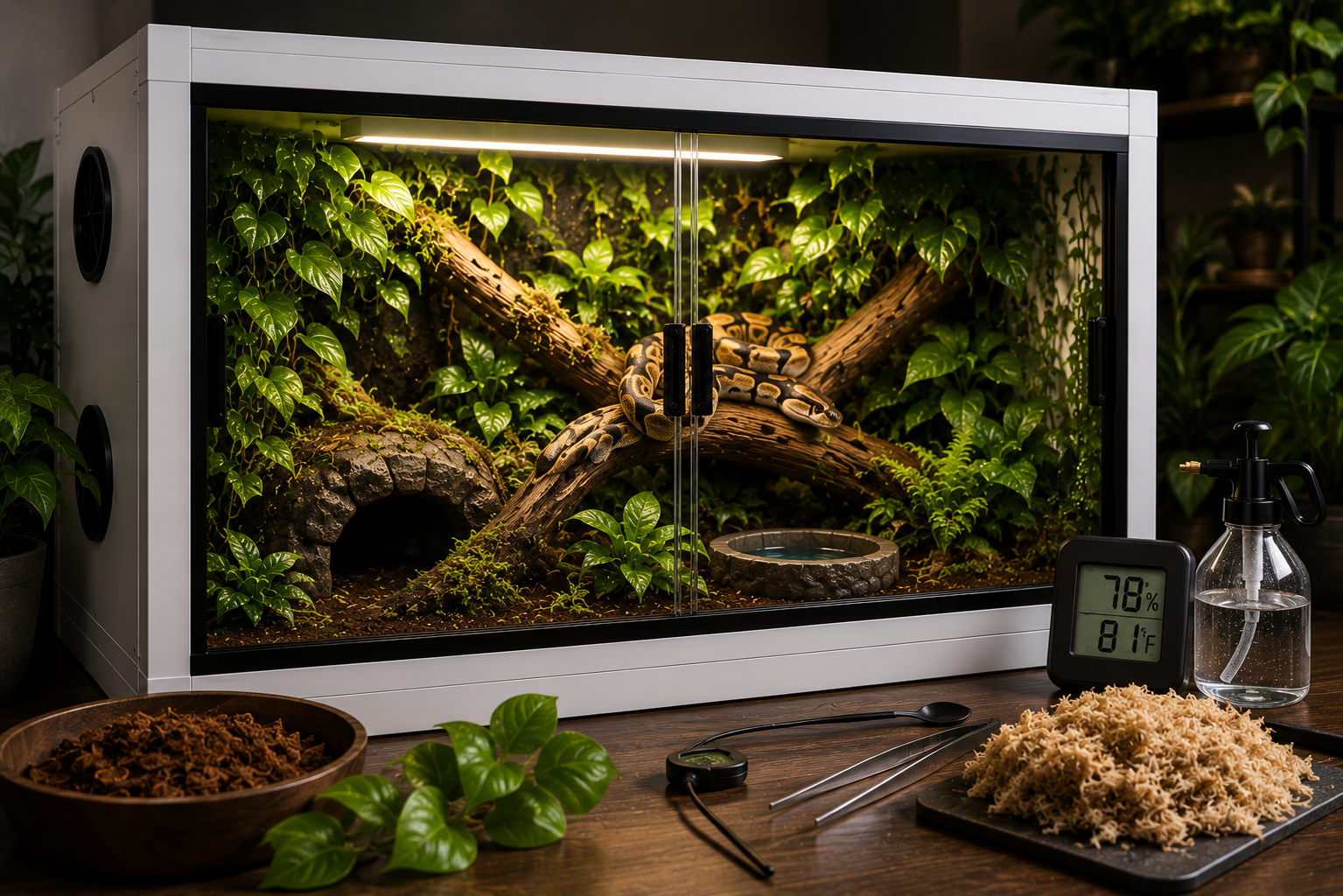
How to Keep Humidity Stable in a PVC Reptile Enclosure
To keep humidity stable in a PVC reptile enclosure, focus on proper substrate selection, balanced ventilation, adequate water sources, temperature control, and regular monitoring. PVC enclosures naturally retain moisture better than glass tanks, but a well-planned setup is still essential for maintaining consistent humidity levels.
Why Stable Humidity Matters
Humidity affects nearly every aspect of reptile health, including:
Shedding
Hydration
Respiratory function
Skin condition
Overall comfort
Frequent humidity swings can stress reptiles and make maintaining proper husbandry more difficult.
Species that commonly require moderate to high humidity include:
Ball Python
Boa Constrictor
Crested Gecko
Gargoyle Gecko
Why PVC Enclosures Hold Humidity Better
PVC offers several advantages over traditional glass enclosures:
Better Insulation
PVC reduces temperature fluctuations, which helps maintain more consistent moisture levels.
Reduced Moisture Loss
Most PVC habitats have:
Solid walls
Smaller ventilation openings
Less exposed screen area
This slows evaporation and helps retain humidity.
Greater Environmental Stability
Stable temperatures often lead to more stable humidity, making PVC a popular choice for tropical reptiles.
1. Choose the Right Substrate
Your substrate plays a major role in humidity retention.
Popular moisture-retaining options include:
Coconut husk
Coconut fiber
Cypress mulch
Bioactive soil blends
These substrates slowly release moisture into the enclosure, helping maintain consistent humidity.
2. Use an Appropriately Sized Water Bowl
Water dishes contribute to humidity through evaporation.
For many reptiles:
Larger bowls increase humidity
Placement near warmer areas increases evaporation
Be careful not to place water directly under intense heat unless required for your setup.
3. Monitor Ventilation Carefully
Ventilation is important, but too much airflow can dry out the enclosure.
A good PVC enclosure should provide:
Fresh air circulation
Controlled humidity retention
Balanced airflow
If humidity drops too quickly, excessive ventilation may be the cause.
4. Maintain Proper Temperatures
Humidity and temperature work together.
If temperatures fluctuate significantly, humidity often fluctuates as well.
Use:
Thermostats
Reliable heat sources
Digital thermometers
Stable temperatures help stabilize humidity.
5. Mist Strategically
Misting can help increase humidity, but consistency is key.
Instead of constantly spraying:
Mist when humidity drops below target levels
Focus on substrate and décor rather than soaking the enclosure
Over-misting can create overly wet conditions.
6. Consider Live Plants
In bioactive setups, live plants can:
Release moisture naturally
Improve environmental stability
Create a more natural habitat
Popular tropical plants are often used for this purpose.
7. Add a Humid Hide
A humid hide provides a localized area of higher humidity.
This can be especially helpful for:
Ball Python
Leopard Gecko
Humid hides are particularly useful during shedding cycles.
8. Use Accurate Monitoring Equipment
Never rely on guesswork.
A quality setup should include:
Digital Hygrometer
Tracks humidity levels accurately.
Digital Thermometer
Monitors enclosure temperatures.
Thermostat
Regulates heating equipment and improves environmental consistency.
Common Causes of Humidity Problems
Excessive Ventilation
Too much airflow is one of the most common reasons humidity drops rapidly.
Dry Substrate
Substrates that don't retain moisture can cause humidity instability.
Small Water Dishes
Insufficient water surface area may reduce natural evaporation.
Temperature Swings
Unstable temperatures often lead to unstable humidity.
PVC vs Glass for Humidity Stability
FeaturePVC EnclosureGlass TankHumidity RetentionExcellentModerateMoisture LossLowHigherTemperature StabilityExcellentModerateEnvironmental ConsistencyExcellentModerateHumidity Maintenance EffortLowerHigher
PVC makes humidity management easier, but proper setup remains important.
Example High-Humidity PVC Setup
A stable setup typically includes:
Moisture-retaining substrate
Water dish
Appropriate ventilation
Digital monitoring equipment
Hides and enrichment
Frequently Asked Questions
What humidity level should my PVC enclosure maintain?
This depends entirely on the species being housed. Always follow species-specific care requirements.
Do PVC enclosures hold humidity better than glass?
Yes. PVC generally provides better insulation and moisture retention.
Should I mist my PVC enclosure every day?
Not necessarily. Monitor humidity levels and adjust as needed.
Can live plants help maintain humidity?
Yes. Many bioactive setups use plants to support environmental stability.
Why does my humidity keep dropping overnight?
Temperature changes, ventilation, and substrate moisture levels are common causes.
Conclusion
PVC reptile enclosures make humidity management significantly easier, but achieving stable humidity still requires the right setup.
By choosing moisture-retaining substrates, maintaining proper temperatures, managing ventilation carefully, and monitoring conditions consistently, you can create a stable environment that supports healthy shedding, hydration, and overall reptile well-being.
For many tropical and humidity-dependent species, a properly configured PVC enclosure provides one of the most reliable ways to maintain ideal humidity levels long-term.
