
Best Solution for Dogs Struggling With Stairs at Home
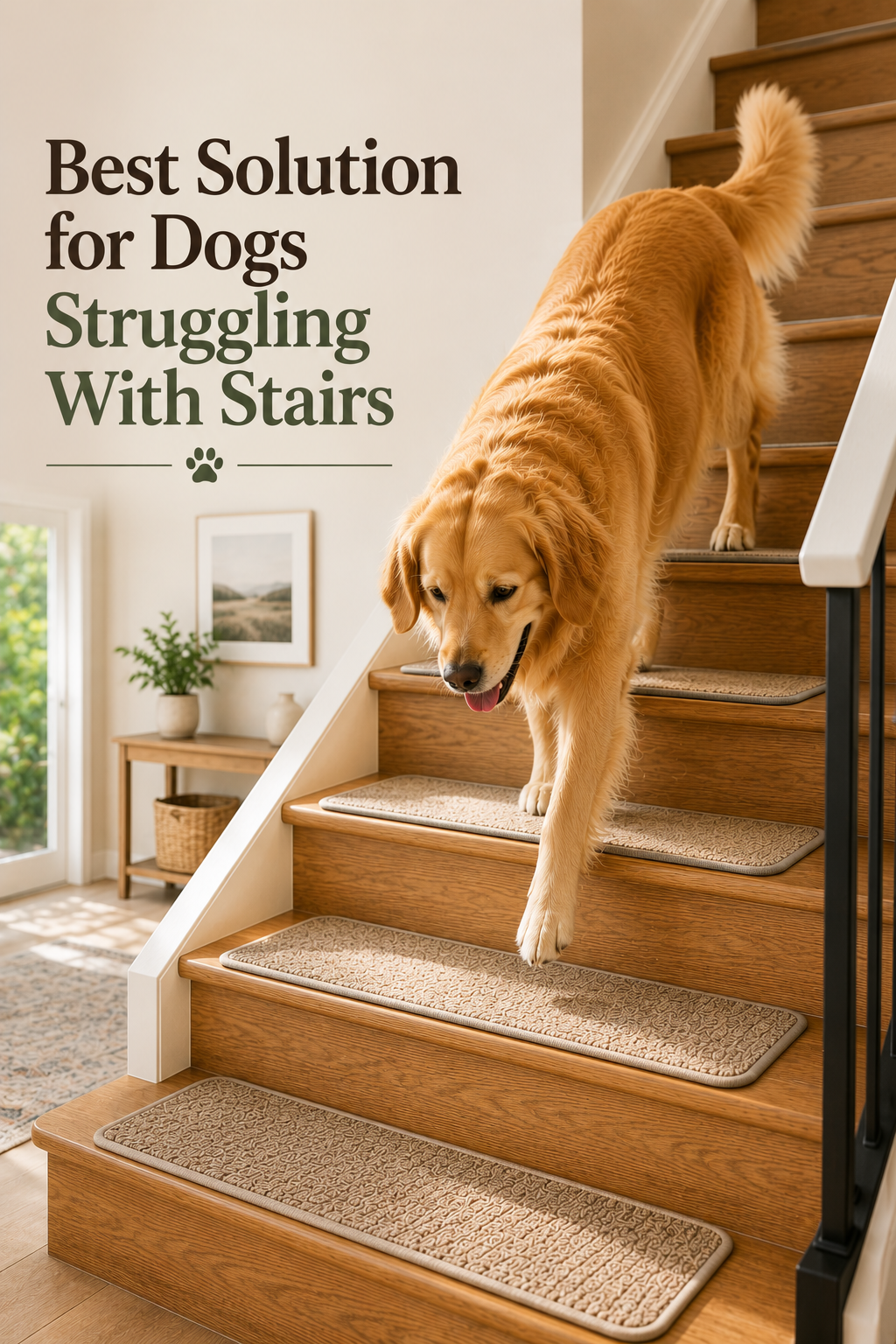
Best Solution for Dogs Struggling With Stairs at Home
The best solution for dogs struggling with stairs is improving traction and stability using non-slip stair treads, carpet runners, or textured stair covers. Most dogs struggle because stairs feel slippery or unstable, so creating a safer surface often improves confidence immediately.
Introduction (Problem Hook)
You notice the hesitation first.
Your dog pauses at the stairs.
Moves carefully.
Sometimes slips—or avoids them completely.
For some dogs, stairs slowly become stressful instead of normal.
And once confidence drops, everyday movement around the house becomes harder for both of you.
The good news?
In most cases, you don’t need to replace your stairs—you just need to make them feel safer.
Why Dogs Struggle With Stairs
Most indoor staircases are designed for human feet, not paws.
Common Problems
Smooth hardwood surfaces
Slippery laminate or tile
Narrow step depth
Poor traction for claws and paw pads
Even healthy dogs can struggle if the stairs feel unstable.
Dogs Most Likely to Have Trouble
Some dogs are especially vulnerable:
Senior dogs
Puppies
Small breeds
Long-bodied breeds
Dogs recovering from injury
Dogs with arthritis or joint stiffness
One bad slip can also reduce confidence quickly.
Common Solutions People Try
1. Carrying the Dog
Pros:
Prevents slips temporarily
Cons:
Not practical long-term
2. Blocking Stair Access
Pros:
Reduces accident risk
Cons:
Limits freedom and movement
3. Training Alone
Pros:
Helps confidence
Cons:
Doesn’t solve slippery surfaces
Related Problems People Also Search
If your dog struggles with stairs, you’re probably also searching:
Dog slipping on stairs
Non-slip stairs for dogs
Senior dog stair safety
Stair treads for pets
Dog afraid of stairs
All of these point to one thing:
👉 Your dog needs better grip and stability.
The Best Long-Term Solution: Improve Stair Traction
This is the biggest game changer for most homes.
Non-Slip Stair Treads
Non-slip stair treads create:
Better paw grip
More stability
Increased confidence
According to testing from The Spruce, textured stair treads significantly improve traction and are especially helpful in homes with pets and children.
Why Stair Treads Work So Well for Dogs
Immediate Benefits
Reduce slipping instantly
Make stairs feel predictable
Improve confidence going up and down
Many stair tread options also include:
Washable surfaces
Soft cushioning
Adhesive-free backing
The Spruce specifically highlighted non-slip stair treads as effective for homes with pets because they improve safety without damaging floors.
Carpet Runners vs Stair Treads
Stair Treads
Best for:
Easy installation
Minimal visual change
Modern look
Carpet Runners
Best for:
Full staircase coverage
Larger dogs
Maximum traction
Both are far easier than replacing the staircase itself.
Other Ways to Help Dogs on Stairs
Keep Nails and Paw Fur Trimmed
Long nails and furry paw pads reduce grip.
Improve Lighting
Dogs feel more confident when they can clearly see step depth.
Encourage Calm Movement
Avoid rushing or pulling your dog on the stairs.
Positive reinforcement works better than pressure.
Why Surface Changes Matter More Than Most People Realize
Many dogs aren’t refusing stairs because they’re stubborn.
They’re reacting to uncertainty.
Once the stairs feel:
Stable
Predictable
Easy to grip
their confidence often improves naturally.
The Most Practical Long-Term Setup
The best stair setup for dogs combines:
Non-slip stair treads or runners
Consistent traction on every step
Calm training and encouragement
Good lighting and visibility
This creates a staircase your dog can trust every day.
Product Integration (Soft Recommendation)
Most people focus on helping the dog emotionally first.
But if the stairs still feel slippery, the stress usually remains.
The real transformation happens when the surface itself feels secure.
Suddenly:
Your dog climbs more confidently
Slipping decreases
The stairs stop feeling intimidating
That’s why many pet owners switch to non-slip stair covers and textured stair surfaces instead of replacing their stairs completely.
They improve safety while still keeping the home clean and modern-looking.
If you want to explore pet-friendly stair solutions, start here:
→ Non-Slip Stair Cover Collection
And for full safety upgrades:
→ Pet-Friendly Stair Solutions
Visual Example Section
Imagine:
Your dog using the stairs confidently again
No more scrambling or hesitation
A calmer, safer home environment
That’s what proper traction can create.
Frequently Asked Questions (SEO Gold)
Why is my dog struggling with stairs?
Slippery surfaces, fear, age, or joint discomfort are common causes.
What is the best solution for slippery stairs?
Non-slip stair treads and carpet runners work best.
Do stair treads help dogs?
Yes, they improve traction and confidence significantly.
Are hardwood stairs difficult for dogs?
They can be very slippery for paws, especially for older dogs.
Can dogs become afraid of stairs?
Yes, especially after slipping or losing confidence.
What helps senior dogs on stairs?
Better traction, lighting, and stable surfaces help most.
Conclusion (Soft Call to Action)
If your dog struggles with stairs, the problem often isn’t the stairs themselves—it’s the surface.
Once your dog feels stable and secure, everyday movement becomes much easier and less stressful.
If you’re ready to make your home safer without a major remodel, non-slip stair covers are one of the smartest upgrades you can make.
Explore your options here:
→ Non-Slip Stair Cover Collection
