
How to Protect Your Dog's Joints When Using Stairs
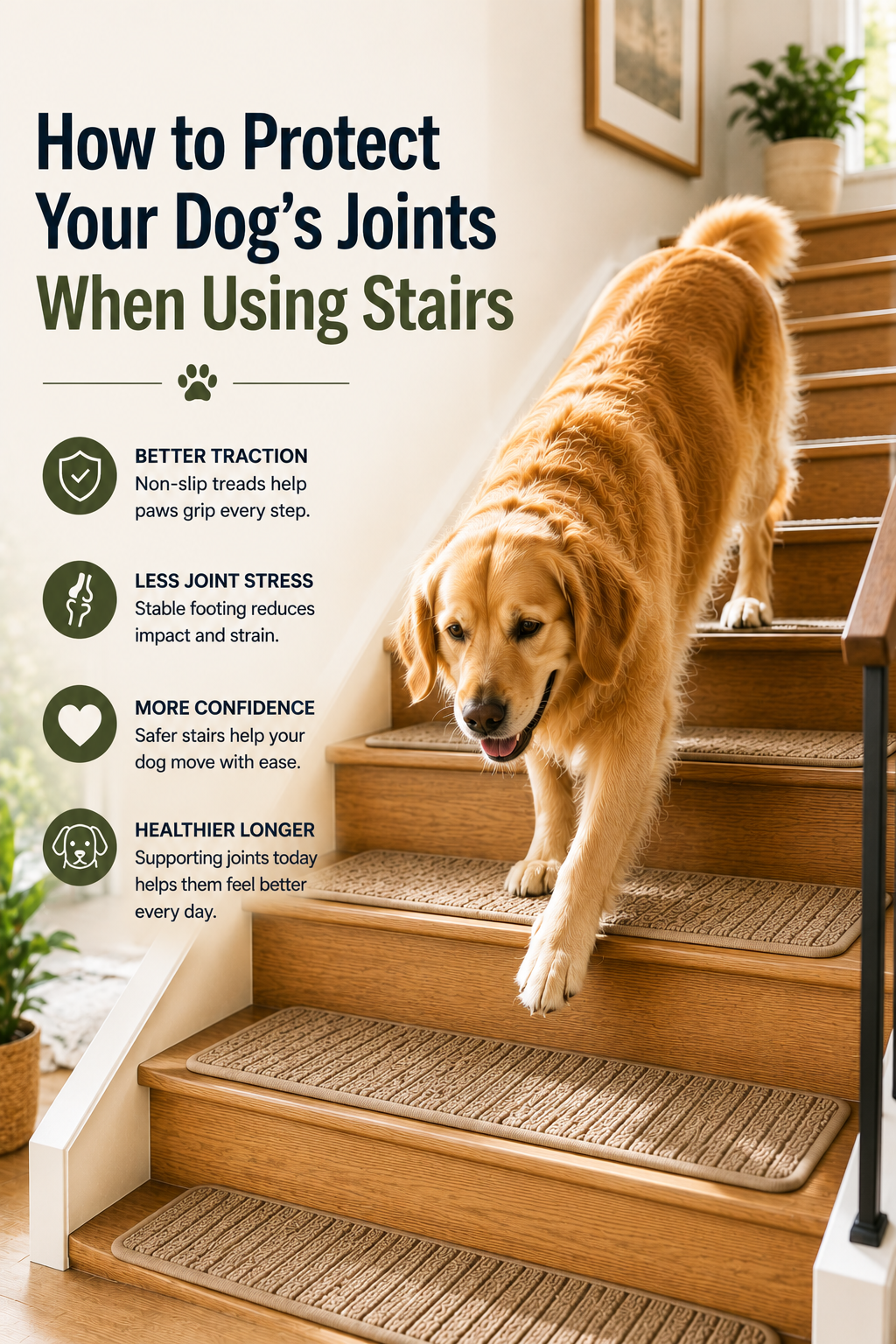
How to Protect Your Dog's Joints When Using Stairs
To protect your dog’s joints on stairs, improve traction with non-slip stair treads or carpet runners, reduce impact from slipping, and encourage controlled movement. Stable surfaces help reduce stress on hips, knees, and joints—especially for senior dogs and breeds prone to joint issues.
Introduction (Problem Hook)
Stairs can be surprisingly hard on dogs—especially over time.
You might notice:
Hesitation before climbing
Slower movement
Slipping or scrambling
Stiffness after using the stairs
For dogs with aging joints or mobility issues, stairs can quietly become one of the most stressful parts of the home.
The good news?
Small changes can make a huge difference.
Why Stairs Put Stress on Dogs’ Joints
Climbing stairs requires dogs to:
Push upward with their hind legs
Balance carefully on descent
Absorb impact on joints repeatedly
When stairs are slippery, dogs compensate by:
Tensing muscles
Spreading legs awkwardly
Overworking joints for stability
That extra strain adds up over time.
Dogs Most at Risk for Stair-Related Joint Stress
Some dogs are especially vulnerable:
Senior dogs
Large breeds
Long-bodied breeds
Dogs with arthritis
Dogs recovering from injury
Dogs with hip or knee problems
Even younger dogs can develop hesitation if the stairs feel unsafe.
Common Mistakes People Make
1. Ignoring Small Slips
Even minor sliding forces dogs to overcompensate physically.
2. Using Bare Hardwood Stairs
Smooth surfaces reduce paw grip significantly.
3. Focusing Only on Exercise
Exercise matters—but safe movement inside the home matters too.
Related Problems People Also Search
If you’re dealing with this, you’re probably also searching:
Best stairs for senior dogs
Dog slipping on hardwood stairs
Non-slip stairs for dogs
How to help dogs with arthritis
Stair treads for pets
All of these point to one thing:
👉 Dogs need safer, lower-stress movement.
The Best Ways to Protect Your Dog’s Joints on Stairs
1. Add Non-Slip Stair Treads
This is one of the most effective upgrades for joint protection.
Why It Helps
Improves traction instantly
Reduces slipping and scrambling
Encourages smoother movement
Lowers impact stress on joints
Textured stair surfaces are commonly recommended because improved traction helps reduce instability and slipping risk. (thisoldhouse.com)
2. Use Carpet Runners for Full Coverage
Runners create:
Continuous grip
Softer impact
More confidence for hesitant dogs
Especially useful for:
Long staircases
Large dogs
Senior pets
3. Keep Nails and Paw Fur Maintained
Long nails reduce stability.
Excess fur around paw pads can also decrease traction on smooth surfaces.
4. Improve Stair Lighting
Dogs feel safer when step depth is easier to see.
Better visibility helps:
Coordination
Confidence
Controlled movement
5. Encourage Slow, Controlled Stair Use
Avoid:
Rushing
Jumping multiple steps
High-speed movement on slippery stairs
Calm movement reduces joint strain significantly.
Why Traction Matters More Than Most Owners Realize
Many dogs don’t show obvious pain immediately.
Instead, you may notice:
Hesitation
Slower climbing
Avoiding stairs occasionally
Often, the issue isn’t the stairs themselves—it’s the instability.
Once traction improves:
Confidence increases
Movement becomes smoother
Joint strain decreases naturally
The Most Practical Long-Term Solution
The best setup combines:
Non-slip stair treads or runners
Stable footing on every step
Good lighting
Calm movement habits
This creates a safer environment that supports long-term mobility.
Product Integration (Soft Recommendation)
Most people don’t realize how much stress slippery stairs put on a dog’s joints until they see the hesitation begin.
But once the stairs feel secure, the difference is immediate.
Your dog moves more confidently.
There’s less scrambling and slipping.
And everyday movement feels easier again.
That’s why many pet owners add non-slip stair covers and textured stair surfaces instead of replacing their staircase entirely.
They improve safety while keeping the home looking clean and modern.
If you want to explore pet-friendly stair solutions, start here:
→ Non-Slip Stair Cover Collection
And for complete safety upgrades:
→ Pet-Friendly Stair Solutions
Visual Example Section
Imagine:
Your dog climbing stairs with confidence
Less slipping and joint strain
A safer, calmer home environment
That’s what the right surface can create.
Frequently Asked Questions (SEO Gold)
Are stairs bad for dogs’ joints?
They can be, especially if the surface is slippery or the dog has joint issues.
How can I make stairs safer for dogs?
Add non-slip stair treads or runners for better traction.
Do slippery stairs hurt dogs?
Repeated slipping can increase strain on joints and muscles.
What helps senior dogs on stairs?
Traction, lighting, and controlled movement help most.
Are carpet runners better than bare stairs for dogs?
Yes, they improve grip and reduce slipping risk.
Can dogs develop stair anxiety from slipping?
Yes, one bad experience can reduce confidence quickly.
Conclusion (Soft Call to Action)
Protecting your dog’s joints isn’t just about exercise or supplements—it’s also about the surfaces they use every day.
Once stairs feel stable and predictable, movement becomes safer, smoother, and less stressful.
If you’re ready to make your home more joint-friendly for your dog, non-slip stair covers are one of the smartest upgrades you can make.
Explore your options here:
→ Non-Slip Stair Cover Collection
