
Best Wood for DIY Floating Shelves: A Complete Buyer's Guide
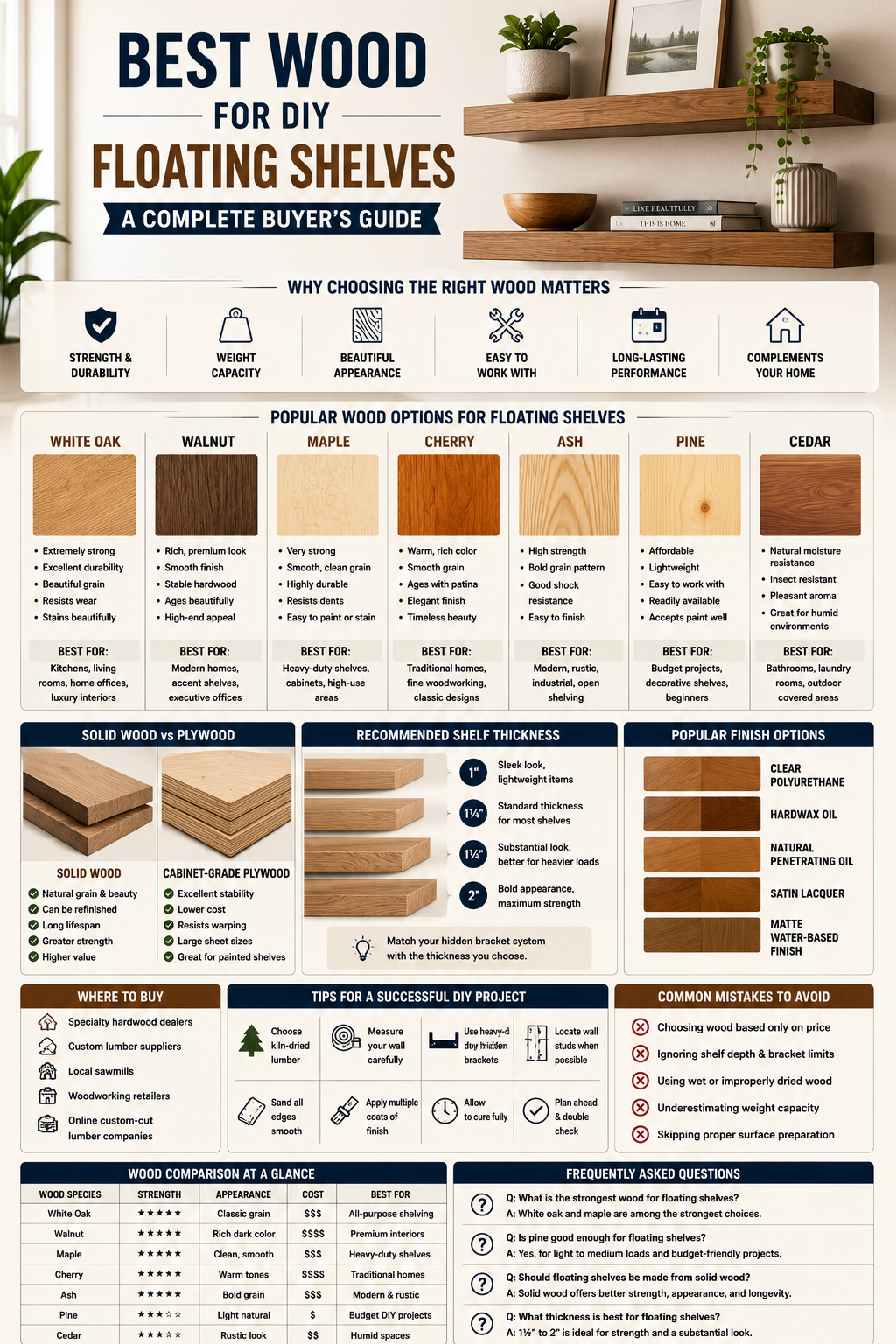
Best Wood for DIY Floating Shelves: A Complete Buyer's Guide
The best wood for DIY floating shelves depends on your project and budget. White oak is an excellent all-around choice thanks to its strength, durability, and timeless appearance. Walnut offers a luxurious finish, maple provides exceptional hardness, while pine is an affordable option for beginners. Choosing the right wood ensures your shelves are sturdy, attractive, and built to last.
Why Choosing the Right Wood Matters
Floating shelves are more than just storage—they're a design feature that can transform a room.
Whether you're installing shelves in a kitchen, living room, bathroom, home office, or bedroom, the wood you choose affects:
Strength
Weight capacity
Durability
Appearance
Ease of installation
Long-term maintenance
Selecting the right species from the start will help your shelves perform well for years while complementing your home's style.
What Makes a Good Wood for Floating Shelves?
Before comparing wood species, it's important to understand what qualities make an ideal shelving material.
Look for wood that offers:
Good structural strength
Dimensional stability
Attractive grain patterns
Easy finishing
Resistance to warping
Availability in suitable sizes
If your shelves will hold heavy items such as books, dishes, or decorative stoneware, strength becomes even more important.
White Oak: The Best All-Around Choice
White oak remains one of the most popular hardwoods for floating shelves.
Pros
Extremely strong
Excellent durability
Beautiful natural grain
Highly resistant to wear
Accepts stain well
Suitable for modern and traditional homes
Best For
Kitchens
Living rooms
Home offices
Luxury interiors
White oak strikes an excellent balance between beauty and performance, making it one of the safest choices for most DIY shelf projects.
Walnut: Premium Beauty
Walnut is prized for its rich brown color and distinctive grain.
Pros
Elegant appearance
Smooth finish
Stable hardwood
Ages beautifully
Premium feel
Considerations
Walnut is typically more expensive than many other hardwoods, but it's often chosen for statement shelves where appearance is the top priority.
Best For
Modern homes
Luxury interiors
Accent shelving
Executive offices
Maple: Tough and Versatile
Maple is one of the hardest domestic hardwoods available.
Advantages
Excellent strength
Smooth grain
Highly durable
Resists dents
Easy to paint or stain
Because of its hardness, maple performs especially well in high-traffic areas.
Cherry: Warm and Timeless
Cherry offers a refined appearance that becomes even richer with age.
Benefits
Warm reddish tone
Smooth grain
Elegant finish
Develops a beautiful natural patina
Ideal for fine woodworking
Cherry is often selected for classic or traditional interior designs.
Ash: Strong with Bold Grain
Ash combines strength with an eye-catching grain pattern.
It's a good choice for homeowners looking for shelves with more visible wood character.
Benefits include:
High strength
Good shock resistance
Attractive texture
Easy finishing
Pine: Budget-Friendly for Beginners
Pine remains one of the most accessible woods for DIY projects.
Pros
Affordable
Lightweight
Easy to work with
Readily available
Accepts paint well
Cons
Softer than hardwoods
Can dent more easily
May require extra care in high-use areas
Pine is ideal for decorative shelves that won't support extremely heavy loads.
Cedar: Ideal for Humid Spaces
Cedar naturally resists moisture and insects.
It's commonly used for:
Laundry rooms
Bathrooms
Covered outdoor spaces
Utility shelving
Its pleasant aroma and natural durability make it a unique option for certain environments.
Comparing Popular Woods
Wood SpeciesStrengthAppearanceCostBest ForWhite OakExcellentClassic grainMedium-HighAll-purpose shelvingWalnutExcellentRich dark colorHighPremium interiorsMapleExcellentClean, smoothMediumHeavy-duty shelvesCherryVery GoodWarm reddish tonesHighTraditional homesAshVery GoodBold grainMediumModern and rustic designsPineModerateLight natural colorLowBudget DIY projectsCedarModerateRustic appearanceMediumBathrooms and utility areas
Should You Choose Solid Wood or Plywood?
Both materials have their place.
Solid Wood
Advantages include:
Natural grain
Premium appearance
Can be refinished
Long lifespan
Greater resale value
Cabinet-Grade Plywood
Benefits include:
Excellent dimensional stability
Lower cost
Less prone to seasonal movement
Large sheet sizes
For exposed floating shelves where appearance matters most, solid hardwood is often the preferred option.
Thickness Matters Too
Choosing the correct thickness is just as important as selecting the wood species.
Common shelf thicknesses include:
1 inch
1¼ inches
1½ inches
2 inches
Thicker shelves create a more substantial appearance and are generally better suited for supporting heavier loads.
Always ensure your hidden mounting bracket is designed to accommodate the shelf thickness you've chosen.
Choosing the Right Finish
A quality finish protects the wood while enhancing its natural beauty.
Popular options include:
Clear polyurethane
Hardwax oil
Natural penetrating oil
Satin lacquer
Matte water-based finish
Choose a finish based on the room's conditions and the look you want to achieve.
Where to Buy Wood for Floating Shelves
You can purchase shelf material from:
Specialty hardwood dealers
Custom lumber suppliers
Local sawmills
Woodworking retailers
Online custom-cut lumber companies
Many suppliers can cut boards to your exact dimensions, reducing preparation time and minimizing waste.
Tips for a Successful DIY Project
For the best results:
Choose kiln-dried lumber.
Measure your wall carefully.
Use heavy-duty hidden brackets.
Locate wall studs whenever possible.
Sand all exposed edges before finishing.
Apply multiple protective finish coats.
Allow the finish to cure fully before installation.
Taking time during preparation leads to stronger, longer-lasting shelves.
Common Mistakes to Avoid
Choosing Wood Based Only on Price
Less expensive lumber may not provide the strength or appearance needed for long-term use.
Ignoring Shelf Depth
Deeper shelves place greater stress on mounting hardware.
Always match the bracket to the intended shelf size.
Using Wet Lumber
Fresh or improperly dried wood may warp or crack after installation.
Kiln-dried lumber is generally the best choice for indoor shelving.
Underestimating Weight Capacity
Consider what the shelves will hold before selecting both the wood species and the mounting system.
Frequently Asked Questions
What is the strongest wood for floating shelves?
White oak and maple are among the strongest and most durable choices for residential floating shelves.
Is pine good enough for floating shelves?
Yes. Pine works well for decorative or light-duty shelving, although it is softer than most hardwoods and may dent more easily.
Should floating shelves be made from solid wood?
Solid wood offers exceptional appearance, durability, and the ability to be refinished. It's often preferred for high-quality custom shelving.
What thickness is best for floating shelves?
A thickness between 1½ and 2 inches is a popular choice because it provides a substantial appearance while accommodating many concealed bracket systems.
Conclusion
The best wood for DIY floating shelves ultimately depends on your budget, design preferences, and how the shelves will be used. For most homeowners, white oak offers the ideal balance of strength, beauty, and versatility. Walnut provides a premium look, maple excels in durability, and pine remains an excellent option for affordable DIY projects.
By selecting high-quality lumber, using reliable mounting hardware, and applying a durable finish, you can build floating shelves that not only look professionally crafted but also provide dependable performance for years to come.
