
Common Barn Door Mistakes Homeowners Make (And How to Avoid Them)
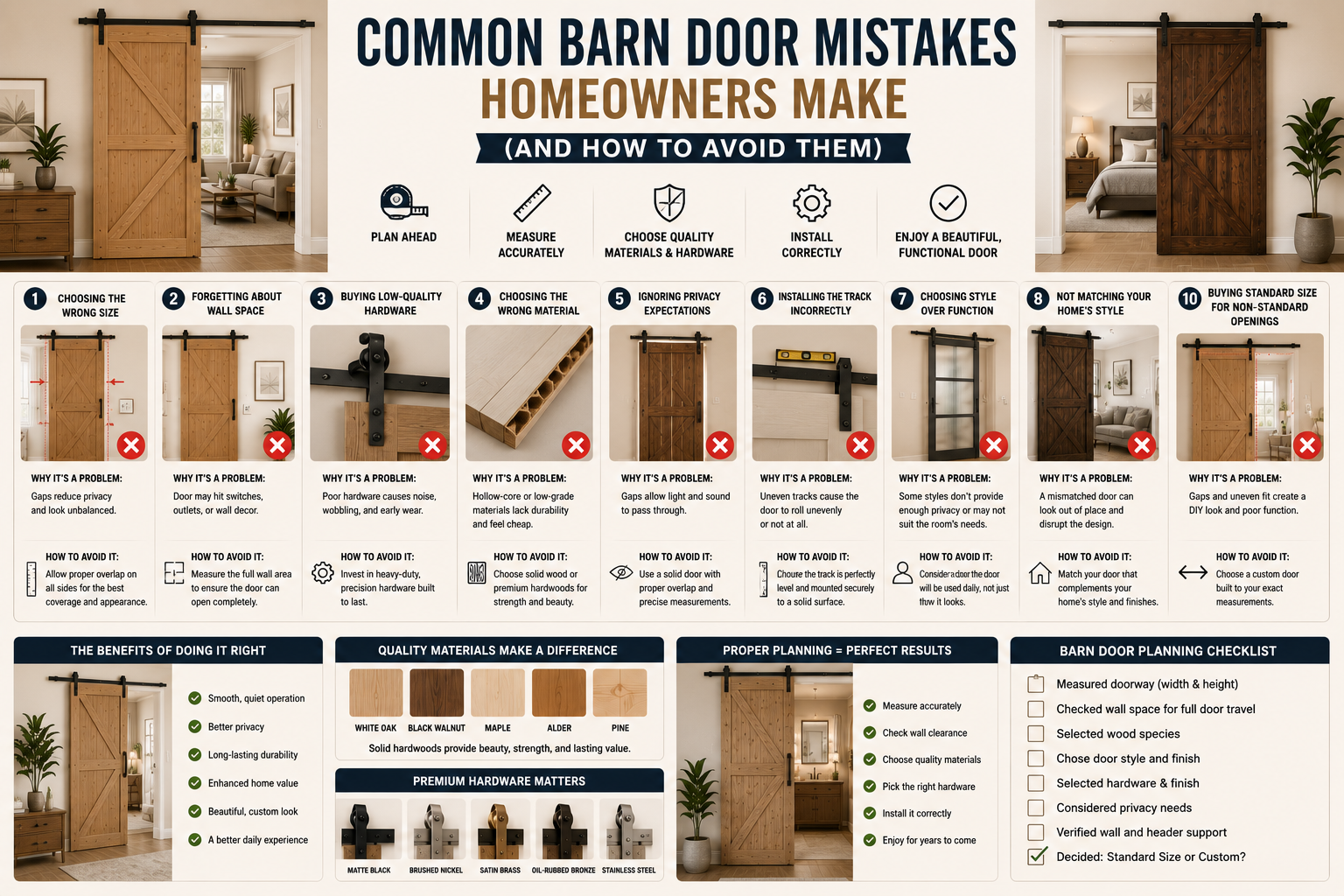
Common Barn Door Mistakes Homeowners Make (And How to Avoid Them)
The most common barn door mistakes include choosing the wrong size, overlooking wall clearance, buying low-quality hardware, selecting the wrong material, and installing the track incorrectly. Fortunately, these problems are easy to avoid with proper planning, accurate measurements, and a professionally built custom barn door designed specifically for your space.
Why Planning Matters Before Installing a Barn Door
Barn doors have become one of the most popular interior upgrades because they save space while adding character and architectural interest.
However, even the most beautiful barn door can become frustrating if it isn't properly planned.
Many homeowners focus only on the door's appearance and overlook practical considerations such as sizing, hardware, wall space, and installation requirements.
Taking the time to plan ahead helps ensure your barn door looks beautiful, operates smoothly, and lasts for years.
Mistake #1: Choosing the Wrong Door Size
One of the biggest mistakes is selecting a door based solely on the size of the existing doorway.
A barn door should extend beyond the opening on all sides to provide proper coverage and improve privacy.
If the door is too small, you may notice:
Visible gaps
Reduced privacy
An unbalanced appearance
Light passing through the edges
How to Avoid It
Measure the finished doorway—not just the existing door—and allow sufficient overlap. If your opening is unusual, consider ordering a custom-sized barn door for the best fit.
Mistake #2: Forgetting About Wall Space
A sliding barn door needs enough unobstructed wall space to open completely.
Homeowners sometimes discover after installation that the door blocks:
Light switches
Electrical outlets
Windows
Artwork
Built-in shelving
Furniture
How to Avoid It
Measure the available wall beside the doorway before purchasing a door. Make sure there is enough room for the entire door to slide open without obstruction.
Mistake #3: Buying Low-Quality Hardware
The hardware is just as important as the door itself.
Low-quality tracks and rollers can lead to:
Noisy operation
Uneven movement
Premature wear
Loose components
Reduced lifespan
How to Avoid It
Choose heavy-duty hardware that matches the weight of your door. Features such as precision rollers and soft-close mechanisms provide smoother, quieter performance.
Mistake #4: Choosing the Wrong Material
Not all barn doors are built the same.
Some budget-friendly options use hollow-core construction or lightweight engineered materials that may not provide the durability or appearance homeowners expect.
How to Avoid It
For long-term performance, choose solid wood or premium hardwood options such as:
White oak
Black walnut
Maple
Alder
Ash
These materials offer greater strength, durability, and timeless beauty.
Mistake #5: Ignoring Privacy Expectations
Barn doors slide outside the wall instead of sealing inside a door frame.
Because of this design, small gaps around the edges are normal.
How to Avoid It
If privacy is important:
Choose a solid wood door.
Increase the overlap around the opening.
Use precise measurements.
Select custom sizing whenever possible.
For spaces such as home offices and bathrooms, thoughtful planning makes a noticeable difference.
Mistake #6: Installing the Track Incorrectly
An improperly installed track can affect both safety and performance.
Common issues include:
Door wobbling
Uneven sliding
Excessive noise
Difficulty opening or closing
How to Avoid It
Install the track on a solid mounting surface and verify that it is perfectly level before securing it permanently.
If you're unsure, professional installation is often worth the investment.
Mistake #7: Choosing Style Over Function
It's easy to fall in love with a particular design, but the door should also suit the room's practical needs.
For example:
Glass doors may not provide enough privacy for bedrooms.
Oversized rustic doors may overwhelm minimalist interiors.
Heavy hardwood doors require stronger hardware.
How to Avoid It
Balance appearance with functionality by considering how the room is used every day.
Mistake #8: Not Matching the Door to Your Home's Style
A barn door should feel like a natural extension of your home's architecture.
A highly rustic door may look out of place in an ultra-modern home, while an industrial steel design may clash with a traditional cottage.
How to Avoid It
Choose a style that complements your existing:
Flooring
Cabinetry
Trim
Furniture
Lighting
Overall design theme
Consistency creates a more polished and timeless appearance.
Mistake #9: Forgetting About Door Weight
Large solid wood barn doors can be significantly heavier than homeowners expect.
Installing heavy doors on undersized hardware may lead to premature wear or unsafe operation.
How to Avoid It
Always confirm the hardware's weight capacity before installation and choose tracks specifically designed for the size and material of your door.
Mistake #10: Buying a Standard Door for a Non-Standard Opening
Many homes—especially older properties or custom builds—have doorway dimensions that don't match standard barn door sizes.
Trying to force a standard-sized door into a unique opening often leads to visible gaps and an awkward appearance.
How to Avoid It
A custom barn door built to your exact measurements provides:
Better proportions
Improved privacy
Cleaner installation
A premium built-in look
Why Custom Barn Doors Help Prevent Most Problems
Professionally built custom barn doors eliminate many of the compromises associated with stock products.
Benefits include:
Exact sizing
Premium hardwood construction
Personalized finishes
Custom panel designs
Better hardware compatibility
Superior craftsmanship
Improved long-term durability
Instead of adapting your home to fit the door, the door is crafted to fit your home.
Barn Door Planning Checklist
Before ordering your barn door, make sure you have:
Measured the doorway accurately
Checked available wall space
Selected the appropriate wood species
Chosen hardware rated for the door's weight
Considered privacy requirements
Coordinated the finish with your interior
Verified clearance above the doorway
Decided whether a standard or custom size is the better fit
A little preparation can prevent expensive adjustments later.
Frequently Asked Questions
What is the biggest mistake homeowners make with barn doors?
The most common mistake is choosing the wrong size. A door that doesn't properly overlap the opening can reduce privacy and create an unbalanced appearance.
Do barn doors need special hardware?
Yes. Barn doors require dedicated sliding hardware that is designed to support the door's weight and allow smooth operation.
Are custom barn doors worth it?
For non-standard openings or homeowners seeking premium quality, custom barn doors often provide better fit, improved durability, and a more refined appearance than mass-produced alternatives.
Can I install a barn door myself?
Many homeowners successfully install barn doors themselves, especially when using standard-sized doors. However, large or heavy solid wood doors may benefit from professional installation to ensure proper alignment and long-term performance.
Conclusion
Barn doors can transform the look and functionality of a home, but success depends on more than choosing a design you love. Proper sizing, quality materials, durable hardware, and thoughtful planning all play a role in creating a door that performs as beautifully as it looks.
Whether you're updating a bedroom, home office, pantry, or laundry room, avoiding these common mistakes will help you enjoy years of reliable use. For homeowners seeking the best fit, premium craftsmanship, and long-term value, a custom barn door remains one of the smartest investments for creating a functional and stylish living space.
