
How Long Does It Take to Build a Custom Barn Door?
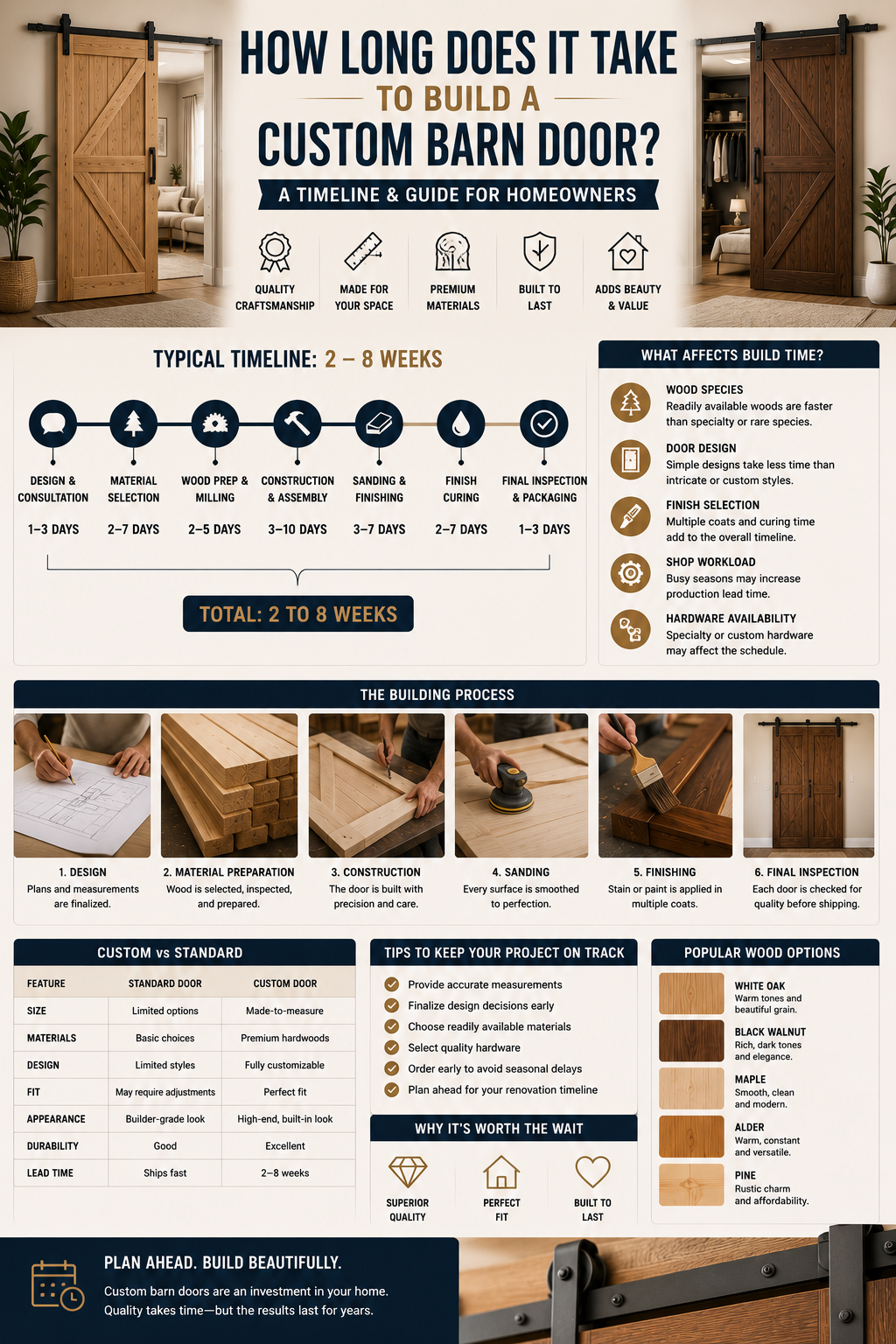
How Long Does It Take to Build a Custom Barn Door?
Most custom barn doors take 2 to 8 weeks to build, depending on the design, materials, finish, and the craftsperson's production schedule. Simple, single-panel doors made from readily available wood may be completed in as little as two to four weeks, while intricate designs, specialty hardwoods, or live edge doors can take six to eight weeks or longer. Although custom doors require more time than off-the-shelf options, the result is a door built specifically for your home with superior craftsmanship and a perfect fit.
Why Custom Barn Doors Take Longer
Unlike mass-produced doors that are manufactured in large batches, custom barn doors are built to order.
Each project begins with your specific requirements, including:
Exact dimensions
Wood species
Panel design
Finish or stain
Hardware selection
Handle placement
Because every detail is tailored to your home, additional time is needed to ensure quality and precision.
Typical Timeline for a Custom Barn Door
While every workshop operates differently, most projects follow a similar process.
StageTypical TimeDesign consultation and measurements1–3 daysMaterial selection2–7 daysWood preparation and milling2–5 daysDoor construction3–10 daysSanding and finishing3–7 daysFinish curing2–7 daysFinal inspection and packaging1–3 days
The overall timeline generally falls between 2 and 8 weeks, depending on complexity and workload.
Factors That Affect Build Time
1. Wood Species
Some hardwoods are easier to source than others.
Common options like:
White oak
Maple
Alder
Pine
may be available immediately, while specialty woods or premium slabs can require additional lead time.
If you're choosing a rare wood species or a highly figured slab, expect the process to take longer.
2. Door Design
Simple designs are naturally quicker to produce.
Examples include:
Flat-panel doors
Modern slab doors
Basic shaker styles
More elaborate options often require additional craftsmanship, including:
Multi-panel designs
Decorative inlays
Glass inserts
Carved details
Live edge construction
The more intricate the design, the more time is needed.
3. Finish Selection
The finish doesn't just change the appearance—it also affects production time.
Popular finishes include:
Natural clear coat
Painted finishes
Light stains
Dark stains
Distressed finishes
Each coat must dry properly before the next one is applied, and many finishes require curing time to achieve maximum durability.
4. Shop Workload
Custom woodshops often build several projects simultaneously.
During busy periods, such as spring renovation season or the months leading up to the holidays, lead times may increase.
Ordering early can help avoid seasonal delays.
5. Hardware Availability
If you've selected specialty hardware, imported components, or custom finishes, delivery times may influence the overall schedule.
Ordering hardware early helps keep the project on track.
Why Rushing the Process Isn't Ideal
High-quality craftsmanship takes time.
Proper construction includes:
Careful measuring
Precision cutting
Strong joinery
Thorough sanding
Multiple finish coats
Detailed quality inspections
Skipping or rushing these steps can affect both the appearance and long-term durability of the door.
What Happens During the Building Process?
A professionally crafted custom barn door typically goes through several stages.
Initial Consultation
Measurements are reviewed, the design is finalized, and materials are selected.
Material Preparation
The wood is inspected, cut, and prepared for construction.
If solid hardwood is used, boards are carefully arranged to create an attractive grain pattern.
Assembly
The door is built using professional woodworking techniques designed for strength and stability.
Sanding
The entire surface is carefully sanded to create a smooth, even finish.
Finishing
Paint, stain, or clear protective coatings are applied in multiple stages.
Each coat must dry properly before the next is added.
Quality Inspection
Before shipping or installation, the completed door is inspected for:
Fit and finish
Surface quality
Structural integrity
Hardware compatibility
Overall craftsmanship
This final step helps ensure the finished product meets high standards.
Can You Speed Up the Process?
In some cases, yes.
You may reduce production time by:
Choosing a standard panel design
Selecting readily available hardwoods
Using common hardware finishes
Finalizing design decisions early
Providing accurate measurements from the start
Even so, it's worth allowing enough time for proper craftsmanship rather than prioritizing speed.
Is a Custom Barn Door Worth the Wait?
For many homeowners, the answer is yes.
Custom barn doors offer benefits that stock products often cannot match, including:
Exact sizing
Premium hardwood construction
Personalized finishes
Superior craftsmanship
Long-term durability
A built-in, high-end appearance
Because they're designed specifically for your home, they often become one of the most distinctive features of the interior.
Planning Your Project Timeline
If your barn door is part of a larger renovation, consider ordering it early in the project.
This helps ensure the door is ready when installation begins and reduces the risk of delaying other finishing work.
Coordinating with contractors, painters, and flooring installers can also help the project run more smoothly.
Common Mistakes That Cause Delays
Waiting Until the Last Minute
Ordering too late can delay your renovation or move-in schedule.
Changing the Design Midway
Major design changes after construction begins can add significant time to the project.
Inaccurate Measurements
Incorrect measurements may require adjustments or even rebuilding the door.
Choosing Materials Without Confirming Availability
Some specialty hardwoods and hardware finishes may have longer lead times than standard options.
Frequently Asked Questions
How long does it take to make a custom barn door?
Most professionally built custom barn doors are completed within 2 to 8 weeks, depending on the design, materials, and production schedule.
Why do custom barn doors take longer than stock doors?
Each custom door is built specifically for one customer, requiring individual design, construction, finishing, and quality inspection rather than mass production.
Can I order a custom barn door with a faster turnaround?
Some builders offer expedited services for select designs, but availability depends on their workload and the materials you've chosen.
Does the finish affect production time?
Yes. Painted, stained, and clear-coated doors often require multiple coats and curing time before they're ready for delivery or installation.
Conclusion
Building a custom barn door is a process that rewards patience. While it may take several weeks from design to completion, every stage—from selecting premium hardwood to applying the final finish—contributes to a product that's crafted specifically for your home.
Whether you choose a modern white oak door, a timeless shaker design, or a striking live edge statement piece, investing in a custom barn door means receiving a unique, high-quality feature built to fit your space perfectly. With thoughtful planning and realistic expectations, you'll end up with a handcrafted door that delivers lasting beauty, smooth performance, and value for years to come.
