
Glass Doors vs Acrylic Doors for PVC Reptile Enclosures
Glass Doors vs Acrylic Doors for PVC Reptile Enclosures
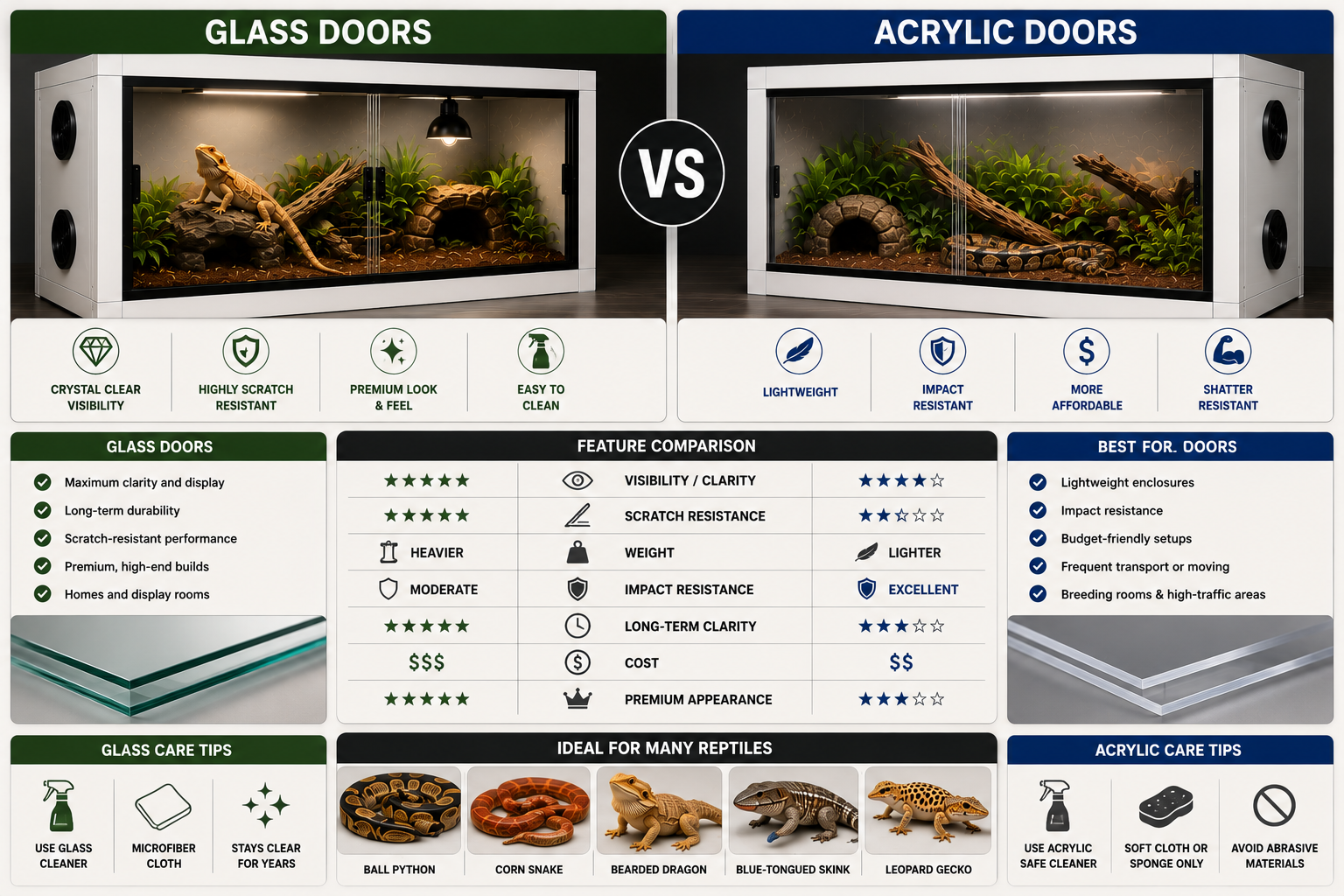
Both glass and acrylic doors are popular choices for PVC reptile enclosures, but they offer different advantages.
Glass doors provide superior scratch resistance, crystal-clear viewing, and a premium feel.
Acrylic doors are lighter, more impact-resistant, and often more affordable.
For most display-focused reptile enclosures, glass is often the preferred option, while acrylic can be an excellent choice for lightweight or budget-conscious setups.
Why Door Material Matters
The doors are one of the most frequently used parts of any reptile enclosure.
They affect:
Visibility
Durability
Cleaning
Long-term appearance
Overall user experience
Choosing the right material can improve both the enclosure's appearance and functionality.
Glass Doors
Glass has long been the standard for many premium reptile enclosures.
Benefits of Glass Doors
Superior Clarity
Glass provides excellent visibility and typically remains clear for many years.
This makes it ideal for:
Display enclosures
Living room setups
Show-quality habitats
Highly Scratch Resistant
Compared to acrylic, glass is much more resistant to:
Cleaning marks
Daily wear
Minor abrasions
This helps maintain a clean appearance over time.
Premium Look and Feel
Many keepers prefer the appearance of glass because it creates a more polished and professional enclosure.
Easy to Clean
Glass handles most reptile-safe cleaning products well and typically wipes clean with minimal effort.
Drawbacks of Glass Doors
Heavier Weight
Glass is significantly heavier than acrylic.
This can matter in:
Large enclosures
Stackable systems
Frequent transportation situations
Can Break if Impacted
Although enclosure glass is often tempered or strengthened, it can still crack or shatter under sufficient force.
Acrylic Doors
Acrylic is a lightweight plastic material commonly used in reptile enclosures.
Benefits of Acrylic Doors
Lightweight
Acrylic weighs much less than glass.
Benefits include:
Easier handling
Reduced enclosure weight
Simpler transportation
Better Impact Resistance
Acrylic is less likely to shatter if accidentally struck.
This can be appealing for:
Breeding rooms
High-traffic environments
Homes with children
Often More Affordable
Many acrylic door systems cost less than comparable glass options.
Drawbacks of Acrylic Doors
More Prone to Scratches
This is the biggest disadvantage.
Acrylic can scratch from:
Cleaning tools
Substrate particles
Daily use
Over time, scratches may reduce visibility.
Can Develop a Hazy Appearance
After years of use, acrylic may lose some of its original clarity if not maintained carefully.
Which Material Is Better for Visibility?
Winner: Glass
Glass generally offers:
Better long-term clarity
Greater scratch resistance
More consistent visibility
For display enclosures, many keepers prefer glass.
Which Material Is Better for Safety?
Winner: Acrylic
Acrylic is more impact-resistant and less likely to shatter.
This makes it attractive in environments where accidental impacts are a concern.
Which Material Is Better for Large Enclosures?
It depends on priorities.
Glass
Best for:
Permanent installations
Display habitats
Premium builds
Acrylic
Best for:
Lightweight setups
Portable enclosures
Large custom habitats where weight matters
Which Reptiles Benefit Most?
The choice of door material usually affects the keeper more than the reptile.
Species commonly housed in PVC enclosures with either option include:
Ball Python
Corn Snake
Bearded Dragon
Blue-Tongued Skink
Leopard Gecko
The reptile generally won't care whether the door is glass or acrylic as long as the enclosure is secure and properly maintained.
Glass vs Acrylic Doors
FeatureGlass DoorsAcrylic DoorsVisibilityExcellentVery GoodScratch ResistanceExcellentModerateWeightHeavyLightweightImpact ResistanceModerateExcellentLong-Term ClarityExcellentGoodCostHigherLowerPremium AppearanceExcellentGood
When to Choose Glass Doors
Glass may be the better choice if you:
Want maximum clarity
Prioritize long-term appearance
Plan a display enclosure
Prefer premium materials
Don't mind additional weight
When to Choose Acrylic Doors
Acrylic may be the better choice if you:
Want a lighter enclosure
Need impact resistance
Have a tighter budget
Frequently move enclosures
Prioritize practicality over appearance
Common Mistakes to Avoid
Choosing Based on Price Alone
Door quality affects daily use for years.
Ignoring Weight Considerations
Large glass doors can add significant weight to oversized enclosures.
Cleaning Acrylic With Abrasive Materials
This can cause scratches that reduce visibility.
Overlooking Long-Term Maintenance
Think about how the enclosure will look after years of use, not just on day one.
Visual Comparison
Both glass and acrylic doors can perform well in a PVC reptile enclosure when chosen for the right application.
Frequently Asked Questions
Are glass doors better than acrylic for reptile enclosures?
Glass is generally better for visibility and scratch resistance, while acrylic is lighter and more impact-resistant.
Do acrylic doors scratch easily?
Compared to glass, yes. Acrylic requires more careful cleaning and maintenance.
Are glass doors safe?
Yes. Quality reptile enclosures often use strong safety glass designed for long-term use.
Which is more affordable?
Acrylic is often the less expensive option.
Which door type is most common on premium PVC enclosures?
Glass doors are commonly found on premium display-oriented enclosures.
Conclusion
Choosing between glass and acrylic doors for a PVC reptile enclosure comes down to your priorities.
If you want maximum clarity, durability, and a premium display appearance, glass is often the best choice. If you value lighter weight, impact resistance, and lower cost, acrylic can be an excellent alternative.
Both materials can provide years of reliable performance when matched to the enclosure's purpose and maintained properly.
