
Sliding Doors vs Swinging Doors for PVC Reptile Enclosures
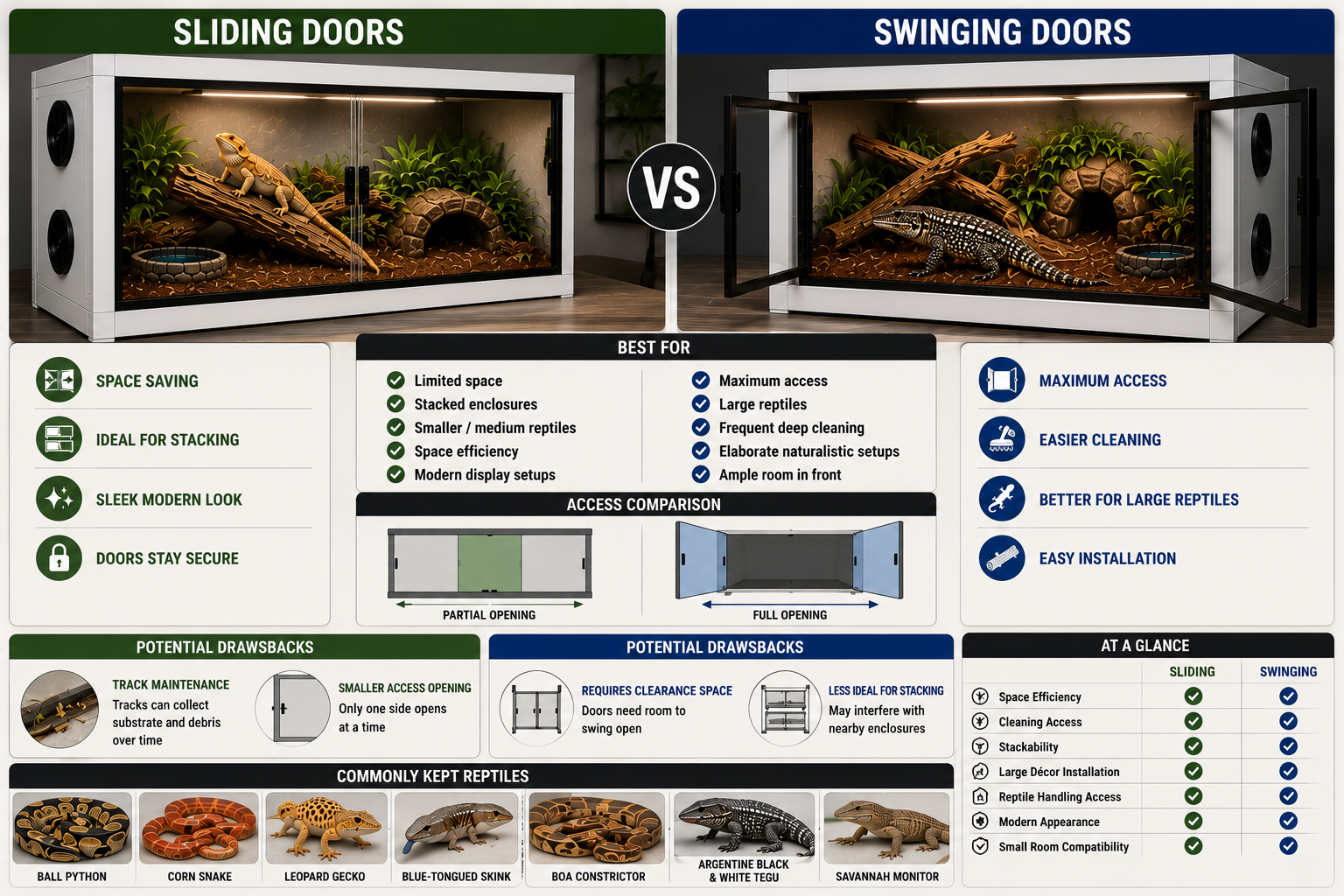
Sliding Doors vs Swinging Doors for PVC Reptile Enclosures
Both sliding doors and swinging doors can work well on a PVC reptile enclosure, but the best choice depends on your space, maintenance routine, and the species you keep.
Sliding doors are ideal for space-saving setups and stacked enclosures.
Swinging doors provide wider access for cleaning, decorating, and handling larger reptiles.
Neither option is universally better—the right choice depends on how you plan to use the enclosure.
Why Door Design Matters
When shopping for a PVC reptile enclosure, most buyers focus on:
Size
Heating
Ventilation
Humidity control
However, door design can significantly affect daily use.
You'll interact with the enclosure every time you:
Feed your reptile
Clean the habitat
Adjust décor
Replace water
Perform maintenance
Choosing the right door style can make these tasks much easier.
Sliding Doors
Sliding doors are among the most common options found on PVC reptile enclosures.
They typically consist of two glass or acrylic panels that move horizontally on tracks.
Benefits of Sliding Doors
Excellent for Tight Spaces
Because the doors slide sideways, they don't require extra room in front of the enclosure.
This makes them ideal for:
Small rooms
Apartments
Reptile walls
Breeding setups
Great for Stackable Enclosures
Many keepers using:
Multiple enclosures
Breeding racks
Dedicated reptile rooms
prefer sliding doors because they work well in stacked systems.
Modern Appearance
Sliding glass doors often create a clean, professional look that many hobbyists appreciate.
Reduced Risk of Doors Swinging Open
Since the panels move along tracks, they remain contained within the enclosure frame.
Potential Drawbacks of Sliding Doors
Smaller Access Opening
You can typically only open one side at a time.
This can make:
Deep cleaning
Large décor changes
Handling large reptiles
slightly more challenging.
Track Maintenance
Door tracks can occasionally collect:
Substrate
Dust
Debris
Regular cleaning helps keep them operating smoothly.
Swinging Doors
Swinging doors open outward like a cabinet door.
Some enclosures use:
Single-door designs
Double-door designs
depending on enclosure size.
Benefits of Swinging Doors
Maximum Access
One of the biggest advantages is the ability to access nearly the entire enclosure.
This makes:
Cleaning easier
Decorating easier
Animal handling easier
especially in larger habitats.
Better for Large Reptiles
Species such as:
Argentine Black and White Tegu
Boa Constrictor
may be easier to manage through larger door openings.
Easier Equipment Installation
Installing:
Branches
Backgrounds
Large hides
Bioactive elements
is often simpler with full-door access.
Potential Drawbacks of Swinging Doors
Require Clearance Space
The doors need room to open outward.
This can be inconvenient in:
Small rooms
Narrow hallways
Dense reptile setups
Less Ideal for Stacked Systems
Swinging doors may interfere with nearby enclosures if space is limited.
Which Door Style Is Best for Different Keepers?
Choose Sliding Doors If You:
Have limited space
Plan to stack enclosures
Want a sleek display enclosure
Keep smaller or medium-sized reptiles
Prioritize space efficiency
Choose Swinging Doors If You:
Want maximum enclosure access
Keep large reptiles
Build elaborate naturalistic habitats
Perform frequent deep cleaning
Have sufficient room in front of the enclosure
Species Considerations
Commonly Kept in Sliding-Door PVC Enclosures
Ball Python
Corn Snake
Leopard Gecko
Blue-Tongued Skink
Often Benefiting From Larger Access Doors
Boa Constrictor
Argentine Black and White Tegu
Savannah Monitor
Sliding vs Swinging Doors
FeatureSliding DoorsSwinging DoorsSpace EfficiencyExcellentModerateCleaning AccessGoodExcellentStackabilityExcellentModerateLarge Décor InstallationGoodExcellentReptile Handling AccessGoodExcellentModern AppearanceExcellentExcellentSmall Room CompatibilityExcellentModerate
Visual Comparison
Both door styles can work exceptionally well when matched to the keeper's needs and enclosure design.
Frequently Asked Questions
Are sliding doors safe for reptiles?
Yes. Quality sliding-door systems are widely used in reptile enclosures and can be fitted with locks for additional security.
Do swinging doors make cleaning easier?
Many keepers find swinging doors provide better access for deep cleaning and enclosure redesigns.
Which door style is best for stacked enclosures?
Sliding doors are typically preferred because they require less clearance.
Are sliding doors harder to maintain?
Not necessarily, but the tracks should be cleaned periodically to prevent debris buildup.
Which option is more popular?
Sliding doors are often the most common choice for standard PVC reptile enclosures, while swinging doors are frequently seen on larger custom builds.
Conclusion
When choosing between sliding doors and swinging doors for a PVC reptile enclosure, there is no single right answer.
Sliding doors excel in space efficiency, stackability, and modern design, making them ideal for many reptile keepers. Swinging doors provide superior access and convenience, especially for larger reptiles and heavily decorated habitats.
By considering your available space, maintenance preferences, and the species you keep, you can select the door style that will make your enclosure easier and more enjoyable to use for years to come.
