
How Easy Are PVC Reptile Enclosures to Clean?
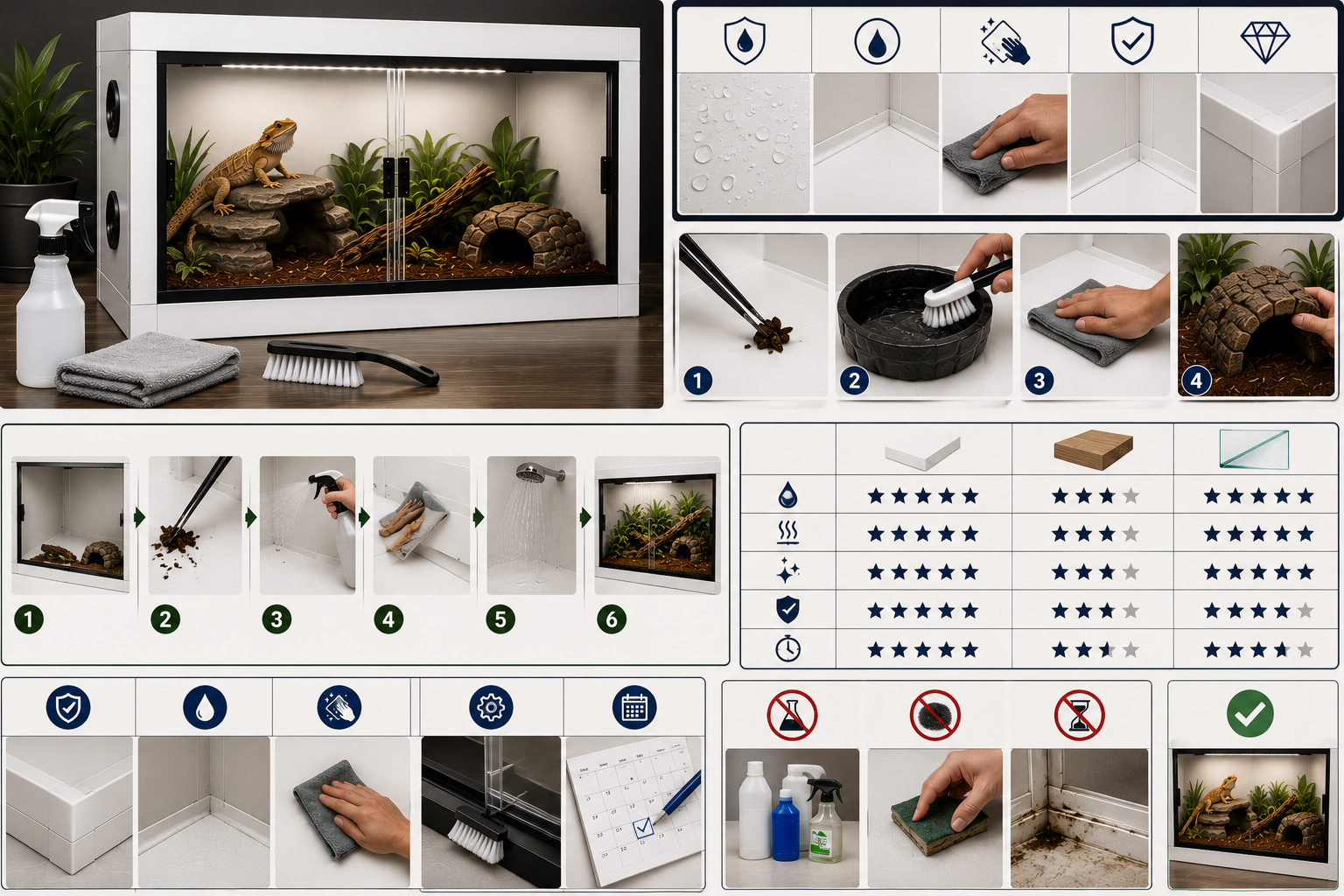
How Easy Are PVC Reptile Enclosures to Clean?
PVC reptile enclosures are generally one of the easiest enclosure types to clean and maintain. Their smooth, non-porous surfaces resist moisture, odors, and stains, making routine cleaning faster and more effective than many traditional enclosure materials.
For keepers who want a low-maintenance habitat, PVC is one of the most practical options available.
Why Cleaning Matters
Regular enclosure cleaning helps:
Maintain hygiene
Reduce odor buildup
Support reptile health
Prevent waste accumulation
Keep the habitat looking attractive
The easier an enclosure is to clean, the more likely routine maintenance will stay consistent.
What Makes PVC Easy to Clean?
Smooth, Non-Porous Surface
Unlike wood or other porous materials, PVC does not absorb:
Moisture
Waste
Odors
Spills
This means most messes stay on the surface where they can be wiped away easily.
Resistant to Humidity
Many reptiles require moderate to high humidity.
PVC handles humid conditions exceptionally well because it:
Does not swell
Does not warp
Resists moisture damage
This makes cleaning tropical setups much easier over the long term.
Easy Spot Cleaning
Daily maintenance often involves nothing more than:
Removing waste
Wiping surfaces
Refreshing water
Most keepers can complete spot cleaning in just a few minutes.
Cleaning Different Types of PVC Enclosures
Snake Enclosures
Species such as:
Ball Python
Corn Snake
Boa Constrictor
typically require:
Spot cleaning as needed
Regular substrate replacement
Periodic enclosure disinfection
PVC makes each step straightforward.
Lizard Enclosures
Species such as:
Bearded Dragon
Blue-Tongued Skink
often create more visible waste and substrate disturbance.
The smooth PVC surfaces help simplify cleanup.
Bioactive Enclosures
Even bioactive setups benefit from PVC's easy-to-clean structure.
While bioactive habitats rely on natural cleanup processes, PVC still makes:
Glass cleaning
Décor maintenance
General upkeep
much easier.
Daily Cleaning Tasks
Most PVC enclosure maintenance includes:
Remove Waste
Check for:
Feces
Urates
Shed skin
Food leftovers
Refresh Water
Clean and refill water dishes regularly.
Inspect Décor
Look for spills, debris, or waste buildup on:
Hides
Branches
Climbing structures
Deep Cleaning PVC Enclosures
Occasionally, a more thorough cleaning is needed.
This may include:
Removing substrate
Cleaning interior surfaces
Disinfecting décor
Washing doors and tracks
Because PVC is non-porous, deep cleaning is usually straightforward.
Cleaning Sliding Door Tracks
If your enclosure uses sliding doors, tracks should be checked periodically.
They can collect:
Dust
Substrate
Shed skin
Debris
Routine cleaning helps ensure smooth operation.
PVC vs Other Enclosure Materials
FeaturePVCWoodGlassMoisture ResistanceExcellentModerateExcellentOdor ResistanceExcellentModerateExcellentSurface CleaningExcellentModerateExcellentLong-Term MaintenanceLowModerateModerateHumidity CompatibilityExcellentModerateGood
PVC is often considered one of the most maintenance-friendly enclosure materials available.
Additional Benefits of PVC During Cleaning
Resistant to Staining
Many spills wipe away easily.
No Sealing Required
Unlike some wood enclosures, PVC generally does not require periodic sealing.
Durable Construction
Frequent cleaning does not typically damage the enclosure when appropriate reptile-safe products are used.
Common Cleaning Mistakes to Avoid
Using Harsh Chemicals
Always use reptile-safe cleaning products.
Forgetting Door Tracks
Tracks often collect debris over time.
Ignoring Water Dishes
Water bowls should be cleaned regularly to prevent contamination.
Waiting Too Long Between Cleanings
Routine maintenance is easier than dealing with heavy buildup later.
Visual Example
The smooth, moisture-resistant surfaces found in PVC enclosures help make routine maintenance quick and efficient.
Frequently Asked Questions
Are PVC reptile enclosures easier to clean than glass tanks?
Many keepers find PVC easier to maintain because it combines smooth surfaces with excellent humidity resistance and durable construction.
Do PVC enclosures absorb odors?
No. PVC is non-porous and generally does not absorb odors like some other materials can.
Can PVC be disinfected safely?
Yes. Most reptile-safe cleaning and disinfecting products can be used according to manufacturer instructions.
Are bioactive PVC enclosures harder to clean?
Not necessarily. Bioactive setups reduce some cleaning tasks while PVC simplifies routine maintenance.
How often should a PVC enclosure be cleaned?
Spot cleaning should occur as needed, while deeper cleaning schedules vary depending on species, enclosure type, and husbandry practices.
Conclusion
PVC reptile enclosures are among the easiest reptile habitats to clean thanks to their smooth, non-porous, moisture-resistant construction.
Whether you're keeping a ball python, bearded dragon, corn snake, or another species, PVC helps simplify both daily maintenance and deep cleaning while resisting odors, stains, and humidity-related damage.
For reptile keepers looking for a durable, hygienic, and low-maintenance enclosure, PVC remains one of the best options available.
