
How to Clean and Disinfect a PVC Reptile Enclosure
How to Clean and Disinfect a PVC Reptile Enclosure
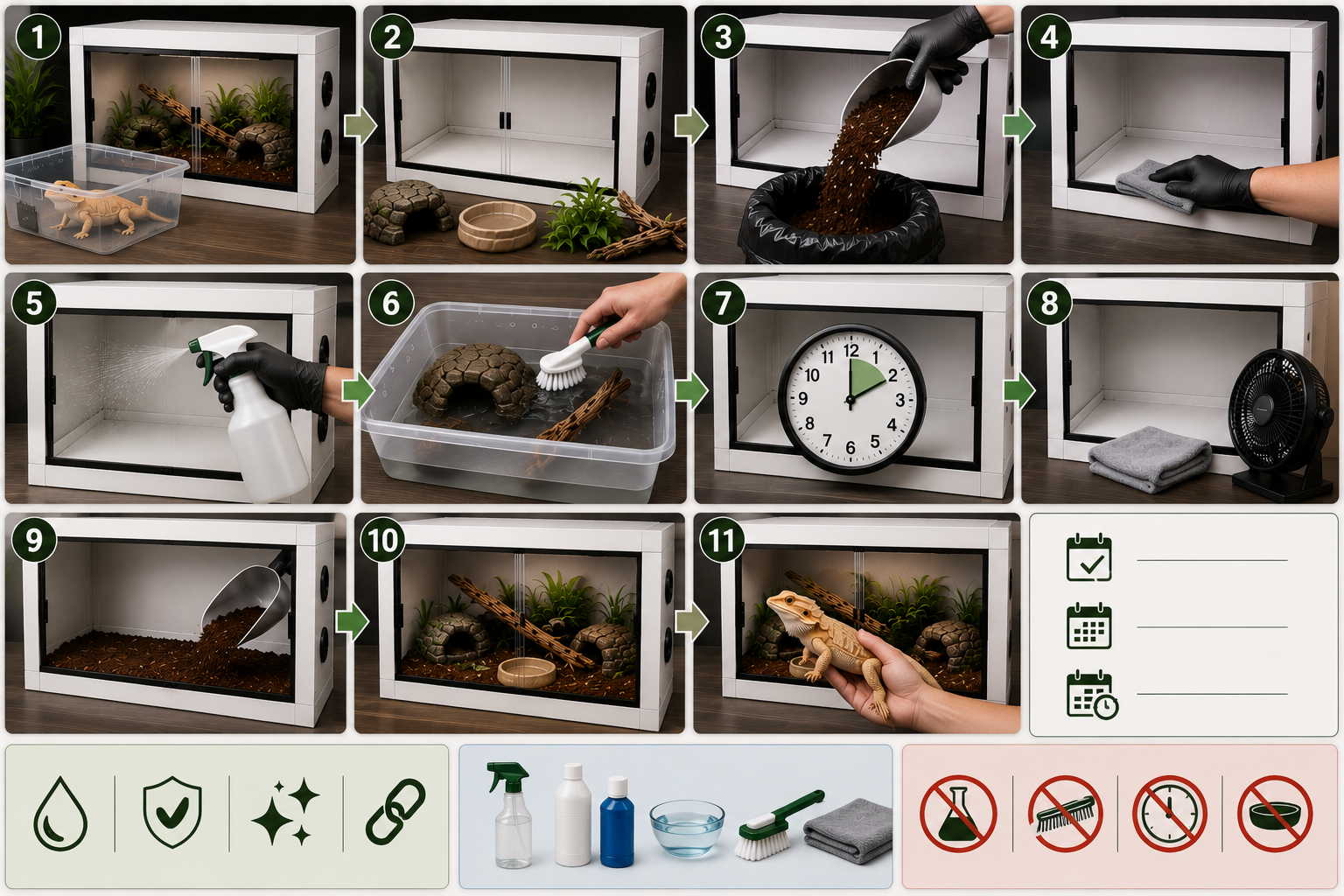
Cleaning a PVC reptile enclosure is simple because PVC is smooth, non-porous, and moisture-resistant. The process typically involves removing your reptile, taking out décor and substrate, cleaning visible debris, disinfecting surfaces, rinsing if necessary, and allowing everything to dry before reassembly.
Regular cleaning helps maintain a healthy environment and reduces the buildup of waste, bacteria, and odors.
Why Regular Cleaning Matters
A clean enclosure helps support:
Reptile health
Better hygiene
Odor control
Improved appearance
Reduced contamination risks
Routine maintenance is easier and more effective than waiting for heavy buildup to occur.
Supplies You'll Need
Before you begin, gather:
Paper towels or soft cloths
Reptile-safe disinfectant
Warm water
Cleaning brush or sponge
Disposable gloves (optional)
Fresh substrate
Always follow the instructions provided with any cleaning product.
Step 1: Move Your Reptile to a Safe Temporary Container
Before cleaning:
Place your reptile in a secure temporary enclosure
Ensure appropriate temperature conditions
Minimize handling stress
Species such as:
Ball Python
Bearded Dragon
Corn Snake
should never remain in the enclosure during cleaning or disinfection.
Step 2: Remove Décor and Accessories
Take out:
Hides
Water bowls
Branches
Plants
Climbing structures
Feeding dishes
Set them aside for separate cleaning.
Step 3: Remove Old Substrate
Dispose of:
Soiled bedding
Shed skin
Waste material
Leftover food
Inspect corners and edges carefully.
Step 4: Wipe Away Loose Debris
Before disinfecting, remove:
Dirt
Dust
Waste residue
Water spots
Using warm water and a cloth first makes the disinfection process more effective.
Step 5: Apply a Reptile-Safe Disinfectant
Follow the product's instructions carefully.
Pay special attention to:
Floor surfaces
Walls
Corners
Door tracks
Frequently contacted areas
PVC's non-porous surface makes disinfecting particularly effective because contaminants remain on the surface rather than soaking into the material.
Step 6: Clean Décor Separately
Hides, bowls, and décor should also be cleaned.
Inspect for:
Waste buildup
Mold
Excess moisture
Damage
Replace items if they become unsafe or difficult to sanitize.
Step 7: Allow Proper Contact Time
Many disinfectants require a specific amount of time to work effectively.
Do not rush this step.
Follow the manufacturer's directions regarding contact time and rinsing requirements.
Step 8: Dry the Enclosure Thoroughly
Before adding substrate:
Ensure surfaces are dry
Confirm there is no standing moisture
Check corners and seams
Dry conditions help prevent unwanted moisture buildup.
Step 9: Add Fresh Substrate
Choose substrate appropriate for your species.
Examples include:
Coconut husk
Cypress mulch
Paper-based substrates
Bioactive substrate systems
Step 10: Reinstall Equipment and Décor
Replace:
Hides
Water bowls
Branches
Heating equipment
Lighting systems
Verify that all equipment is functioning correctly before returning your reptile.
Step 11: Return Your Reptile
Once temperatures and humidity have stabilized, your reptile can safely return to the enclosure.
Monitor behavior for a short period to ensure everything is functioning normally.
How Often Should You Clean?
Daily
Remove waste
Replace dirty water
Spot clean affected areas
Weekly
Inspect décor
Clean water bowls thoroughly
Wipe surfaces if needed
Monthly or As Needed
Deep clean enclosure
Replace substrate
Disinfect surfaces
Cleaning frequency depends on:
Species
Enclosure size
Substrate type
Husbandry practices
Why PVC Is Easy to Disinfect
PVC offers several cleaning advantages:
Non-Porous Surface
Does not absorb:
Moisture
Waste
Odors
Resistant to Humidity
Ideal for tropical reptiles such as:
Crested Gecko
Boa Constrictor
Durable Construction
Regular cleaning typically causes minimal wear when proper products are used.
Common Cleaning Mistakes
Using Unsafe Chemicals
Only use products intended for reptile habitats.
Forgetting Door Tracks
Sliding-door tracks often collect debris.
Reintroducing the Reptile Too Quickly
Ensure the enclosure is clean, dry, and properly set up first.
Ignoring Water Bowls
Water dishes should receive frequent attention because they can become contaminated quickly.
Visual Example
Regular cleaning and proper disinfection help maintain a healthier and more attractive reptile habitat.
Frequently Asked Questions
Can PVC reptile enclosures be disinfected safely?
Yes. PVC is one of the easiest enclosure materials to disinfect because of its non-porous surface.
How often should I deep clean my reptile enclosure?
The schedule depends on the species, enclosure setup, and husbandry practices, but regular deep cleaning is an important part of reptile care.
Do I need to remove my reptile during cleaning?
Yes. Reptiles should be moved to a secure temporary container during cleaning and disinfection.
Can I reuse substrate after cleaning?
Most traditional substrates should be replaced rather than reused during deep cleaning.
Are PVC enclosures easier to clean than wood enclosures?
Generally, yes. PVC resists moisture and does not absorb waste or odors like some porous materials can.
Conclusion
PVC reptile enclosures are among the easiest reptile habitats to clean and disinfect thanks to their durable, moisture-resistant, non-porous construction.
By following a consistent cleaning routine and using reptile-safe disinfectants, you can maintain a hygienic environment that supports your reptile's health while keeping the enclosure looking its best for years to come.
