
How Thick Should a Live Edge Slab Be for a Table?
How Thick Should a Live Edge Slab Be for a Table?
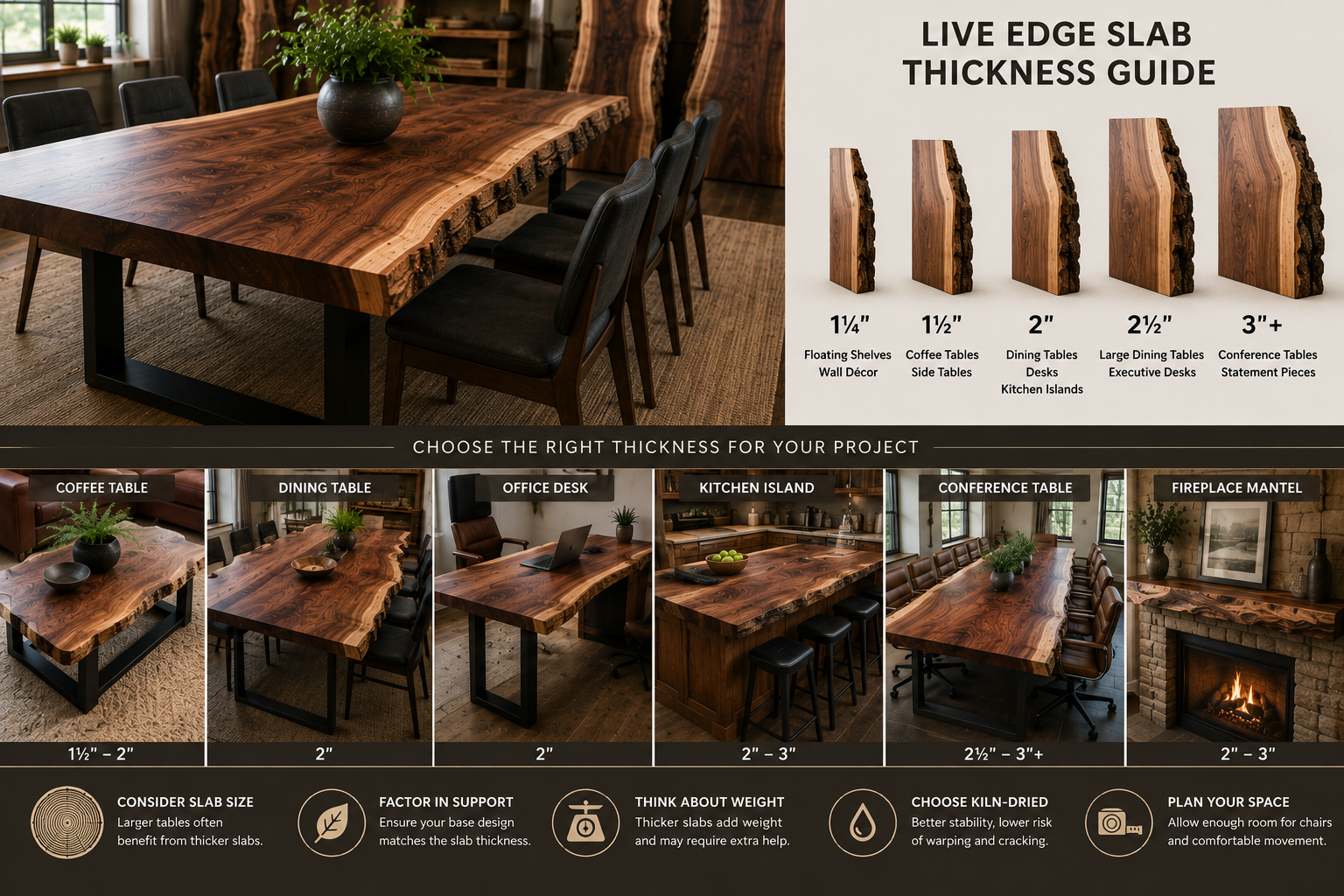
For most live edge tables, a slab thickness of 2 inches is considered the ideal balance of strength, durability, and visual appeal. Smaller tables, such as coffee tables or side tables, can often be built with 1½-inch slabs, while larger dining tables and conference tables typically benefit from 2½- to 3-inch slabs for a more substantial appearance and added structural integrity.
Why Slab Thickness Matters
Choosing the right thickness is about more than appearance.
The thickness of a live edge slab affects:
Structural strength
Long-term stability
Overall weight
Visual impact
Cost
Ease of installation
A slab that's too thin may lack the bold look many homeowners want, while an overly thick slab can add unnecessary weight and expense.
Selecting the proper thickness ensures your table is both functional and visually balanced.
Standard Live Edge Slab Thicknesses
Most live edge slabs are available in several common thicknesses.
Finished ThicknessBest For1¼ InchesFloating shelves, wall décor, small accent tables1½ InchesCoffee tables, console tables, side tables2 InchesDining tables, office desks, kitchen islands2½ InchesLarge dining tables, executive desks3 Inches and ThickerConference tables, statement furniture, luxury builds
For the majority of residential furniture, 2 inches remains the most popular choice.
Choosing the Right Thickness by Table Type
Dining Tables
Recommended thickness:
2 inches
This size offers:
Excellent durability
Comfortable weight
Premium appearance
Long-term stability
For oversized dining tables seating eight or more people, a 2½-inch slab creates an even more impressive look.
Coffee Tables
Recommended thickness:
1½–2 inches
Coffee tables generally don't require extremely thick slabs because of their smaller size.
A 1½-inch walnut slab often provides the perfect balance between elegance and practicality.
Office Desks
Recommended thickness:
2 inches
A thicker desktop creates a premium appearance while offering enough strength to support monitors, equipment, and everyday work.
Live edge desks also benefit from walnut's natural durability and timeless beauty.
Conference Tables
Recommended thickness:
2½–3 inches
Large conference tables become focal points in professional spaces.
A thicker slab communicates craftsmanship, quality, and permanence.
Console Tables
Recommended thickness:
1½–2 inches
Console tables are typically narrower than dining tables, making this thickness ideal for maintaining an elegant profile without unnecessary weight.
Kitchen Islands
Recommended thickness:
2–3 inches
Kitchen islands receive heavy daily use.
A thicker walnut slab creates a luxurious appearance while providing outstanding durability.
Thickness and Wood Species
Different hardwoods perform differently, but common live edge species such as black walnut, white oak, maple, and cherry all provide excellent strength when properly dried.
Black Walnut
Ideal thickness:
2 inches for most dining tables
2½ inches for luxury statement pieces
Walnut combines strength with a refined appearance.
White Oak
Recommended thickness:
2 inches
2½ inches
White oak offers exceptional durability and works well in both rustic and modern interiors.
Maple
Recommended thickness:
2 inches
Maple's hardness makes it an excellent choice for high-use surfaces.
Cherry
Recommended thickness:
1½–2 inches
Cherry creates elegant furniture with a warm, timeless look.
Does a Thicker Slab Mean a Stronger Table?
Not always.
Strength depends on several factors, including:
Wood species
Moisture content
Base design
Joinery
Span length
Overall construction
A properly built 2-inch kiln-dried walnut slab is more than strong enough for most dining tables.
Increasing thickness beyond what's needed often adds weight without providing significant practical benefits.
Consider the Weight
As slab thickness increases, so does the overall weight.
For example:
Thicker slabs may require multiple people to move.
Larger tables often need stronger bases.
Upper-floor installations may be more challenging.
Freight shipping costs can increase significantly.
Always balance appearance with practicality.
The Importance of Kiln-Dried Lumber
Regardless of thickness, moisture content is critical.
A kiln-dried slab offers:
Better dimensional stability
Lower risk of warping
Reduced shrinkage
Improved performance indoors
Even a thick slab can develop problems if it hasn't been properly dried.
Live Edge vs Straight Edge Thickness
Whether you choose a live edge or straight edge slab, thickness recommendations remain largely the same.
However, live edge furniture often appears slightly thicker because of its natural contours, giving it a more substantial and handcrafted look.
Should You Choose a Single Slab or Bookmatched Slabs?
Thickness is only one part of the decision.
Single Slab
Advantages:
Continuous grain
Natural appearance
Simpler construction
Bookmatched Slabs
Advantages:
Wider table surface
Mirrored grain patterns
Luxury appearance
Ideal for oversized dining tables
Both options are available in a range of thicknesses.
Tips for Choosing the Right Slab
Before making a purchase:
Measure your available space.
Consider how many people the table will seat.
Choose kiln-dried wood.
Verify the finished thickness.
Leave extra material if additional flattening is required.
Select a base designed to support the slab's weight.
Taking these factors into account helps ensure a successful project.
Common Mistakes to Avoid
Choosing Thickness Based Only on Appearance
A thicker slab may look impressive, but it can also increase cost, weight, and installation complexity.
Ignoring Finished Dimensions
Some suppliers list rough thickness rather than finished thickness.
Confirm whether the slab has already been surfaced or flattened.
Overlooking the Base
A heavy slab requires a properly engineered base to prevent sagging or instability.
Forgetting About Room Size
Very thick slabs can overwhelm smaller dining rooms or breakfast nooks.
Choose proportions that complement your space.
Frequently Asked Questions
Is a 2-inch live edge slab thick enough for a dining table?
Yes. A finished thickness of 2 inches is widely considered the standard for custom live edge dining tables because it offers an excellent combination of strength, durability, and visual appeal.
Can I build a table with a 1½-inch slab?
Absolutely. A 1½-inch slab works well for coffee tables, side tables, desks, and smaller dining tables when properly supported.
Are 3-inch slabs better?
Not necessarily. They create a dramatic, luxury appearance but also increase weight and cost. For most homeowners, a 2-inch slab provides everything needed for everyday use.
Should slab thickness include the finish?
No. Thickness measurements typically refer to the finished wood itself. Protective finishes add only a negligible amount and don't affect the structural thickness.
Conclusion
The ideal thickness for a live edge slab depends on the size and purpose of your table, but 2 inches remains the preferred choice for most dining tables, desks, and custom furniture. It offers the perfect balance of durability, stability, manageable weight, and timeless style.
Smaller projects often look best with 1½-inch slabs, while oversized dining tables and conference tables can benefit from the bold appearance of 2½- to 3-inch slabs. No matter which thickness you choose, selecting a kiln-dried slab from a reputable supplier is one of the best ways to ensure your finished table remains beautiful and stable for years to come.
