
Live Edge Dining Tables: How to Choose the Right Walnut Slab
Live Edge Dining Tables: How to Choose the Right Walnut Slab
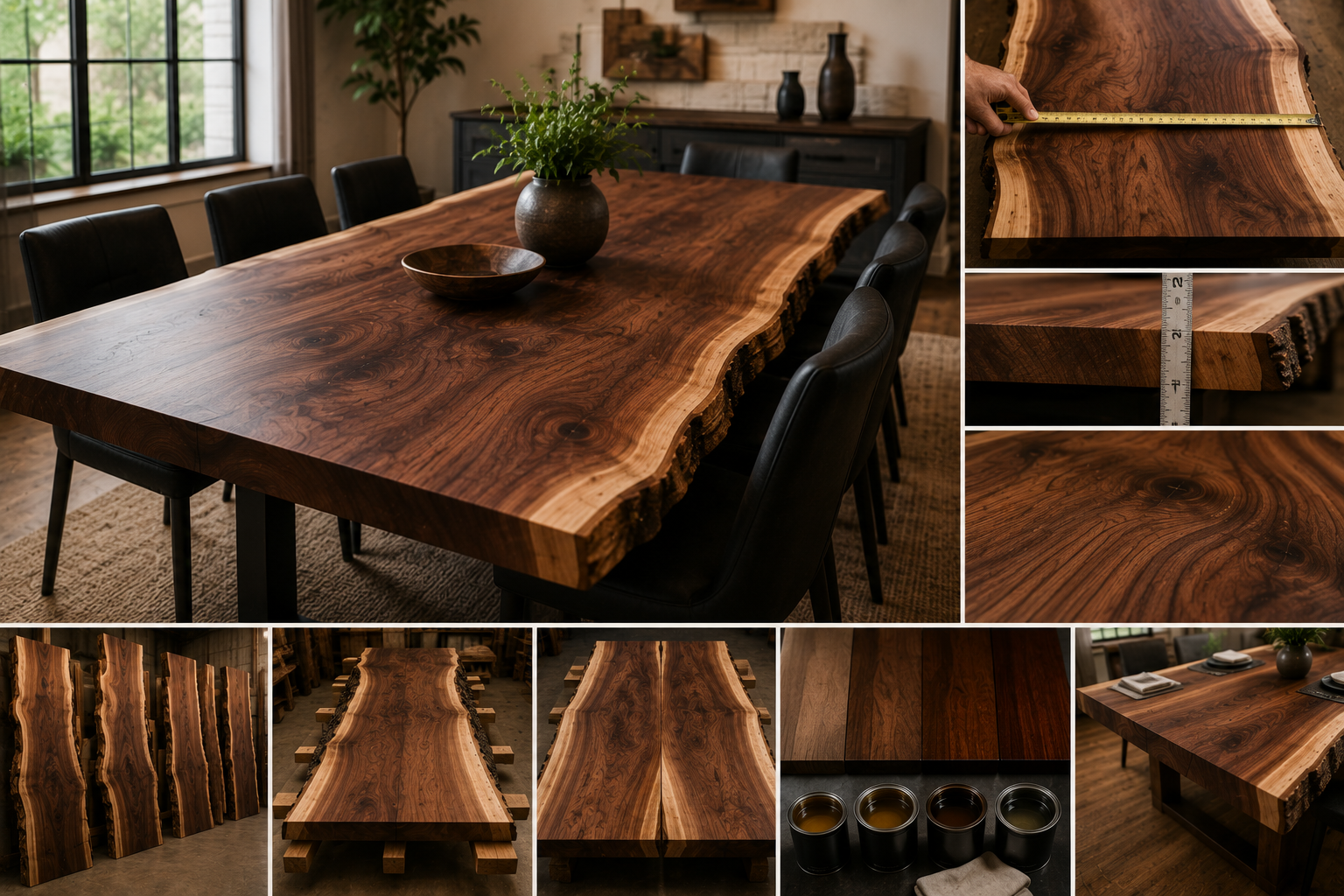
choosing the right walnut slab for a live edge dining table starts with selecting a kiln-dried slab that's the correct size, thickness, and moisture content for your space. Look for attractive grain patterns, stable live edges, and enough width to achieve your desired table design. A high-quality black walnut slab provides exceptional durability, timeless beauty, and can become a centerpiece that lasts for generations.
Why Walnut Is the Gold Standard for Live Edge Dining Tables
Few hardwoods are as admired as black walnut.
Its rich chocolate-brown color, flowing grain, and naturally elegant live edge create dining tables that blend craftsmanship with nature. Every slab is unique, ensuring no two tables are ever exactly alike.
Beyond its appearance, walnut offers several practical advantages:
Excellent durability
Outstanding dimensional stability
Easy workability
Long-lasting performance
Timeless appeal that complements many interior styles
Whether your home is modern, rustic, farmhouse, or transitional, a walnut dining table fits beautifully.
Start with the Right Table Size
Before shopping for a slab, determine the size of the finished table.
Think about:
How many people you want to seat
The available floor space
Chair clearance
Walkways around the table
A comfortable dining area should allow enough room for chairs to be pulled out while still leaving space to move around the table.
Common Dining Table Sizes
Seating CapacityRecommended Table Length4 People48–60 inches6 People72 inches8 People84–96 inches10 People108–120 inches
These are general guidelines. Custom tables can be built to almost any dimension.
Choose the Right Slab Width
Width has a major impact on both appearance and functionality.
Many homeowners prefer a single wide slab because it preserves the uninterrupted beauty of the grain.
If your desired width exceeds what's available from a single slab, consider a bookmatched pair. Bookmatching creates a mirrored grain pattern that becomes a dramatic focal point.
When comparing slabs, look for:
Consistent width
Balanced live edges
Minimal taper
Attractive natural curves
Select the Proper Thickness
Thickness affects both durability and visual impact.
1½ Inches
Suitable for:
Smaller dining tables
Compact breakfast nooks
Contemporary designs
2 Inches
The most popular choice because it provides:
Excellent strength
Premium appearance
Comfortable weight
Long-term durability
2½–3 Inches
Best for:
Large dining tables
Luxury statement pieces
Rustic designs
Heavy pedestal bases
Thicker slabs create a bold, handcrafted appearance.
Look for Beautiful Grain Patterns
One of walnut's biggest attractions is its grain.
Popular grain characteristics include:
Cathedral grain
Wavy grain
Curly figure
Feather-like figuring
Natural color variation
Every slab tells its own story, so choose one that complements your home's style.
Decide Whether You Like Sapwood
Black walnut naturally includes two distinct colors.
Heartwood
The darker center of the tree.
Characteristics include:
Rich chocolate brown
Deep warm tones
Elegant appearance
Sapwood
The lighter outer portion of the tree.
Some homeowners love the dramatic contrast between dark heartwood and creamy sapwood, while others prefer slabs with mostly heartwood for a more uniform look.
Neither choice is better—it simply depends on your personal preference.
Inspect the Live Edge
The live edge is what makes each table unique.
Look for:
Smooth natural curves
Well-preserved edges
Stable wood fibers
Minimal loose bark
Attractive organic shape
A beautiful live edge should enhance the design without compromising the slab's structural integrity.
Always Choose Kiln-Dried Walnut
For indoor dining tables, kiln-dried lumber is generally the best option.
Benefits include:
Greater dimensional stability
Lower moisture content
Reduced risk of warping
Better resistance to cracking
Improved long-term performance
A properly dried slab is far less likely to develop movement after it has been installed in your home.
Single Slab vs Bookmatched Slabs
Both options create stunning dining tables.
Single Slab
Advantages:
Continuous grain
One-piece appearance
Natural character
Simple construction
Ideal for medium-sized dining tables.
Bookmatched Slabs
Advantages:
Symmetrical grain
Greater table width
Luxury appearance
Dramatic visual impact
Bookmatched slabs are especially popular for large dining and conference tables.
Choose the Right Base
The tabletop may be the centerpiece, but the base also influences the overall style and stability.
Popular options include:
Steel U-legs
Trapezoid metal legs
X-frame bases
Pedestal bases
Trestle bases
Solid wood bases
Choose a base that complements both the walnut slab and your home's design.
Consider the Finish
A quality finish protects the wood while highlighting its natural beauty.
Popular finishes include:
Hard Wax Oil
Provides:
Natural appearance
Easy maintenance
Satin sheen
Repairable finish
Danish Oil
Offers:
Rich color enhancement
Smooth feel
Easy application
Polyurethane
Ideal for households that need extra protection against:
Spills
Scratches
Daily wear
Choose the finish that best matches your lifestyle and maintenance preferences.
Questions to Ask Before Buying
When shopping for a walnut slab, ask:
Is the slab kiln dried?
What is the current moisture content?
Are the dimensions rough or finished?
Has the slab been flattened?
Are there any structural cracks?
Can I see photos of the exact slab?
A reputable supplier should be able to answer all of these questions.
Common Mistakes to Avoid
Choosing a Slab Before Measuring Your Space
Always measure your dining room before selecting a slab.
A beautiful table that overwhelms the room won't be comfortable to use.
Focusing Only on Color
Color is important, but also evaluate:
Grain pattern
Width
Thickness
Stability
Live edge quality
Ignoring Moisture Content
A dining table should be built from properly dried wood to reduce the likelihood of future movement.
Buying the Cheapest Slab
Premium walnut costs more for a reason.
Investing in a high-quality slab often results in better stability, more attractive grain, and a longer-lasting finished piece.
Frequently Asked Questions
What thickness is best for a walnut dining table?
A finished thickness of approximately 2 inches is the most popular choice because it balances strength, durability, and appearance.
Should I choose a single slab or a bookmatched pair?
If you can find a slab wide enough for your desired table, a single slab creates a seamless look. For larger tables, bookmatched slabs provide greater width and a striking mirrored grain pattern.
Is black walnut durable enough for everyday dining?
Yes. Black walnut is a durable hardwood that performs exceptionally well for dining tables when properly finished and maintained.
How do I protect a walnut dining table?
Use coasters and placemats, wipe spills promptly, clean with a soft cloth, and maintain the protective finish according to the manufacturer's recommendations.
Conclusion
A live edge walnut dining table is more than just furniture—it's a handcrafted centerpiece that showcases the natural beauty of one of North America's most prized hardwoods. Choosing the right slab means looking beyond color alone and considering size, thickness, grain, moisture content, and the quality of the live edge.
Whether you prefer a dramatic single slab or an elegant bookmatched design, investing in a kiln-dried walnut slab from a reputable supplier ensures your table will provide both beauty and durability for years to come. With thoughtful planning and careful selection, you'll create a one-of-a-kind dining table that becomes the heart of your home.
