
How to Help Senior Dogs Use Stairs Without Pain
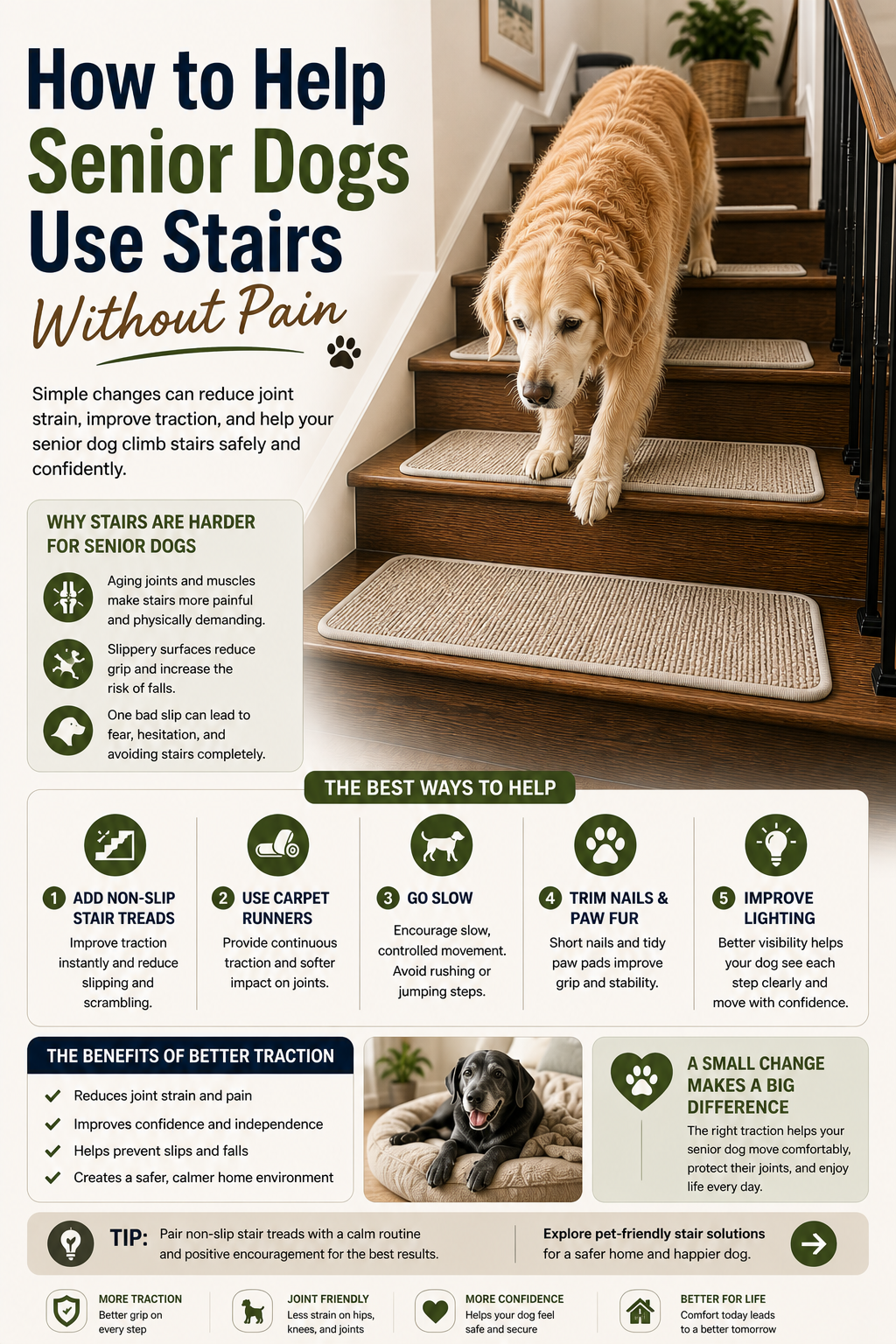
How to Help Senior Dogs Use Stairs Without Pain
To help senior dogs use stairs without pain, improve traction with non-slip stair treads or carpet runners, reduce joint strain, and encourage slow, stable movement. Senior dogs often struggle because slippery stairs increase pressure on aging hips, knees, and joints.
Introduction (Problem Hook)
You start noticing the little things first.
Your dog pauses at the bottom of the stairs.
Moves more slowly.
Or struggles to keep balance while climbing.
For senior dogs, stairs can quietly become one of the hardest parts of daily life.
And when the stairs are slippery, every step can feel stressful and painful.
The good news?
You usually don’t need to change your entire home to make a huge difference.
Why Stairs Become Difficult for Senior Dogs
As dogs age, they naturally lose:
Joint flexibility
Muscle strength
Balance and coordination
This makes climbing stairs more physically demanding.
Smooth hardwood or laminate stairs make the problem even worse because aging dogs need more traction and stability than younger dogs.
According to the American Kennel Club, senior dogs commonly experience mobility changes that affect confidence and movement on stairs. (akc.org)
Signs Your Senior Dog Is Struggling on Stairs
You may notice:
Hesitation before climbing
Slipping or scrambling
Taking stairs slowly
Avoiding stairs completely
Difficulty going down more than up
These are often signs that the stairs feel painful or unsafe.
Common Mistakes People Make
1. Assuming It’s Just “Old Age”
Many mobility problems improve significantly with safer surfaces.
2. Ignoring Minor Slips
Even small slips increase joint strain and reduce confidence.
3. Focusing Only on Supplements
Joint support helps—but daily movement inside the home matters too.
Related Problems People Also Search
If you’re dealing with this, you’re likely also searching:
Best stairs for senior dogs
Dog slipping on stairs
Non-slip stairs for dogs
Senior dog mobility help
Stair treads for pets
All of these point to one thing:
👉 Senior dogs need safer, lower-stress movement.
The Best Ways to Help Senior Dogs on Stairs
1. Add Non-Slip Stair Treads
This is the biggest improvement for most homes.
Why It Helps
Improves grip immediately
Reduces slipping and scrambling
Makes movement feel safer
Lowers stress on joints
Non-slip stair surfaces are commonly recommended because they improve traction and reduce fall risk for pets and older adults alike.
2. Use Carpet Runners for Full Coverage
Runners provide:
Continuous traction
Softer impact
More confidence on longer staircases
Especially helpful for:
Large senior dogs
Arthritic dogs
Steep staircases
3. Encourage Slow, Controlled Movement
Avoid:
Rushing
Excited stair running
Jumping multiple steps
Slow movement reduces joint strain significantly.
4. Keep Nails and Paw Fur Trimmed
Long nails and furry paw pads reduce traction on smooth stairs.
Simple grooming improvements can help stability noticeably.
5. Improve Stair Lighting
Older dogs often benefit from:
Better visibility
Clearer step depth perception
Reduced visual uncertainty
This helps movement feel more predictable.
Why Traction Changes Confidence So Quickly
Many senior dogs aren’t refusing stairs because they’re stubborn.
They’re reacting to:
Pain
Instability
Fear of slipping again
Once the stairs feel secure:
Confidence often improves naturally
Hesitation decreases
Movement becomes smoother and calmer
The Most Practical Long-Term Solution
The best stair setup for senior dogs combines:
Non-slip stair treads or runners
Consistent traction on every step
Calm movement habits
Good visibility and lighting
This creates a staircase your dog can use with less stress every day.
Product Integration (Soft Recommendation)
Most people don’t realize how much slippery stairs affect senior dogs until the hesitation becomes obvious.
But once the surface feels stable, the difference is immediate.
Your dog moves more confidently.
There’s less scrambling and slipping.
And everyday movement becomes easier again.
That’s why many pet owners add non-slip stair covers and textured stair surfaces instead of replacing their staircase entirely.
They improve traction while keeping the home looking clean and modern.
If you want to explore pet-friendly stair solutions, start here:
→ Non-Slip Stair Cover Collection
And for full mobility-friendly upgrades:
→ Pet-Friendly Stair Solutions
Visual Example Section
Imagine:
Your dog climbing stairs calmly and confidently
Less slipping and joint strain
A safer and more comfortable home environment
That’s what proper traction can create.
Frequently Asked Questions (SEO Gold)
Why do senior dogs struggle with stairs?
Aging joints, muscle weakness, and slippery surfaces all contribute.
What is the best way to help older dogs on stairs?
Add non-slip traction and encourage slow movement.
Are hardwood stairs bad for senior dogs?
They can be difficult because smooth surfaces reduce grip.
Do stair treads help senior dogs?
Yes, they improve traction and confidence significantly.
Can stairs hurt dogs with arthritis?
Yes, slippery stairs can increase stress on painful joints.
Should senior dogs avoid stairs completely?
Not always—many dogs do well with safer stair surfaces and support.
Conclusion (Soft Call to Action)
Helping a senior dog use stairs safely isn’t just about comfort—it’s about protecting their confidence and mobility long-term.
Once the stairs feel stable and predictable, many dogs move more comfortably almost immediately.
If you’re ready to make your home safer for your aging dog, non-slip stair covers are one of the smartest upgrades you can make.
Explore your options here:
→ Non-Slip Stair Cover Collection
