
Are Dog Ramps Better Than Stairs? What Pet Owners Should Know
Are Dog Ramps Better Than Stairs? What Pet Owners Should Know
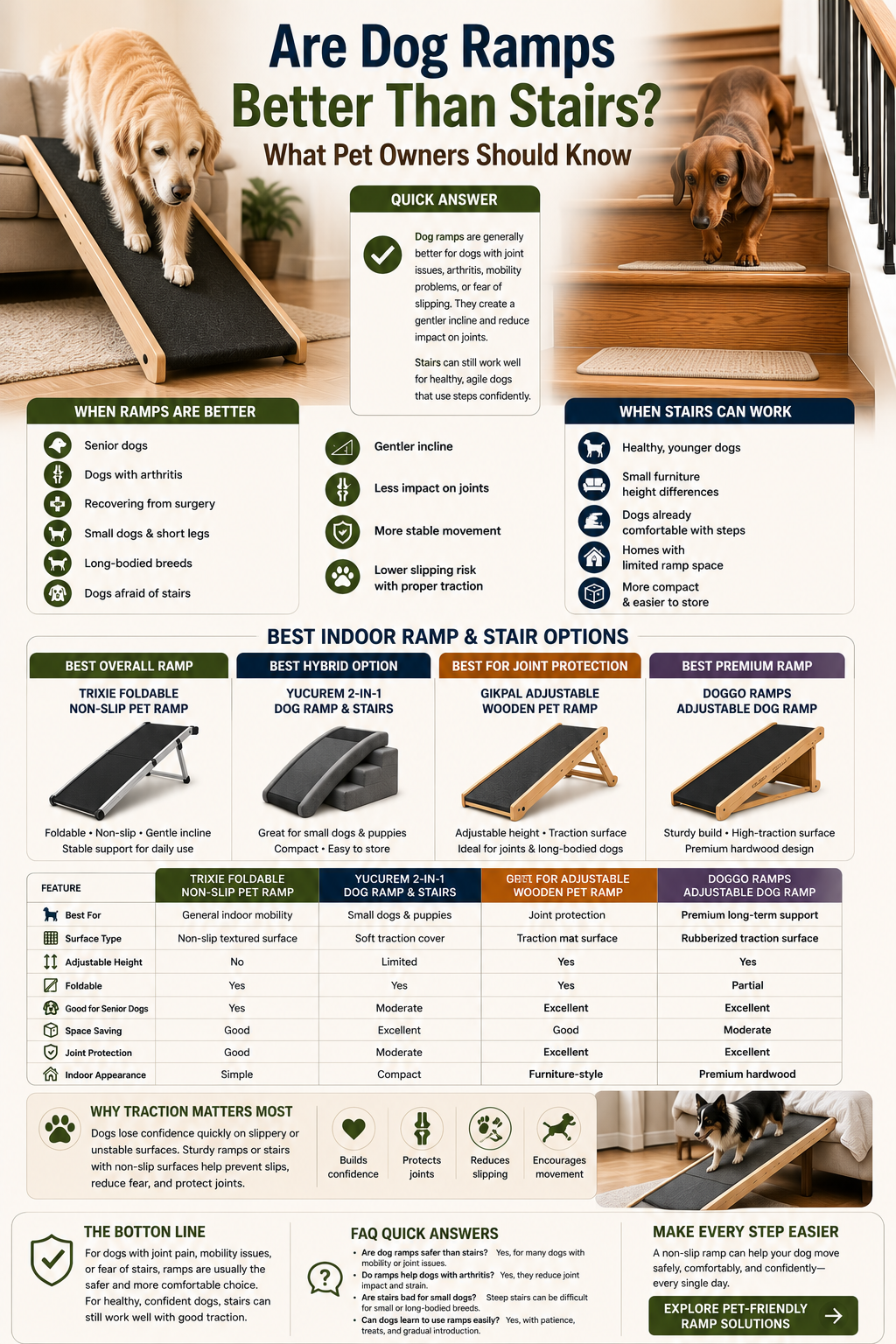
Dog ramps are generally better than stairs for dogs with joint issues, arthritis, mobility problems, short legs, or fear of slipping. Ramps create a gentler incline and reduce impact on hips, knees, and backs. Stairs can still work well for healthy, agile dogs that already use steps confidently.
Introduction (Problem Hook)
Many pet owners don’t think about ramps or stairs until their dog starts struggling.
Maybe you’ve noticed:
Hesitation before climbing
Slipping on stairs
Difficulty jumping onto furniture
Slower movement with age
And suddenly you’re wondering:
👉 Is a ramp actually better than stairs?
The answer depends on your dog’s:
Age
Size
Joint health
Confidence
Mobility needs
But for many dogs—especially seniors and small breeds—ramps are often the safer long-term choice.
Why Some Dogs Struggle With Stairs
Stairs require dogs to:
Lift their body weight repeatedly
Balance carefully
Absorb impact while descending
That can increase stress on:
Hips
Knees
Spine
Joints
According to The Spruce Pets, ramps are especially helpful for dogs with arthritis, mobility issues, or long-backed breeds like Dachshunds and Corgis because they reduce jumping and impact strain. (The Spruce Pets)
When Dog Ramps Are Better Than Stairs
Ramps are usually the better option for:
Senior dogs
Dogs with arthritis
Dogs recovering from surgery
Small dogs struggling with tall steps
Long-bodied breeds
Dogs afraid of stairs
Why Ramps Help
Gentler incline
Less impact on joints
More stable movement
Lower slipping risk with proper traction
Veterinarians interviewed by The Spruce Pets specifically noted that ramps reduce injury risk and are easier on joints than stairs for dogs with mobility concerns. (The Spruce Pets)
When Dog Stairs Can Still Work Well
Dog stairs may still be useful for:
Healthy younger dogs
Small furniture height differences
Dogs already comfortable with steps
Homes with limited ramp space
Stairs are often:
More compact
Easier to store
Better for tighter spaces
Best Indoor Ramp & Stair Options for Dogs
For most pet owners, the biggest decision comes down to:
Joint protection
Space available
Dog confidence level
Traction and safety
Best Overall Ramp
Why it stands out:
Foldable storage
Good traction surface
Gentle incline
Stable support for daily use
Best Hybrid Ramp + Stairs Option
Best for:
Small dogs
Puppies
Apartment spaces
Dogs transitioning from stairs to ramps
Best for Joint Protection
Best for:
Arthritic dogs
Senior dogs
Long-bodied breeds
Best Premium Indoor Ramp
WIRED highlighted Doggo Ramps for their sturdy construction and high-traction walking surface, especially for dogs needing stable indoor support. (WIRED)
Product Comparison Table
FeatureTRIXIE Foldable Non-Slip Pet RampYucurem 2-in-1 Dog Ramp & StairsGIKPAL Adjustable Wooden Pet RampDoggo Ramps Adjustable Dog RampBest ForGeneral indoor mobilitySmall dogs & puppiesJoint protectionPremium long-term supportSurface TypeNon-slip textured surfaceSoft traction coverTraction mat surfaceRubberized traction surfaceAdjustable HeightNoLimitedYesYesFoldableYesYesYesPartialGood for Senior DogsYesModerateExcellentExcellentSpace SavingGoodExcellentGoodModerateJoint ProtectionGoodModerateExcellentExcellentIndoor AppearanceSimpleCompactFurniture-stylePremium hardwood
Why Traction Matters More Than Most People Realize
Whether you choose ramps or stairs, traction is the most important factor.
Dogs lose confidence quickly when surfaces feel:
Slippery
Unstable
Wobbly
According to The Spruce Pets, sturdy ramps with non-slip surfaces are preferred because wobbling and poor traction can make dogs fearful of using them.
The Most Practical Long-Term Solution
For dogs with:
Joint pain
Fear of stairs
Mobility changes
Slipping problems
A non-slip ramp is usually the safest and most comfortable option long-term.
For younger healthy dogs, stairs can still work well—as long as the surface provides enough traction.
Visual Example Section
Imagine:
Your dog moving confidently again
Less slipping and hesitation
Safer movement without stressing joints
That’s what the right setup can create.
Frequently Asked Questions (SEO Gold)
Are dog ramps safer than stairs?
For many senior or mobility-impaired dogs, yes.
Do ramps help dogs with arthritis?
Yes, ramps reduce joint impact and strain significantly.
Are stairs bad for small dogs?
Steep stairs can be difficult for small or long-bodied breeds.
What is the safest surface for a dog ramp?
Textured rubber, carpet, or traction mats provide the best grip.
Can dogs learn to use ramps easily?
Yes, most dogs adapt with treats, patience, and gradual introduction.
Are ramps better for senior dogs?
Usually yes, especially for dogs with joint pain or balance issues.
Conclusion (Soft Call to Action)
The best choice depends on your dog’s mobility, confidence, and physical needs.
But for many dogs—especially seniors and breeds prone to joint issues—ramps provide a safer, lower-impact way to move comfortably at home.
If you’re ready to make everyday movement easier for your dog, a non-slip indoor ramp can be one of the smartest upgrades you make.
