
How to Order Lumber Cut to Your Exact Dimensions
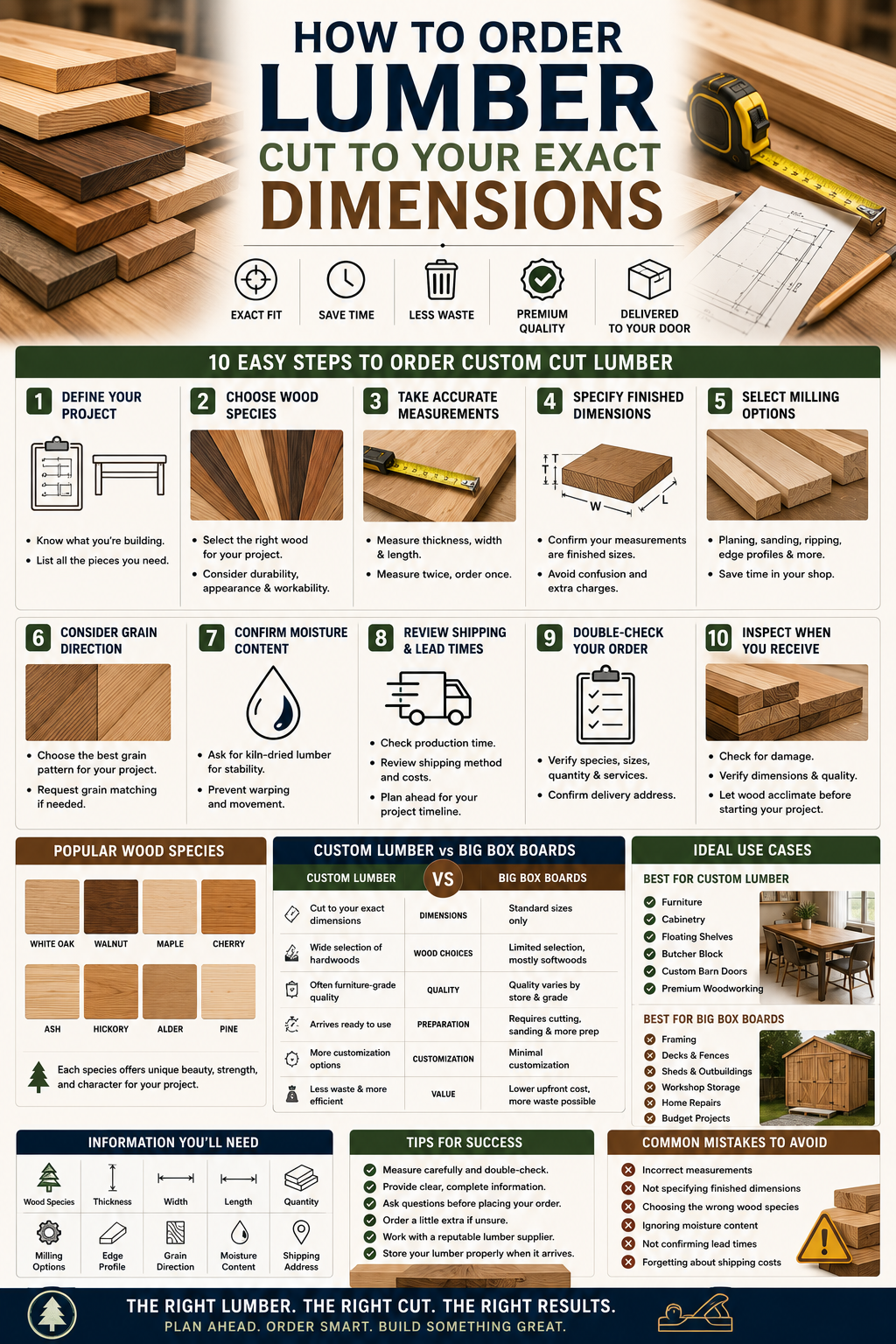
How to Order Lumber Cut to Your Exact Dimensions
Ordering lumber cut to your exact dimensions is easier than ever. Start by determining your project's measurements, choose the right wood species, specify the finished dimensions, and communicate any additional milling or edge-finishing requirements. Working with a reputable custom lumber supplier ensures your wood arrives ready to use, saving time, reducing waste, and improving the quality of your finished project.
Why Order Lumber Pre-Cut?
Buying oversized boards and cutting them yourself has long been the traditional approach, but it isn't always the most practical.
Whether you're a homeowner tackling a DIY project or a professional woodworker managing multiple builds, having lumber cut before it arrives offers several advantages.
These include:
Less material waste
Faster project completion
Greater accuracy
Reduced need for specialized tools
Cleaner, more efficient workflow
Better use of premium hardwood
For many projects, pre-cut lumber allows you to spend more time building and less time preparing materials.
Step 1: Define Your Project
Before placing an order, identify exactly what you're building.
Different projects require different lumber sizes and wood species.
Common applications include:
Floating shelves
Dining tables
Coffee tables
Built-in cabinets
Bookcases
Cutting boards
Fireplace mantels
Wall paneling
Custom barn doors
Knowing your end goal helps you order the correct material from the start.
Step 2: Choose the Right Wood Species
Every wood species has its own appearance, hardness, durability, and workability.
Some of the most popular hardwoods include:
White Oak
Strong, durable, and well suited for furniture, shelving, and barn doors.
Black Walnut
Known for its rich color and elegant grain, making it a favorite for premium furniture.
Maple
A hard, smooth wood that's excellent for cutting boards and cabinets.
Cherry
Develops a beautiful warm patina over time and is commonly used for fine furniture.
Ash
Offers strength with a pronounced grain pattern that's easy to stain.
If you're working on structural or outdoor projects, softwoods such as pine or cedar may be more appropriate.
Step 3: Take Accurate Measurements
This is the most important part of the process.
Measure every board individually and record:
Thickness
Width
Length
Quantity
Always measure twice before submitting your order.
If your project contains multiple parts, label each piece clearly to avoid confusion.
Step 4: Specify Finished Dimensions
Many people overlook the difference between rough lumber and finished lumber.
Finished dimensions refer to the size of the board after it has been planed and surfaced.
For example, if you need a board that measures exactly 1 inch thick, make sure you specify that you're requesting the finished size rather than the rough-cut size.
Clarifying this detail helps prevent costly misunderstandings.
Step 5: Decide on Additional Milling Services
Many custom lumber suppliers offer optional services that can save you hours of preparation.
Popular options include:
Planing
Sanding
Straight-line ripping
Crosscutting
Edge profiling
Beveled edges
Round-over edges
If you don't own woodworking machinery, these services can significantly simplify your project.
Step 6: Consider the Grain Direction
The direction of the wood grain affects both appearance and strength.
For furniture and decorative projects, you may wish to request:
Quarter-sawn lumber
Rift-sawn lumber
Plain-sawn boards
Grain matching for multiple pieces
Discussing these preferences with your supplier can produce a more refined finished product.
Step 7: Confirm Moisture Content
For indoor woodworking projects, kiln-dried lumber is generally the preferred choice.
Properly dried wood offers several benefits:
Improved dimensional stability
Less shrinkage
Reduced risk of warping
Better finishing performance
If you're unsure, ask your supplier whether the lumber has been kiln-dried and what the approximate moisture content is.
Step 8: Review Shipping and Lead Times
Custom-cut lumber isn't always available for same-day delivery.
Before ordering, confirm:
Estimated production time
Shipping method
Packaging
Tracking availability
Delivery schedule
Planning ahead helps prevent delays, especially if your lumber is part of a larger renovation or construction project.
Step 9: Double-Check Your Order
Before approving production, verify every detail, including:
Wood species
Board thickness
Width
Length
Quantity
Milling services
Delivery address
A few minutes of review can save both time and money later.
Step 10: Inspect the Lumber When It Arrives
When your order is delivered:
Check for shipping damage.
Confirm the correct wood species.
Measure several boards to verify accuracy.
Review the quality of the cuts.
Allow the lumber to acclimate to your workshop before beginning construction.
Proper inspection ensures any issues are identified promptly.
Information Every Supplier Will Need
To prepare an accurate quote, most suppliers will ask for:
Wood species
Finished thickness
Width
Length
Quantity
Desired milling services
Edge treatment
Shipping destination
Providing complete information helps streamline production and reduces the chance of errors.
Projects That Benefit Most from Custom-Cut Lumber
Ordering lumber cut to your exact dimensions is particularly valuable for:
Dining tables
Floating shelves
Built-in storage
Kitchen cabinetry
Window benches
Coffee tables
Cutting boards
Stair treads
Wall cladding
Custom barn doors
These projects often require consistent sizing and high-quality materials to achieve a professional finish.
Common Ordering Mistakes
Measuring Only Once
Small measuring errors can affect the fit of your entire project.
Always verify your dimensions before submitting an order.
Choosing the Wrong Thickness
Board thickness affects both strength and appearance.
Confirm your required finished thickness before production begins.
Forgetting About Tolerances
Ask your supplier about acceptable cutting tolerances, especially for precision projects.
Overlooking Shipping Costs
Long hardwood boards and thick slabs can increase freight costs.
Include shipping in your overall project budget.
Tips for Getting the Best Results
For a smoother ordering experience:
Sketch your project before ordering.
Label each required board.
Buy from a reputable hardwood supplier.
Choose kiln-dried wood for indoor applications.
Ask about available milling services.
Keep a copy of your measurements.
Order early if you're working toward a renovation deadline.
Good preparation leads to better results and fewer delays.
Frequently Asked Questions
Can I order wood cut to any size?
Most custom lumber suppliers can cut boards to your requested dimensions, although minimum and maximum sizes vary depending on the equipment they use.
Is custom-cut lumber more expensive?
Generally, yes. However, the additional cost often reflects the labor involved and can be offset by reduced waste, greater accuracy, and time saved during construction.
Can I order multiple pieces in different sizes?
Absolutely. Most suppliers allow you to submit a detailed cut list with different dimensions for each piece.
Should I order exact measurements or slightly oversized boards?
If you plan to perform final fitting in your workshop, ordering boards slightly oversized can provide extra flexibility. If you're relying entirely on the supplier's cutting service, provide your exact finished dimensions.
Conclusion
Ordering lumber cut to your exact dimensions is one of the easiest ways to simplify a woodworking project while improving the quality of the finished result. By selecting the right wood species, providing accurate measurements, and clearly communicating your machining requirements, you'll receive material that's ready for assembly with minimal preparation.
Whether you're crafting custom furniture, installing floating shelves, building cabinetry, or creating a handcrafted custom barn door, precision-cut lumber can save time, reduce waste, and help you achieve a professional finish that lasts for years.
