
How to Organize Small Toys Without Losing Pieces
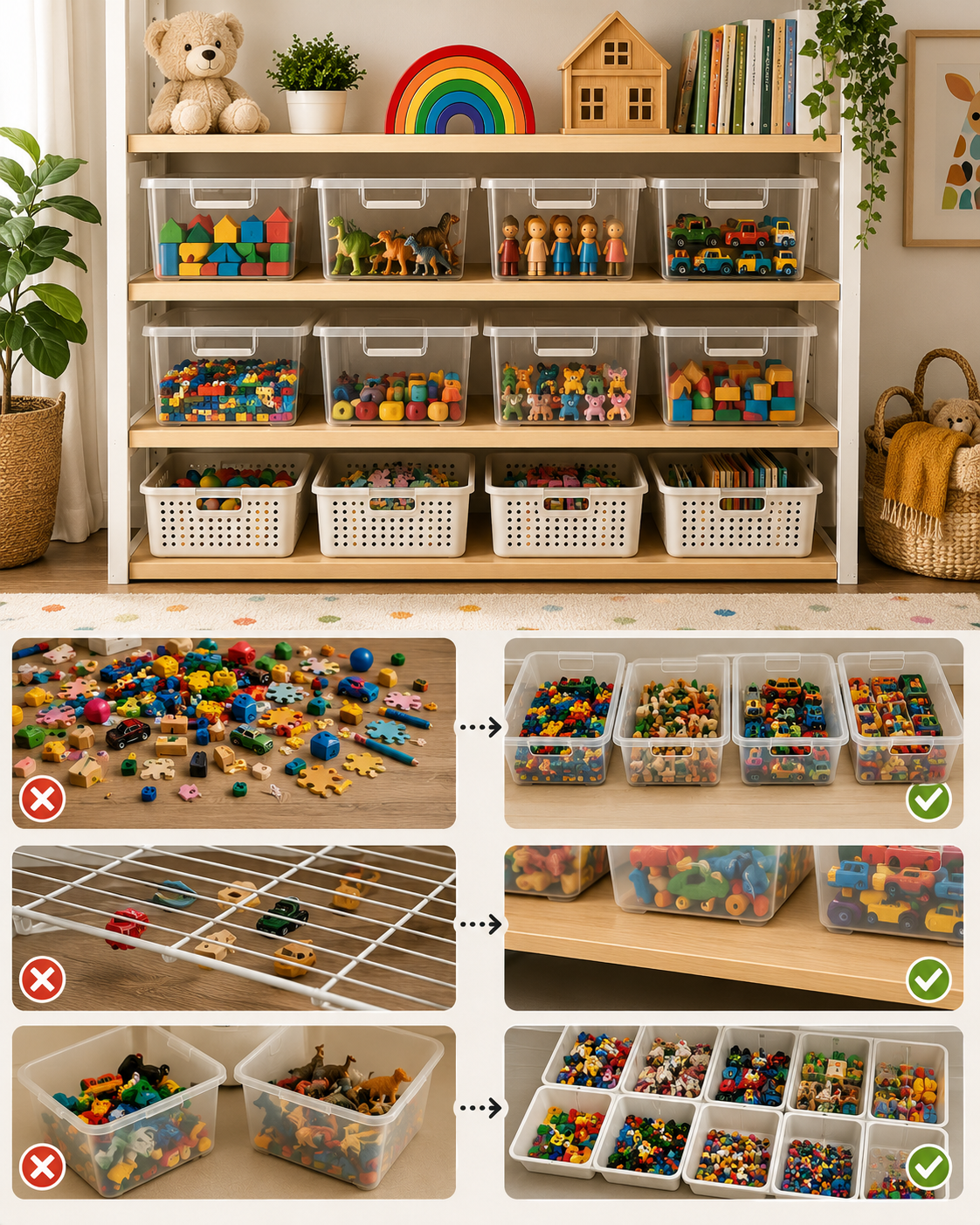
How to Organize Small Toys Without Losing Pieces
The best way to organize small toys without losing pieces is to use categorized bins, labeled containers, and flat storage surfaces that prevent items from falling through gaps. Clear organization systems make cleanup easier and help keep toy sets complete.
Introduction (Problem Hook)
Small toys seem to disappear faster than anything else in a house.
One day the set is complete.
The next day:
Pieces are missing
Tiny parts are under furniture
Everything is mixed together
And somehow cleanup takes longer than the actual playtime.
The problem usually isn’t the toys themselves.
It’s the storage system.
Why Small Toys Become So Hard to Manage
Tiny toys create unique organization problems because they:
Scatter easily
Roll into gaps
Get mixed with other sets
Fall through wire shelves and baskets
Without clear storage zones, small pieces disappear quickly.
Common Mistakes People Make
1. Throwing Everything Into One Bin
Pros:
Fast cleanup
Cons:
Pieces get mixed and lost
2. Using Open Wire Shelves
Pros:
Affordable storage
Cons:
Small parts fall through gaps easily
3. Overcomplicated Organization Systems
Pros:
Looks good initially
Cons:
Hard to maintain daily
Related Problems People Also Search
If you’re dealing with this, you’re likely also searching:
Toy storage ideas for small spaces
How to organize LEGO pieces
Storage for tiny toys
Kids playroom organization
Wire shelf storage solutions
All of these point to one thing:
👉 Small toys need stable, easy-to-maintain storage.
The Best Ways to Organize Small Toys
1. Separate Toys by Category
This is the foundation of easy cleanup.
Examples:
Building toys
Action figures
Doll accessories
Craft supplies
Puzzle pieces
Smaller categories make missing pieces easier to spot.
2. Use Clear Containers or Bins
Clear bins help kids and parents:
See contents quickly
Avoid dumping everything out
Keep sets together
Labeling also helps maintain the system long-term.
3. Create Flat Storage Surfaces
This is especially important with wire shelving.
Why Flat Surfaces Matter
Without a solid surface:
Tiny pieces fall through gaps
Bins wobble
Toys become harder to organize neatly
Adding a stable shelf surface instantly makes storage more functional.
4. Use Shallow Containers for Tiny Pieces
Deep bins create “digging piles.”
Shallow trays and divided organizers make:
Cleanup faster
Pieces easier to find
Play more accessible
5. Keep Frequently Used Toys Easy to Reach
Place daily-use items:
At lower levels
In lightweight bins
On accessible shelves
This encourages kids to maintain the system independently.
Why Wire Shelves Often Make Toy Storage Harder
Wire shelving is popular because it’s affordable and lightweight.
But for toy storage, the gaps can create constant frustration:
Pieces fall through
Containers tilt unevenly
Small items slide around
That’s why many families add flat shelf covers before reorganizing.
The Most Practical Long-Term Solution
The easiest systems to maintain usually combine:
Categorized bins
Clear labels
Flat shelf surfaces
Easy-access storage zones
Simple systems work better than overly perfect ones.
Product Integration (Soft Recommendation)
Most people try new bins first.
But the real difference often comes from fixing the shelves underneath.
Once the surface becomes stable:
Small pieces stop falling through
Bins sit flat
The whole system feels easier to maintain
That’s why many homeowners add wooden wire shelf covers to toy storage areas.
They instantly create a smooth, solid surface without replacing the shelving itself.
If you want to explore options, start here:
→ Wire Shelf Cover Collection
And for exact-fit storage upgrades:
→ Wooden Wire Shelf Covers
Visual Example Section
Imagine:
No more missing toy pieces
Faster cleanup every day
Shelves that actually work for small items
That’s what the right storage setup can create.
Frequently Asked Questions (SEO Gold)
What is the best way to organize small toys?
Use categorized bins and stable flat shelving surfaces.
How do you stop toy pieces from getting lost?
Keep sets separated and store them in labeled containers.
Are wire shelves good for toy storage?
They can be difficult because small pieces fall through gaps.
What can I put over wire shelves for toys?
Shelf covers or liners create a solid surface instantly.
Should toys be stored in clear bins?
Yes, clear bins make finding and maintaining toys easier.
How do I organize toys in a small space?
Use vertical shelving, labeled bins, and compact categories.
Conclusion (Soft Call to Action)
Organizing small toys becomes much easier when the storage system actually supports the way toys are used daily.
Once your shelves are stable and your categories are simple, cleanup feels faster and less frustrating.
If you’re ready to make toy storage easier without replacing your shelving, adding a solid shelf surface is one of the smartest upgrades you can make.
Explore your options here:
→ Wire Shelf Cover Collection
