
How to Prevent Cracks and Warping in Live Edge Slabs
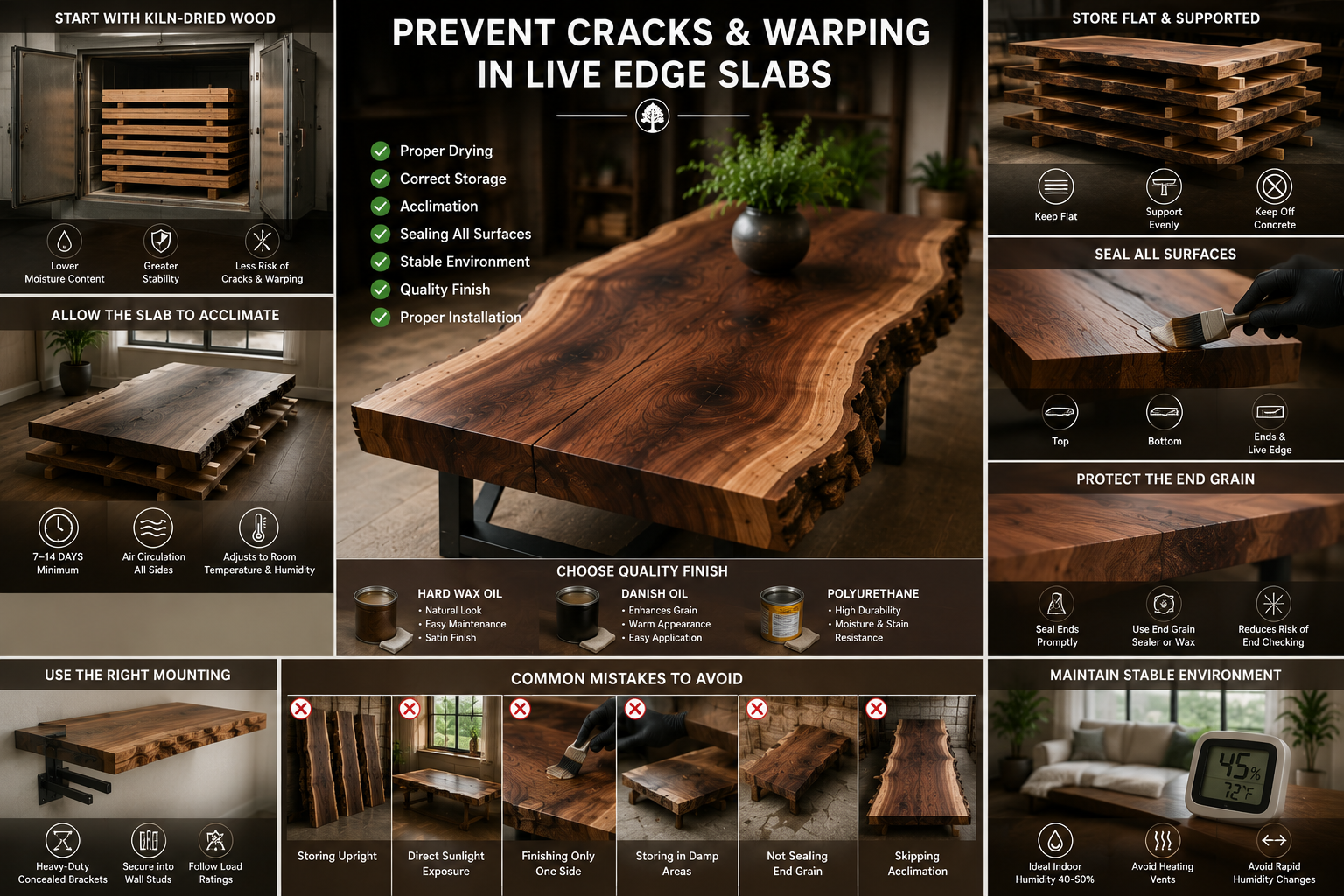
How to Prevent Cracks and Warping in Live Edge Slabs
The best way to prevent cracks and warping in live edge slabs is to start with properly kiln-dried wood, store it correctly, allow it to acclimate before use, seal all surfaces with a quality finish, and maintain a stable indoor environment. While wood naturally expands and contracts with seasonal humidity changes, these steps significantly reduce movement and help preserve your slab for decades.
Why Live Edge Slabs Can Crack or Warp
Wood is a natural material that continues to respond to its environment long after the tree has been harvested.
As humidity rises, wood absorbs moisture and expands. When the air becomes dry, it releases moisture and contracts. This natural movement can lead to:
Surface cracks
End checking
Bowing
Twisting
Cupping
Splits
Uneven surfaces
Although some movement is normal, excessive cracking or warping is often the result of improper drying, storage, or installation.
Understanding these causes is the first step toward preventing them.
Start with a Properly Kiln-Dried Slab
One of the most important decisions you'll make is choosing the right slab.
Kiln-dried live edge slabs are dried in a controlled environment until they reach a moisture content suitable for indoor use.
Benefits include:
Greater dimensional stability
Reduced risk of shrinkage
Lower chance of warping
Fewer moisture-related defects
Better long-term performance
When purchasing a slab, ask the supplier if it has been kiln dried and inquire about its moisture content.
Allow the Slab to Acclimate
Even kiln-dried wood needs time to adjust to its new surroundings.
Before building your project:
Bring the slab into the room or workshop where it will be used.
Lay it flat with adequate support.
Allow air to circulate on all sides.
Give it time to adjust to the local temperature and humidity.
Acclimation helps minimize movement after construction.
Store Slabs Correctly
Improper storage is one of the leading causes of warping.
To keep your slab stable:
Store it flat.
Support it evenly along its length.
Keep it off concrete floors.
Use spacers if stacking multiple slabs.
Protect it from direct sunlight.
Avoid damp locations.
Storing slabs upright for long periods or leaving them unsupported can cause them to bow or twist over time.
Seal Every Surface
Many people finish only the top of a tabletop, leaving the underside exposed.
This allows one side of the wood to absorb and release moisture at a different rate than the other, increasing the likelihood of movement.
For best results:
Finish the top.
Finish the bottom.
Seal both ends.
Protect the live edge.
Applying finish evenly helps regulate moisture exchange throughout the slab.
Pay Special Attention to the End Grain
Most cracks begin at the ends of a slab.
That's because moisture escapes through end grain much faster than through the face of the wood.
To reduce end checking:
Seal the ends promptly after cutting.
Avoid leaving freshly cut ends exposed.
Reapply protection if the finish becomes damaged.
Protecting the end grain is one of the simplest ways to reduce future cracking.
Maintain Stable Indoor Humidity
Wood performs best in a consistent indoor environment.
Large swings in humidity place stress on the wood fibers and increase seasonal movement.
To help maintain stability:
Avoid placing slabs near fireplaces or wood stoves.
Keep furniture away from heating vents.
Limit prolonged exposure to direct sunlight.
Maintain consistent indoor temperature when possible.
A stable environment is especially important for large dining tables and conference tables.
Choose the Right Base Design
A well-designed base allows the wood to move naturally while still providing adequate support.
Avoid rigid construction methods that prevent seasonal expansion and contraction.
Instead, use hardware and joinery that accommodate natural wood movement without compromising stability.
This approach helps reduce internal stress that can contribute to cracks over time.
Don't Rush the Build
One of the biggest mistakes DIY builders make is starting too soon.
Before milling or assembling your slab:
Confirm it's properly dried.
Allow adequate acclimation time.
Inspect for existing movement.
Flatten the slab if necessary.
Patience during preparation often results in a more stable finished project.
Use High-Quality Finishes
A protective finish doesn't stop wood movement entirely, but it slows the rate at which moisture enters and leaves the slab.
Popular options include:
Hard Wax Oil
Advantages:
Natural appearance
Easy spot repairs
Satin finish
Excellent for furniture
Danish Oil
Benefits:
Enhances grain
Warm natural look
Easy application
Polyurethane
Ideal for:
Dining tables
Kitchen islands
High-use surfaces
It offers excellent resistance to spills, scratches, and moisture.
Choose a finish that suits both your project and maintenance preferences.
Inspect Your Slab Regularly
Routine inspections help identify small issues before they become major problems.
Check for:
Hairline cracks
Loose bark
Finish wear
Excessive movement
Changes in humidity
Addressing minor concerns early can extend the life of your furniture.
Common Mistakes That Lead to Cracks and Warping
Buying Green or Improperly Dried Wood
Freshly cut slabs contain a high level of moisture and are far more likely to move as they dry.
Skipping Acclimation
Installing a slab immediately after delivery may increase the risk of seasonal movement.
Finishing Only One Side
Leaving the underside unfinished creates uneven moisture exchange.
Always finish all surfaces whenever practical.
Improper Storage
Leaning slabs against a wall or storing them in damp environments can encourage warping.
Ignoring Seasonal Changes
Even well-built furniture benefits from a relatively stable indoor climate.
Large fluctuations in humidity increase stress on solid wood.
Frequently Asked Questions
Can live edge slabs crack even after they're finished?
Yes. Wood naturally expands and contracts with changes in humidity. Proper drying, sealing, and maintenance reduce the risk but cannot eliminate all natural movement.
Is kiln-dried wood less likely to warp?
Yes. Kiln drying reduces moisture content under controlled conditions, making slabs more stable for indoor furniture.
Should I seal both sides of a live edge slab?
Yes. Sealing both the top and bottom helps slow moisture exchange and promotes more even movement.
What causes cracks at the ends of a slab?
End grain loses moisture faster than the rest of the board, making it more prone to checking and splitting if left unprotected.
Conclusion
Preventing cracks and warping in live edge slabs begins long before construction. Choosing a properly kiln-dried slab, storing it correctly, allowing it to acclimate, sealing every surface, and maintaining a stable indoor environment all contribute to a stronger, longer-lasting finished piece.
Because wood is a natural material, some seasonal movement is expected. However, by following these best practices and purchasing high-quality hardwood from a reputable supplier, you can greatly reduce the risk of serious cracking or warping. Whether you're building a live edge dining table, coffee table, floating shelf, or fireplace mantel, careful preparation and proper maintenance will help preserve the beauty and integrity of your project for many years.
