
Live Edge Floating Shelves: Choosing the Right Walnut Slab
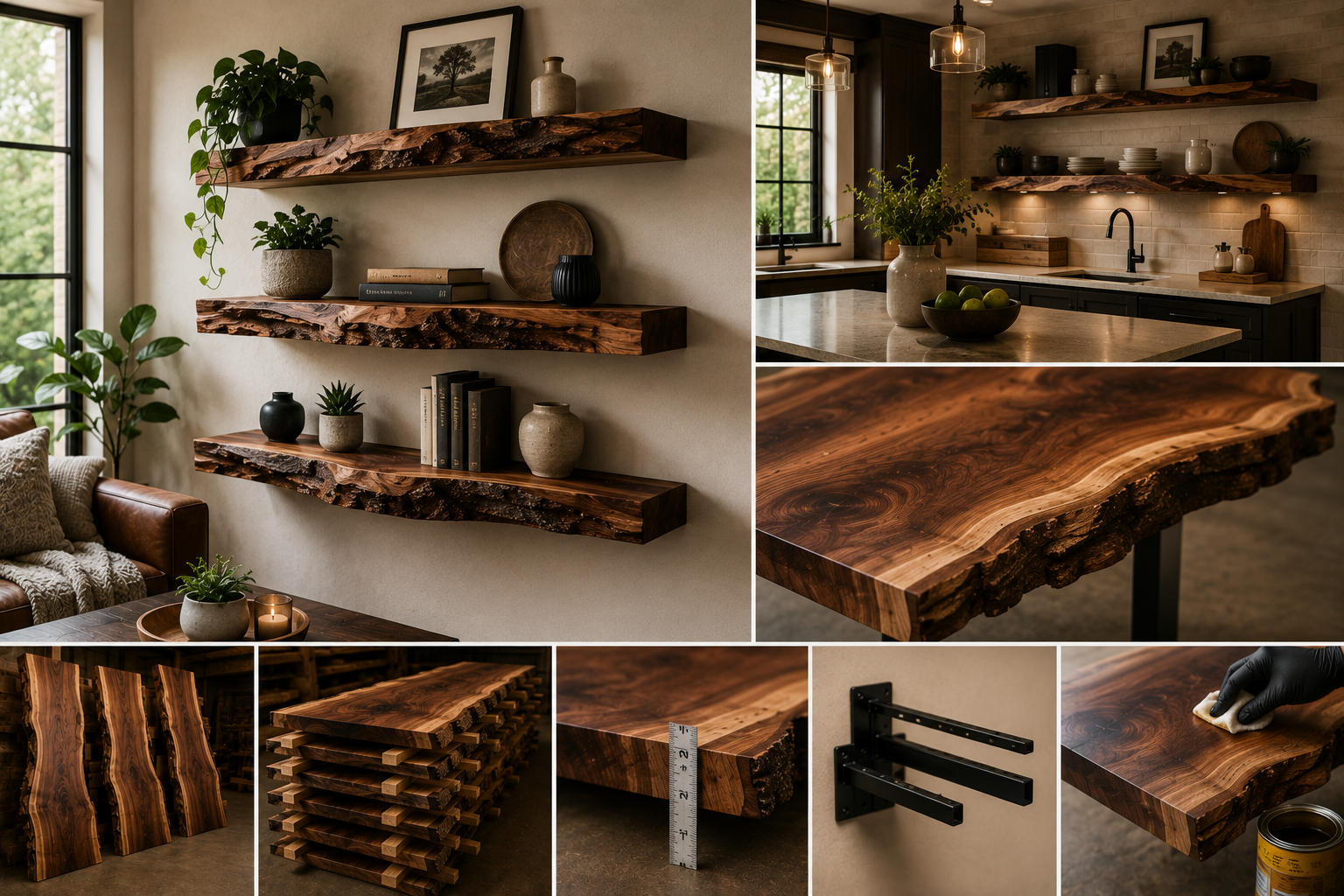
Live Edge Floating Shelves: Choosing the Right Walnut Slab
The best walnut slab for live edge floating shelves is kiln-dried black walnut with attractive grain, stable moisture content, and the appropriate thickness for your intended use. Most floating shelves perform best with 1½- to 2-inch-thick slabs, offering an ideal balance of strength, durability, and timeless natural beauty.
Why Live Edge Walnut Floating Shelves Are So Popular
Floating shelves have become one of the easiest ways to add warmth and character to a room without taking up valuable floor space.
When crafted from a black walnut live edge slab, they become much more than storage—they become architectural features that showcase the natural beauty of solid hardwood.
Unlike manufactured shelving, every walnut slab is unique, with its own grain, color, and live edge profile.
Whether installed in a living room, kitchen, office, or bedroom, walnut floating shelves create a custom look that complements both modern and traditional interiors.
Why Black Walnut Is an Excellent Choice
Black walnut is widely regarded as one of North America's finest hardwoods.
It offers:
Rich chocolate-brown color
Beautiful natural grain
Excellent strength
Long-lasting durability
Superior dimensional stability
Timeless appearance
Unlike lighter woods that often require stain, walnut's natural color is one of its biggest attractions.
A simple clear finish is usually enough to highlight its elegance.
Start by Choosing the Right Shelf Size
Before selecting a slab, determine how the shelf will be used.
Decorative shelves may only need to support lightweight items, while shelves intended for books, dishes, or collectibles require more substantial dimensions.
Common Shelf Dimensions
Shelf LocationTypical DepthTypical ThicknessLiving Room8–10 inches1½–2 inchesKitchen10–12 inches1½–2 inchesBathroom6–8 inches1½ inchesOffice10–12 inches2 inchesFireplace Mantel Shelf8–12 inches2–3 inches
The ideal dimensions depend on the wall space, intended load, and overall room design.
Choose the Right Thickness
Thickness affects both appearance and strength.
1½-Inch Walnut Slabs
Ideal for:
Decorative shelving
Bathrooms
Bedrooms
Small accent walls
They provide a refined appearance while remaining relatively lightweight.
2-Inch Walnut Slabs
The most popular option.
Benefits include:
Premium appearance
Excellent rigidity
Better weight capacity
Suitable for most residential installations
Most custom floating shelves are built using slabs in this thickness range.
2½–3-Inch Slabs
Best suited for:
Oversized shelves
Fireplace mantels
Luxury interiors
Statement pieces
These thicker slabs create a bold, handcrafted look but require stronger concealed mounting hardware.
Select a Beautiful Grain Pattern
Every walnut slab has its own personality.
Some homeowners prefer:
Straight grain
Cathedral grain
Wavy grain
Curly figure
Natural knots
Color variation
Choose a slab whose grain complements your home's style rather than trying to find a perfectly uniform board.
Natural variation is part of walnut's charm.
Preserve the Natural Live Edge
The live edge is what distinguishes these shelves from standard lumber.
Look for slabs with:
Smooth organic curves
Healthy wood fibers
Minimal loose bark
Well-defined natural edges
Balanced proportions
Avoid heavily damaged edges that may require extensive repairs.
Always Choose Kiln-Dried Walnut
Moisture content plays a critical role in long-term performance.
Kiln-dried walnut offers:
Greater dimensional stability
Lower moisture content
Reduced risk of warping
Better resistance to cracking
Improved indoor performance
For floating shelves installed inside climate-controlled homes, kiln-dried slabs are generally the preferred option.
Consider Weight Capacity
A floating shelf is only as strong as its mounting system.
The weight it can safely support depends on:
Wall construction
Concealed bracket quality
Shelf thickness
Shelf depth
Fastener installation
Properly installed concealed steel brackets anchored into wall studs provide the best support for solid walnut shelves.
Always follow the hardware manufacturer's installation guidelines and load ratings.
Choosing the Best Finish
A protective finish enhances walnut's natural beauty while helping defend against everyday wear.
Popular options include:
Hard Wax Oil
Advantages:
Natural appearance
Easy maintenance
Satin sheen
Simple spot repairs
Danish Oil
Provides:
Rich color enhancement
Smooth finish
Easy application
Polyurethane
Ideal for:
Kitchens
Bathrooms
High-humidity areas
Heavy-use shelving
It provides excellent protection against moisture, stains, and scratches.
Where to Install Live Edge Floating Shelves
Walnut floating shelves work beautifully throughout the home.
Popular locations include:
Living rooms
Kitchens
Home offices
Bathrooms
Dining rooms
Bedrooms
Laundry rooms
Entryways
They're also excellent for displaying plants, artwork, books, and family photos.
Styling Your Floating Shelves
A few carefully chosen accessories can make your shelves stand out without making them feel cluttered.
Consider displaying:
Small potted plants
Framed artwork
Decorative bowls
Candles
Cookbooks
Ceramic vases
Family photographs
Sculptural objects
Leave some open space so the walnut grain remains visible and becomes part of the décor.
Common Mistakes to Avoid
Choosing the Wrong Thickness
Thin shelves may not provide enough rigidity for heavier items, while overly thick slabs can look bulky in smaller rooms.
Ignoring Moisture Content
Even the most beautiful slab can warp or crack if it hasn't been properly dried before installation.
Using Inadequate Mounting Hardware
Concealed floating shelf brackets should be selected based on the shelf's size and expected load.
Proper installation is just as important as choosing the right wood.
Overloading the Shelf
Distribute weight evenly and stay within the recommended load capacity of the mounting system to ensure long-term performance.
Frequently Asked Questions
What thickness is best for walnut floating shelves?
For most homes, 1½ to 2 inches provides the ideal combination of strength, appearance, and durability.
Is black walnut strong enough for floating shelves?
Yes. Black walnut is a durable hardwood that performs exceptionally well when paired with quality concealed mounting hardware and proper installation.
Should floating shelves be kiln dried?
Yes. Kiln-dried walnut has a lower and more consistent moisture content, making it more stable for indoor use.
Can live edge floating shelves support heavy items?
They can, provided the shelves are properly sized and installed with heavy-duty concealed brackets secured into wall studs.
Conclusion
Live edge floating shelves made from black walnut combine practical storage with the timeless beauty of natural hardwood. Choosing the right slab means considering more than just appearance—you'll also want to evaluate thickness, grain pattern, moisture content, live edge quality, and the mounting system that will support the shelf.
A kiln-dried walnut slab with a well-preserved live edge offers the best balance of strength, stability, and elegance. Whether you're creating a single accent shelf or an entire wall of custom shelving, investing in quality walnut ensures your project will remain both beautiful and functional for years to come.
