
How to Set Up a Natural-Looking PVC Reptile Enclosure
How to Set Up a Natural-Looking PVC Reptile Enclosure
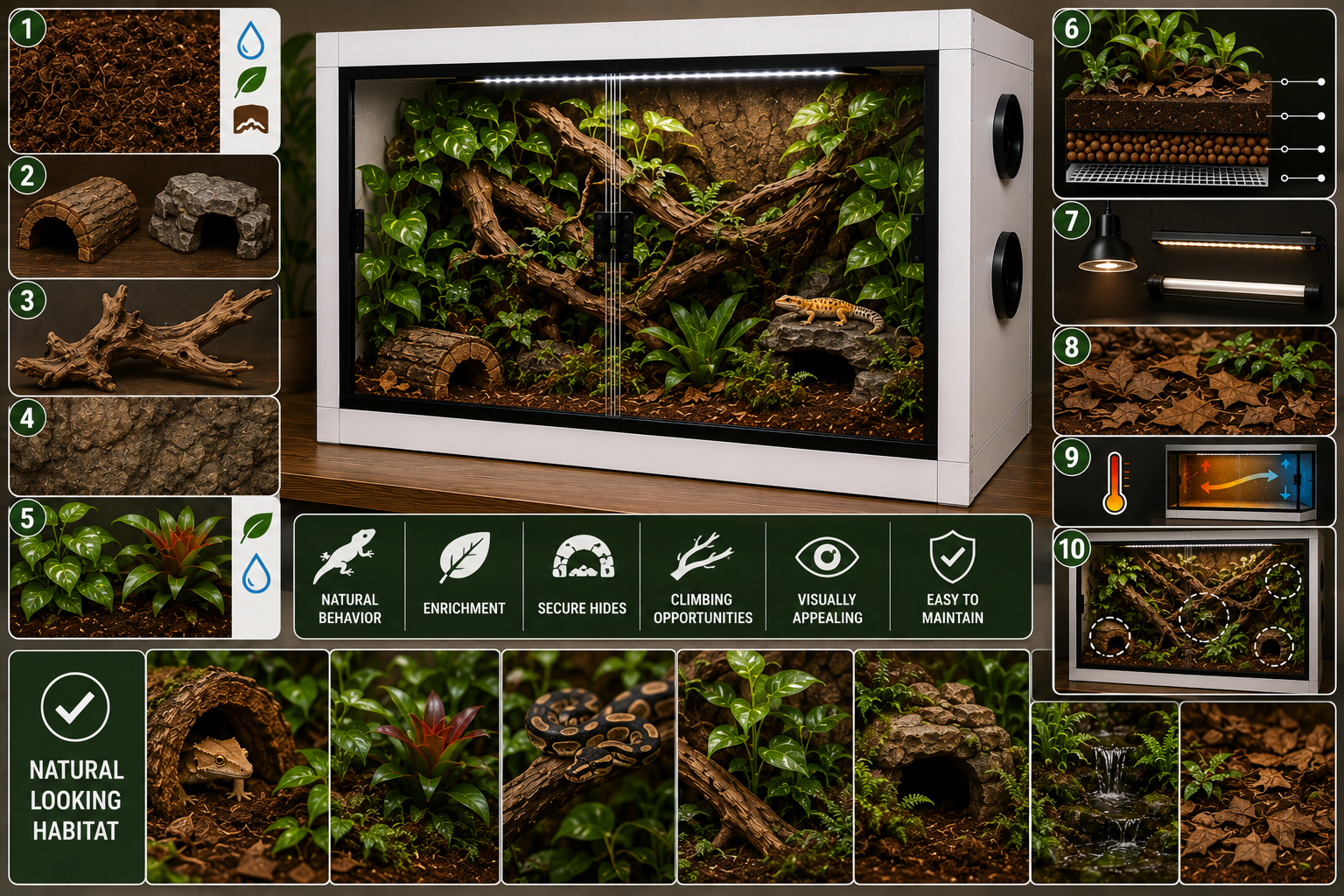
To create a natural-looking PVC reptile enclosure, combine a realistic substrate, natural décor, appropriate plants, hides, climbing structures, and proper lighting. The goal is to recreate elements of your reptile's natural habitat while maintaining a safe, functional, and easy-to-maintain environment.
PVC enclosures provide an excellent foundation because they retain heat and humidity well while offering plenty of customization options.
Why Build a Naturalistic Enclosure?
A natural-looking habitat offers more than visual appeal.
Benefits can include:
Increased enrichment
More natural behaviors
Better use of enclosure space
Improved climbing and hiding opportunities
A more attractive display
Many keepers find that naturalistic setups are rewarding for both the reptile and the owner.
Step 1: Choose the Right Substrate
Your substrate should reflect the reptile's natural environment.
Tropical Species
Examples:
Ball Python
Crested Gecko
Popular options:
Coconut husk
Coconut fiber
Bioactive substrate blends
Arid Species
Examples:
Bearded Dragon
Popular options:
Natural soil blends
Clay-based desert substrates
Species-appropriate naturalistic mixes
Step 2: Add Multiple Hides
Every reptile needs secure places to retreat.
Consider placing hides on:
The warm side
The cool side
Elevated areas when appropriate
Natural-looking hides can be designed to resemble:
Rock formations
Hollow logs
Root systems
Step 3: Incorporate Branches and Climbing Structures
Many reptiles benefit from vertical space.
Suitable species include:
Crested Gecko
Corn Snake
Boa Constrictor
Branches create:
Climbing opportunities
Exercise
Visual interest
Arrange them securely and strategically.
Step 4: Use Natural Backgrounds
A custom background can dramatically improve realism.
Popular choices include:
Rock-style backgrounds
Cliff walls
Forest-inspired designs
Tropical scenery
Backgrounds also increase usable climbing space.
Step 5: Add Plants
Live Plants
Common choices include:
Pothos
Philodendrons
Snake plants
Bromeliads
Live plants work especially well in bioactive habitats.
Artificial Plants
High-quality artificial plants can:
Improve appearance
Provide cover
Require little maintenance
Many keepers combine live and artificial vegetation.
Step 6: Create Visual Layers
Natural habitats contain multiple levels and textures.
Include:
Ground cover
Mid-level structures
Elevated climbing areas
This makes the enclosure feel larger and more dynamic.
Step 7: Build a Natural Temperature Gradient
A realistic habitat should still support proper husbandry.
Provide:
Warm side
Cool side
Basking opportunities
Appropriate humidity zones
Natural décor should never interfere with environmental requirements.
Step 8: Use Appropriate Lighting
Lighting enhances both reptile health and enclosure appearance.
Depending on the species, consider:
UVB Lighting
Required or recommended for many reptiles.
LED Daylight Lighting
Improves visibility and highlights natural décor.
Plant Lighting
Useful for bioactive setups with live vegetation.
Step 9: Add Leaf Litter and Ground Cover
Leaf litter can:
Improve realism
Support bioactive systems
Provide enrichment
Create hiding opportunities
This small detail often makes a big difference in appearance.
Step 10: Avoid Overcrowding
A common mistake is adding too many decorations.
Your reptile still needs:
Open movement areas
Access to hides
Clear basking spots
Proper airflow
Balance appearance with functionality.
Species That Thrive in Naturalistic PVC Enclosures
Natural-looking habitats are commonly created for:
Ball Python
Corn Snake
Boa Constrictor
Bearded Dragon
Crested Gecko
Blue-Tongued Skink
PVC works exceptionally well because it supports a wide range of habitat styles.
Why PVC Is Ideal for Naturalistic Setups
PVC offers:
Excellent Humidity Retention
Helpful for tropical habitats.
Moisture Resistance
Perfect for live plants and bioactive systems.
Easy Customization
Supports backgrounds, lighting, and décor installations.
Long-Term Durability
Naturalistic habitats often remain in place for years.
Visual Inspiration
Naturalistic PVC enclosures can combine beauty, enrichment, and practical husbandry into a single habitat.
Frequently Asked Questions
Can PVC enclosures look natural?
Absolutely. Many of the most impressive naturalistic reptile habitats are built using PVC enclosures.
Do I need live plants?
No. Artificial plants can still create a realistic appearance with less maintenance.
Are bioactive setups required?
Not at all. A natural-looking enclosure can be created with traditional substrates and décor.
What is the best reptile for a naturalistic PVC enclosure?
Many species thrive in naturalistic habitats, including ball pythons, crested geckos, corn snakes, and bearded dragons.
Do naturalistic enclosures require more maintenance?
Some do, particularly bioactive setups, but the level of maintenance depends on the design.
Conclusion
Creating a natural-looking PVC reptile enclosure is one of the best ways to combine reptile welfare, enrichment, and visual appeal.
By selecting appropriate substrate, realistic décor, plants, lighting, and climbing opportunities, you can build a habitat that closely resembles nature while still providing the environmental stability that reptiles need. Thanks to its durability, moisture resistance, and flexibility, PVC remains one of the best enclosure materials for naturalistic and bioactive reptile setups.
