
Best Substrate for PVC Reptile Enclosures
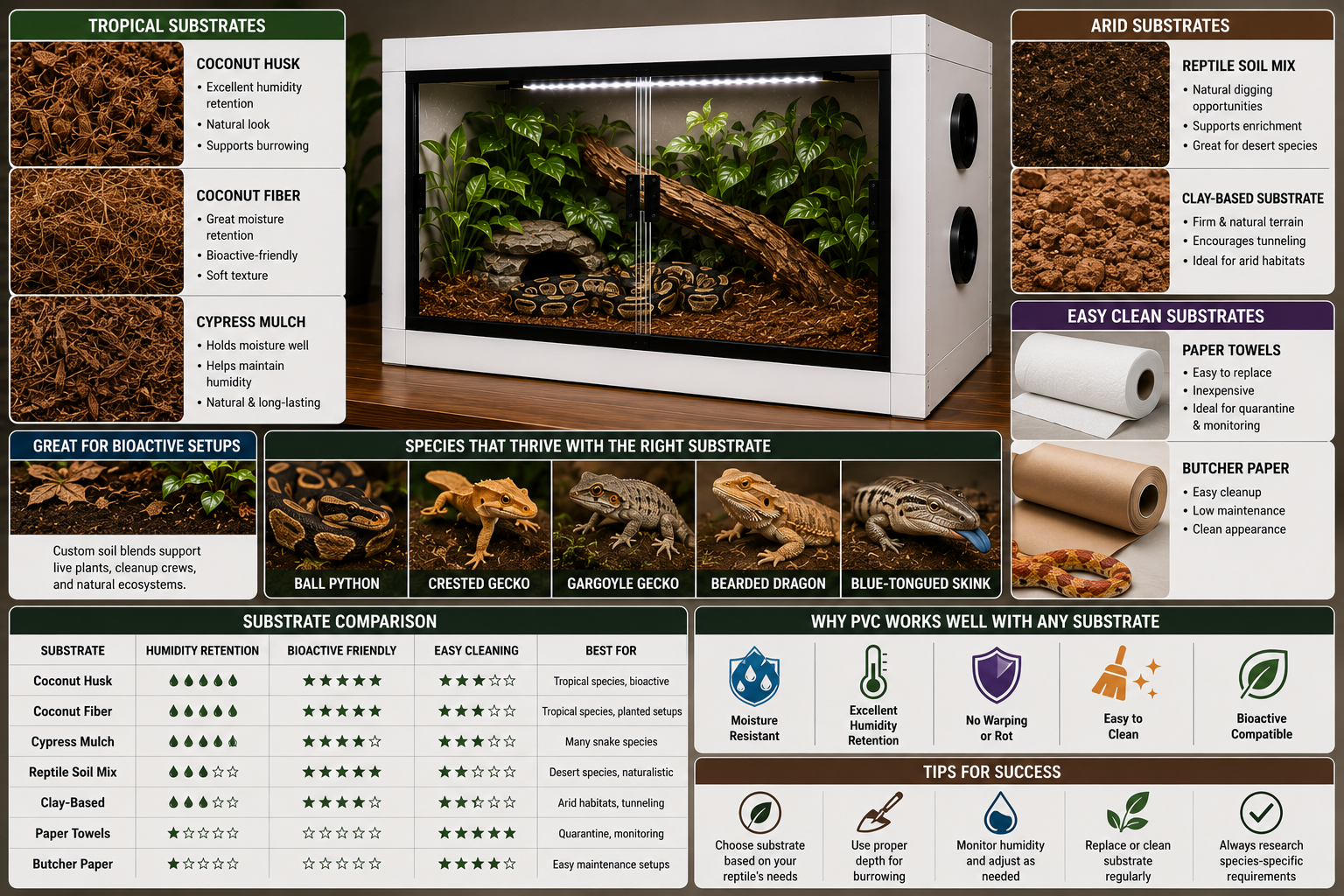
Best Substrate for PVC Reptile Enclosures
The best substrate for a PVC reptile enclosure depends on the species you keep, its humidity requirements, and whether you're building a traditional or bioactive habitat. Because PVC enclosures retain moisture and heat so effectively, they work well with a wide variety of substrates, from simple paper-based options to advanced naturalistic blends.
There is no single "best" substrate for every reptile, but there is a best substrate for your specific species and husbandry goals.
Why Substrate Matters
Substrate does more than cover the floor of an enclosure.
It can help with:
Humidity control
Waste management
Natural behaviors
Burrowing opportunities
Comfort and enrichment
Bioactive ecosystem support
Choosing the right substrate is an important part of enclosure design.
Best Substrates for Tropical Species
Coconut Husk
Coconut husk is one of the most popular substrates for PVC enclosures.
Benefits
Excellent humidity retention
Natural appearance
Supports burrowing
Long-lastingOften used for:
Ball Python
Boa Constrictor
Coconut Fiber
Coconut fiber provides a softer texture and helps maintain humidity.
Benefits
Good moisture retention
Bioactive-friendly
Natural appearanceFrequently used in tropical habitats and planted setups.
Cypress Mulch
Another popular high-humidity substrate.
Benefits
Holds moisture well
Helps maintain humidity
Supports naturalistic environmentsCommonly used for many snake species.
Best Substrates for Arid Species
Reptile-Safe Soil Mixes
Naturalistic desert blends can work well for species such as:
Bearded Dragon
Benefits include:
Natural digging opportunities
Improved enrichment
Realistic habitat appearanceClay-Based Desert Substrates
Designed to create firmer, more natural terrain.
Useful for:
Burrowing
Tunnel formation
Naturalistic displays
Best Substrates for Bioactive PVC Enclosures
Bioactive habitats typically use a custom substrate blend.
Common ingredients include:
Organic topsoil
Coconut fiber
Sand
Bark products
Leaf litter
These combinations support:
Plant growth
Cleanup crews
Natural ecosystem functions
Species That Commonly Benefit From Bioactive Substrates
Crested Geckos
Crested Gecko
Gargoyle Geckos
Gargoyle Gecko
Ball Pythons
Ball Python
Best Substrates for Easy Cleaning
Paper Towels
Simple and practical.
Benefits
Easy to replace
Inexpensive
Useful for quarantine setups
Excellent for health monitoringOften used for:
New arrivals
Veterinary observation
Temporary housing
Butcher Paper
A popular upgrade from paper towels.
Benefits include:
Easy cleanup
Low maintenance
Clean appearanceBest Substrates for Burrowing Species
Some reptiles naturally dig and tunnel.
Appropriate substrate depth can support these behaviors.
Examples include:
Blue-Tongued Skinks
Blue-Tongued Skink
Corn Snakes
Corn Snake
Boa Constrictors
Boa Constrictor
Deep naturalistic substrates can provide valuable enrichment.
Why PVC Works Well With Most Substrates
PVC enclosures offer:
Excellent Moisture Resistance
No warping or rot from damp substrates.
Strong Humidity Retention
Helps substrates maintain appropriate moisture levels.
Easy Cleaning
Smooth interior surfaces simplify maintenance.
Bioactive Compatibility
Supports naturalistic and planted habitats exceptionally well.
Substrate Comparison
SubstrateHumidity RetentionBioactive FriendlyEasy CleaningCoconut HuskExcellentExcellentGoodCoconut FiberExcellentExcellentGoodCypress MulchExcellentGoodGoodSoil MixesGoodExcellentModeratePaper TowelsPoorNoExcellentButcher PaperPoorNoExcellent
The best choice depends on your reptile's needs.
Common Substrate Mistakes
Choosing Based on Appearance Alone
Function should always come before aesthetics.
Ignoring Species Requirements
Different reptiles thrive in different environments.
Using Insufficient Depth
Burrowing species often benefit from deeper substrate layers.
Neglecting Maintenance
Even the best substrate requires regular cleaning and replacement.
Visual Example
PVC enclosures support a wide range of substrate options, making them suitable for both simple and advanced reptile habitats.
Frequently Asked Questions
What is the best substrate for a PVC reptile enclosure?
It depends on the species. Coconut husk, coconut fiber, cypress mulch, and bioactive soil blends are among the most popular choices.
Can PVC enclosures use bioactive substrates?
Yes. PVC is one of the best enclosure materials for bioactive setups.
What substrate is best for ball pythons?
Many keepers prefer coconut husk, cypress mulch, or bioactive substrate blends.
Are paper towels acceptable?
Yes. They are commonly used for quarantine, monitoring, and temporary housing.
Does PVC affect substrate performance?
Generally, PVC improves substrate performance by helping maintain stable heat and humidity levels.
Conclusion
The best substrate for a PVC reptile enclosure depends on your reptile's natural habitat, humidity requirements, and husbandry goals.
Whether you choose coconut husk for a ball python, a bioactive soil blend for a crested gecko, or a simple paper-based substrate for easy maintenance, PVC provides an excellent foundation thanks to its moisture resistance, durability, and environmental stability.
By matching the substrate to your species and enclosure design, you can create a healthier, more natural, and more enjoyable habitat for your reptile.
