
How to Turn a Black Walnut Slab into a One-of-a-Kind Piece of Furniture
How to Turn a Black Walnut Slab into a One-of-a-Kind Piece of Furniture
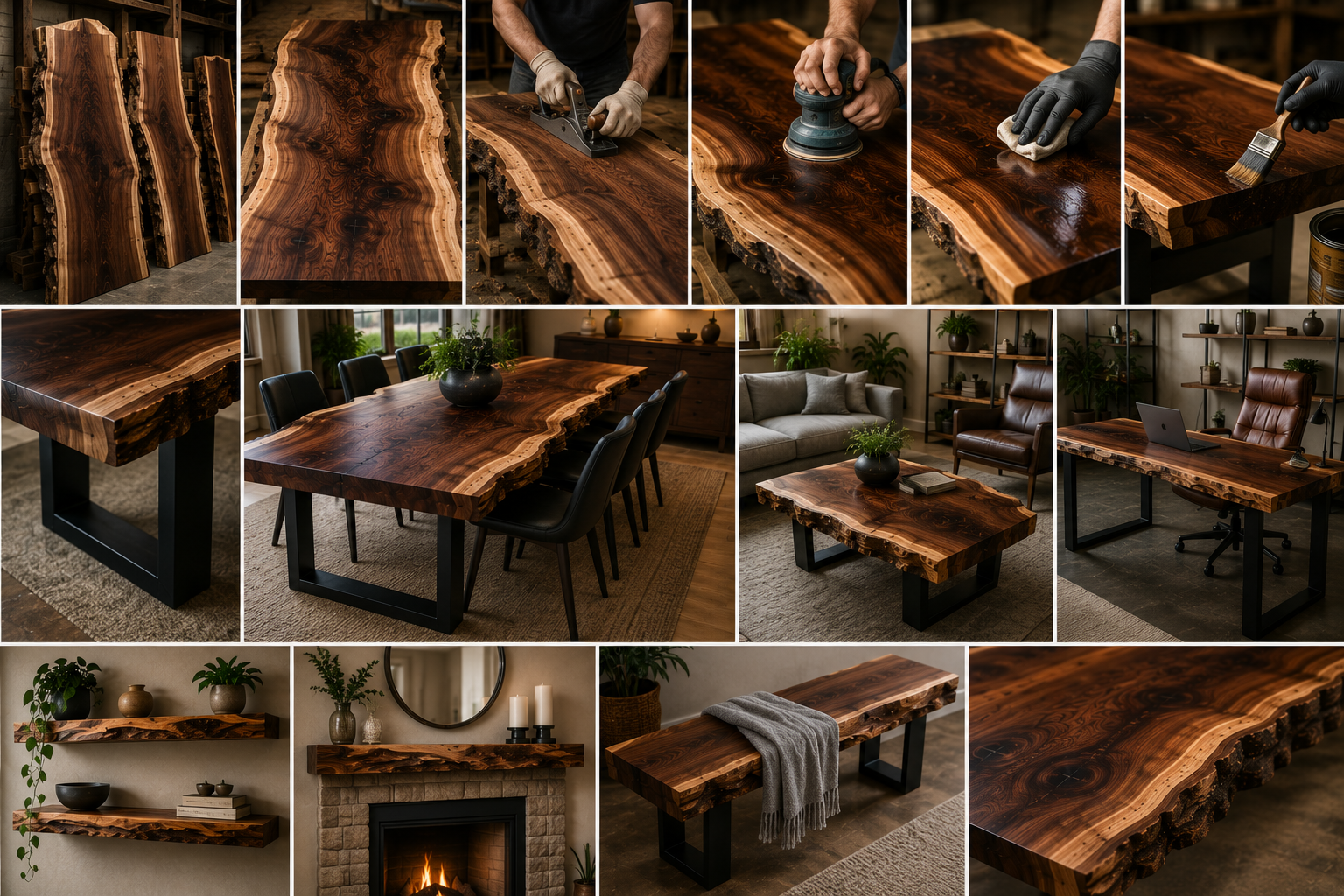
Turning a black walnut slab into a one-of-a-kind piece of furniture starts with selecting a high-quality kiln-dried slab, designing around its natural grain and live edge, properly preparing the wood, choosing a sturdy base, and applying a durable finish. By embracing the slab's unique character rather than hiding it, you can create custom furniture that is both functional and heirloom-worthy.
Why Black Walnut Is Perfect for Custom Furniture
Few hardwoods can match the beauty and versatility of black walnut.
Its rich chocolate-brown color, striking grain patterns, and naturally sculpted live edge make it a favorite among furniture makers and homeowners alike. Every slab is different, meaning every finished piece tells its own story.
Whether you're furnishing a modern home or adding rustic charm to a traditional space, black walnut delivers timeless elegance that never goes out of style.
Benefits include:
Exceptional durability
Beautiful natural color
Distinctive grain patterns
Excellent workability
Long-lasting value
Heirloom-quality appearance
Start with the Right Walnut Slab
Your finished furniture will only be as good as the slab you begin with.
Look for a slab that is:
Kiln dried
Structurally sound
Properly flattened or suitable for milling
Free from major structural defects
Wide enough for your project
Rich in natural grain and character
A reputable hardwood supplier should provide detailed dimensions, moisture content, and photographs of the exact slab.
Decide What You Want to Build
One of the greatest advantages of a live edge slab is its versatility.
Popular furniture projects include:
Dining tables
Coffee tables
Executive desks
Conference tables
Floating shelves
Fireplace mantels
Kitchen islands
Entryway console tables
Benches
Media consoles
Choosing the project first helps determine the size, thickness, and design features you'll need.
Let the Natural Shape Guide the Design
The live edge is the centerpiece of the slab.
Instead of trimming away its natural curves, use them to inspire the design.
For example:
A gently curved edge creates an elegant dining table.
A dramatic edge becomes a striking coffee table.
A narrow slab makes a beautiful floating shelf.
A long slab is ideal for an executive desk.
The goal is to highlight nature's craftsmanship rather than force the slab into a perfectly rectangular shape.
Choose the Right Thickness
Different furniture pieces require different slab thicknesses.
ProjectRecommended ThicknessFloating Shelves1½–2 inchesCoffee Tables1½–2 inchesDining Tables2 inchesOffice Desks2 inchesBenches2 inchesConference Tables2½–3 inchesFireplace Mantels2–3 inches
For most furniture, a finished thickness of 2 inches offers an excellent balance of strength and visual appeal.
Prepare the Slab Properly
Before assembly, the slab should be carefully prepared.
Typical preparation includes:
Inspecting for cracks
Removing loose bark if necessary
Flattening the slab
Sanding progressively through finer grits
Cleaning away dust and debris
Proper preparation creates a smooth surface while preserving the wood's natural character.
Preserve Natural Character
One of the biggest advantages of black walnut is its unique appearance.
Rather than removing every imperfection, consider preserving features such as:
Knots
Grain variation
Sapwood contrast
Natural voids
Small checks
Organic live edges
These elements add authenticity and make every piece truly one of a kind.
Select the Perfect Base
The base influences both the style and stability of your furniture.
Popular choices include:
Steel Legs
Ideal for:
Modern homes
Industrial interiors
Contemporary designs
Wooden Bases
Perfect for:
Farmhouse décor
Traditional interiors
Rustic homes
Pedestal Bases
Excellent for:
Dining tables
Round tabletops
Luxury statement pieces
Trestle Bases
Provide:
Outstanding support
Classic appearance
Excellent legroom
Choose a base that complements the walnut rather than competing with it.
Apply a High-Quality Finish
The right finish enhances the wood while protecting it from daily wear.
Popular finishes include:
Hard Wax Oil
Benefits:
Natural matte appearance
Easy maintenance
Spot repairable
Highlights grain beautifully
Danish Oil
Offers:
Rich color enhancement
Smooth feel
Traditional appearance
Polyurethane
Ideal for:
Dining tables
Kitchen islands
High-use furniture
Provides excellent resistance to scratches, spills, and moisture.
Add Functional Features
Custom furniture can be designed to meet your specific needs.
Consider adding:
Cable management for desks
Hidden storage compartments
Floating shelf brackets
Soft-close drawers
Adjustable leveling feet
Integrated charging stations
Matching benches
Metal accent inlays
Thoughtful features improve both usability and value.
Pair Walnut with Complementary Materials
Black walnut works beautifully with a variety of materials.
Popular combinations include:
Black steel
Brushed brass
Glass
Leather
Natural stone
Concrete
Matte black hardware
These pairings create furniture that feels both timeless and contemporary.
Care for Your Finished Furniture
Proper care helps preserve your walnut furniture for decades.
Maintenance tips include:
Wipe spills promptly.
Dust with a soft microfiber cloth.
Use coasters and placemats.
Avoid prolonged direct sunlight.
Keep furniture away from heating vents.
Reapply maintenance finishes as recommended.
Routine care protects both the wood and its finish.
Common Mistakes to Avoid
Choosing Green or Improperly Dried Wood
Furniture built from wood with excessive moisture is more likely to warp or crack over time.
Over-Sanding the Live Edge
The live edge should retain its natural character.
Excessive shaping can remove the very features that make the slab unique.
Selecting an Undersized Base
Large walnut slabs are heavy.
Choose a base designed to safely support both the weight and dimensions of the finished piece.
Applying the Wrong Finish
Different finishes provide different levels of protection.
Choose one that matches how the furniture will be used.
Frequently Asked Questions
What can I make from a black walnut slab?
Popular projects include dining tables, coffee tables, desks, benches, fireplace mantels, floating shelves, kitchen islands, and console tables.
Do I need a kiln-dried slab?
Yes. Kiln-dried walnut is generally recommended for indoor furniture because it offers greater stability and reduced moisture content.
Should I remove the bark?
Loose bark should usually be removed, but the natural live edge itself should be preserved to maintain the slab's unique appearance.
How long will black walnut furniture last?
With proper construction and routine maintenance, black walnut furniture can last for generations and often becomes a cherished family heirloom.
Conclusion
Turning a black walnut slab into a one-of-a-kind piece of furniture is about more than woodworking—it's about showcasing the natural beauty of one of the world's finest hardwoods. By selecting a premium kiln-dried slab, designing around its unique grain and live edge, choosing a sturdy base, and applying a durable finish, you can create furniture that blends craftsmanship with nature.
Whether you're building a dining table, coffee table, floating shelf, or executive desk, every black walnut slab offers an opportunity to create something truly original. With thoughtful planning and attention to detail, your finished piece won't just serve a purpose—it will become a lasting centerpiece admired for years to come.
