
What to Look for When Buying a Live Edge Slab Online
What to Look for When Buying a Live Edge Slab Online
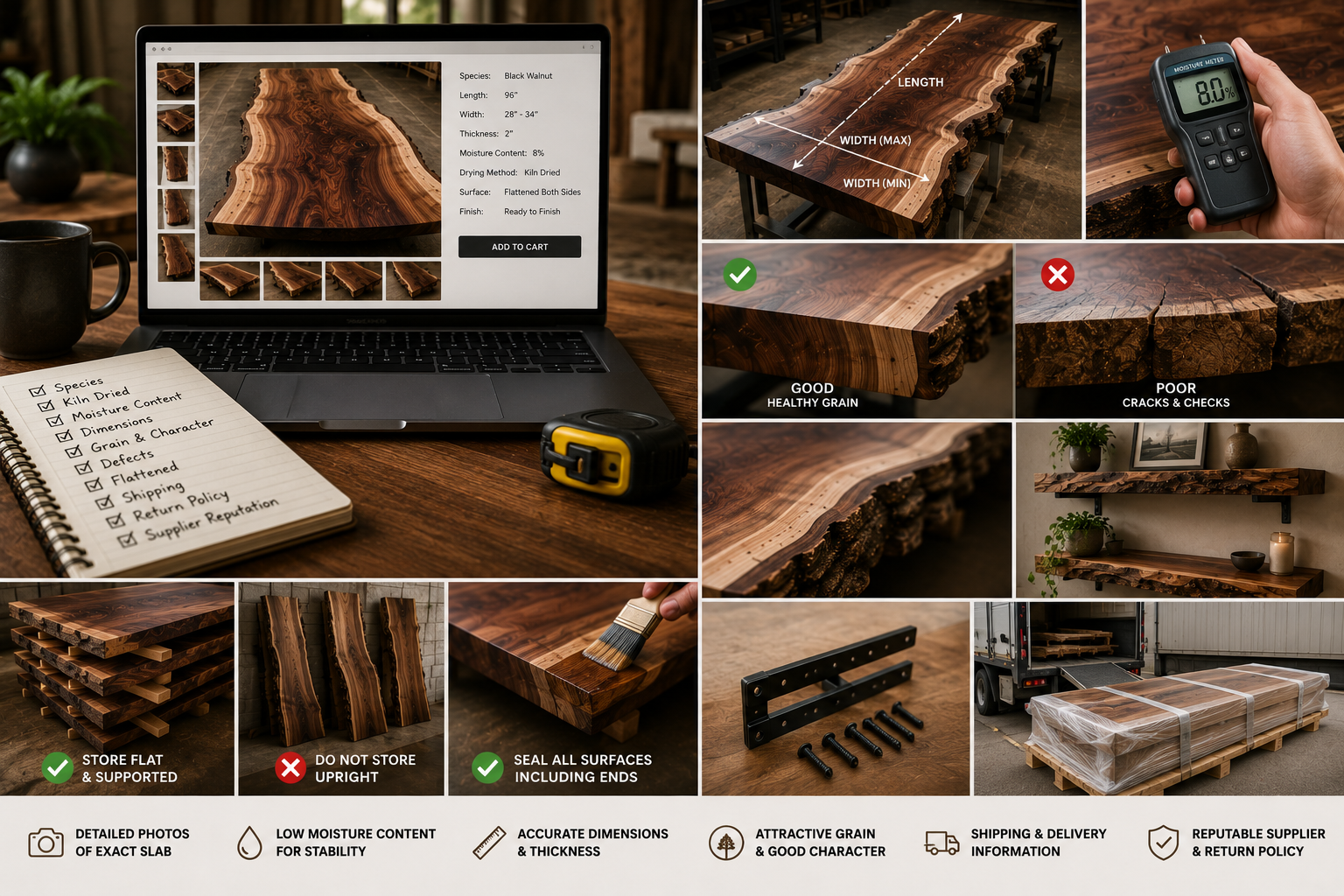
When buying a live edge slab online, look for a kiln-dried slab with accurate dimensions, attractive grain, high-quality photos of the exact piece, low moisture content, and a reputable supplier. Also review shipping policies, return options, and whether the slab has been flattened and prepared for furniture projects.
Why Buying a Live Edge Slab Online Requires Careful Research
Shopping online gives you access to hundreds of beautiful live edge slabs that may not be available locally. Whether you're searching for black walnut, white oak, maple, or another hardwood, online suppliers often provide a much larger selection of sizes and grain patterns.
However, unlike shopping in person, you can't physically inspect the slab before purchasing.
That's why it's important to know exactly what details to evaluate before placing your order.
With the right information, buying online can be both convenient and rewarding.
Start with the Right Wood Species
Different hardwoods offer different appearances and performance characteristics.
Some of the most popular choices include:
Black Walnut
Perfect for:
Dining tables
Coffee tables
Desks
Floating shelves
Fireplace mantels
Known for its rich chocolate-brown color and elegant grain.
White Oak
Excellent for:
Modern furniture
Farmhouse interiors
Kitchen islands
Shelving
Highly durable with a distinctive grain pattern.
Maple
Popular for:
Contemporary furniture
Countertops
Desktops
Offers a lighter, cleaner appearance.
Cherry
Ideal for:
Traditional furniture
Accent pieces
Cabinets
Develops a deeper, richer color as it ages.
Choose a species that matches both your design preferences and functional needs.
Confirm the Slab Is Kiln Dried
One of the most important questions to ask is whether the slab has been kiln dried.
Kiln drying provides:
Lower moisture content
Greater stability
Reduced risk of warping
Better indoor performance
Lower likelihood of insect activity
For furniture projects, kiln-dried slabs are generally the preferred choice.
Check the Moisture Content
Even kiln-dried wood should have an appropriate moisture level for indoor use.
Ask the supplier:
What is the current moisture content?
How was it measured?
When was the slab dried?
Reputable suppliers often provide this information in the product listing or upon request.
Review the Exact Dimensions
Don't rely on estimated measurements.
Verify:
Length
Maximum width
Minimum width
Thickness
Live edge slabs naturally taper, so maximum and minimum widths can differ significantly.
Make sure the dimensions will accommodate your finished project with enough extra material for trimming and flattening if needed.
Study the Photos Carefully
High-quality photos are essential when buying online.
Look for listings that show:
The full slab
Close-up grain details
Both faces of the slab
The live edges
End grain
Natural character marks
Whenever possible, purchase the exact slab pictured, not a representative example.
Every live edge slab is unique, so seeing the actual piece helps you know exactly what you're buying.
Evaluate the Grain Pattern
Grain is one of the defining features of a live edge slab.
Popular grain characteristics include:
Cathedral grain
Straight grain
Wavy figure
Curly figure
Feather patterns
Natural color variation
Choose a slab whose grain complements your desired furniture style.
Inspect for Natural Character
Natural features add personality, but it's important to distinguish between desirable character and structural problems.
Features many buyers appreciate include:
Small knots
Burl figure
Sapwood contrast
Natural color variation
Gentle live edge curves
Be cautious if you notice:
Large structural cracks
Deep splits
Excessive rot
Severe twisting
Major insect damage
These issues may require extensive repairs.
Ask Whether the Slab Has Been Flattened
Some slabs are sold rough-sawn, while others have already been surfaced.
Knowing the difference helps you plan your project.
Questions to ask include:
Has the slab been flattened?
Has it been planed?
Has it been sanded?
Is it ready for finishing?
If additional milling is required, factor that into your budget and timeline.
Consider the Thickness
Different projects require different slab thicknesses.
ProjectRecommended ThicknessFloating Shelves1½–2 inchesCoffee Tables1½–2 inchesDining Tables2 inchesExecutive Desks2 inchesConference Tables2½–3 inchesFireplace Mantels2–3 inches
Choose a thickness that balances strength, appearance, and practicality.
Understand Shipping and Delivery
Live edge slabs are large, heavy, and often shipped via freight.
Before ordering, review:
Shipping costs
Estimated delivery time
Packaging methods
Freight requirements
Delivery location restrictions
Inspection procedures upon arrival
Understanding the shipping process helps prevent unexpected surprises.
Review the Return Policy
Because every slab is unique, it's important to understand the supplier's return policy before making a purchase.
Check whether:
Returns are accepted
Damaged shipments are covered
Inspection is required upon delivery
Refund conditions are clearly explained
Reading these details ahead of time can save frustration later.
Buy from a Reputable Supplier
Choose a supplier known for quality and transparency.
Look for businesses that provide:
Detailed product descriptions
Clear photographs
Accurate dimensions
Helpful customer support
Transparent drying information
A reputable supplier should be willing to answer questions before you buy.
Common Mistakes to Avoid
Buying Based Only on Price
The cheapest slab isn't always the best value.
Quality drying, careful preparation, and premium grain often justify a higher price.
Ignoring Moisture Content
A beautiful slab can still develop problems if it hasn't been properly dried.
Always verify moisture information before purchasing.
Not Looking at the Actual Slab
Whenever possible, buy the exact slab shown in the listing rather than a stock image or representative sample.
Forgetting About Shipping
Freight costs, delivery access, and unloading requirements can significantly affect your project budget.
Plan for these expenses before placing your order.
Frequently Asked Questions
Is it safe to buy a live edge slab online?
Yes. Buying online is a popular option, provided you choose a reputable supplier, review detailed photos, and verify important information such as dimensions, drying method, and moisture content.
Should I only buy kiln-dried slabs?
For indoor furniture, kiln-dried slabs are generally recommended because they offer better stability and lower moisture content.
What is the most important thing to check before buying?
Moisture content, slab dimensions, and photographs of the exact slab are among the most important factors to review.
Why do live edge slabs vary so much in price?
Pricing depends on factors such as wood species, slab size, thickness, figure, rarity, drying process, and overall quality.
Conclusion
Buying a live edge slab online opens the door to an incredible selection of premium hardwoods, unique grain patterns, and one-of-a-kind pieces that can become the centerpiece of your next project. By taking the time to evaluate the wood species, moisture content, dimensions, grain, drying method, and supplier reputation, you can shop with confidence and avoid costly mistakes.
Whether you're building a live edge dining table, coffee table, floating shelves, desk, or fireplace mantel, selecting a properly kiln-dried slab from a trusted supplier is one of the best investments you can make. Careful research before you buy ensures your finished project will be as durable as it is beautiful.
