
How to Block a Doorway Without Stepping Over a Gate
How to Block a Doorway Without Stepping Over a Gate
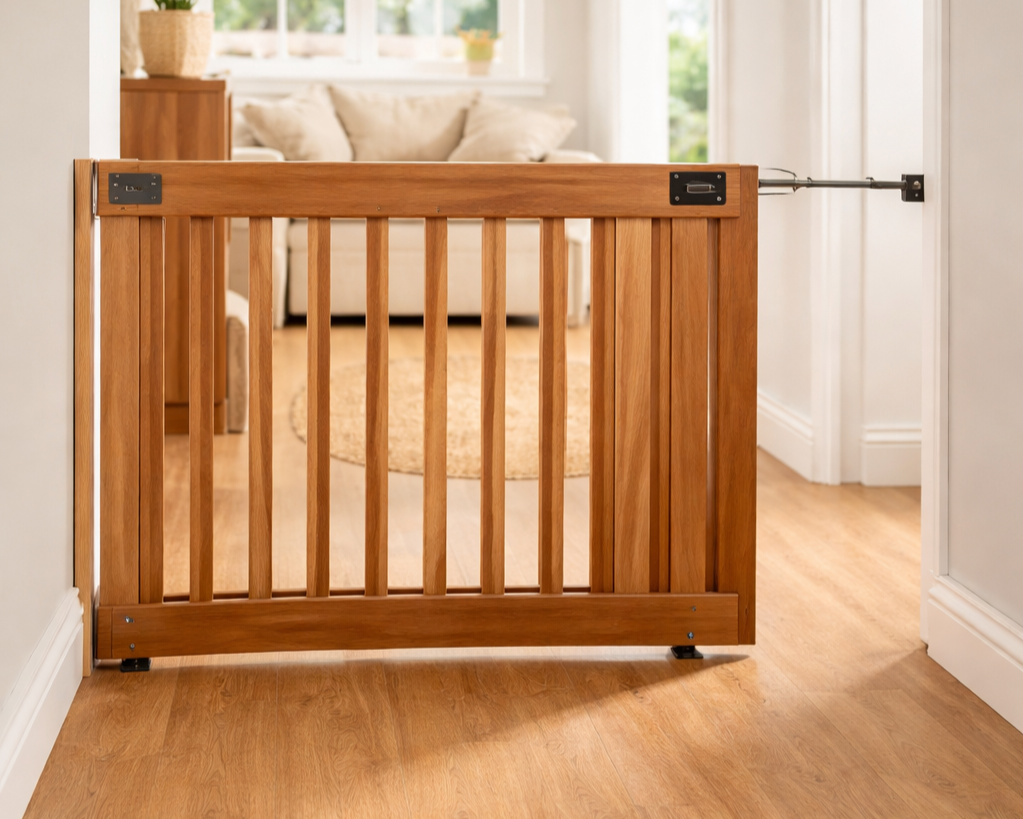
Many homes rely on baby gates to keep children or pets out of certain rooms. While they serve an important safety purpose, at Stumps Custom Wood , traditional pressure-mounted gates often create a frustrating obstacle for adults.Most of these gates include a metal bar across the bottom that you have to step over every time you pass through the doorway. At first it seems like a small inconvenience, but over time it becomes annoying and sometimes even dangerous—especially when you’re carrying groceries, laundry, or a child.Because of this, many homeowners start searching for ways to block a doorway without stepping over a gate. The good news is that there are several safer and more convenient solutions that keep areas secure while allowing normal movement through your home.
Why Traditional Baby Gates Create a Tripping Hazard?
Most standard baby gates are designed to be installed without tools. They use a pressure-mounted frame that pushes against the walls of the doorway.
To keep the frame stable, manufacturers add a horizontal support bar across the bottom of the gate. That bar helps prevent the gate from bending or shifting when pressure is applied.
While the design makes installation simple, it also creates a permanent obstacle in the doorway. Every time someone walks through, they have to step over that bar. In high-traffic areas like hallways, kitchens, or stair entrances, this quickly becomes a daily frustration.
For families with elderly members or busy households, the step-over design can even become a safety concern.
Common Solutions People Try
Before discovering better alternatives, many homeowners try a few different approaches to deal with the inconvenience of step-over gates.
Removing the Gate
Some people eventually remove the gate completely once they get tired of stepping over it.
Pros
• Walkways become completely clear
• Easier to move through the home
Cons
• Removes the safety barrier
• Pets or children regain access to restricted areas
Extra-Tall Step-Over Gates
Some baby gates are designed specifically to be stepped over rather than opened.
Pros
• Simple design
• No installation required
Cons
• Still creates a tripping hazard
• Difficult when carrying items
• Not ideal for elderly family members
Swing-Open Baby Gates
Wall-mounted gates that swing open like a small door are another option.
Pros
• No bottom bar
• Allows normal walking through the doorway
Cons
• Requires drilling into the wall
• Can block space when open
• Often bulky in smaller hallways
While these options work in some homes, they don’t always solve the problem of keeping the doorway clear and convenient.
Baby Gate Alternatives That Keep Walkways Clear
Modern gate designs focus on keeping the doorway accessible while still creating a secure barrier.
Swinging Doorway Gates
Swing gates attach to the wall and open like a door. Because they are mounted directly to the wall instead of using pressure, they typically eliminate the bottom threshold.
These gates are commonly used for stairways, kitchens, and hallway entrances.
Retractable Mesh Gates
Retractable gates use flexible mesh that rolls into a small housing when not in use.
Advantages
• Compact design
• Minimal visual clutter
Limitations
• Less durable for large pets
• Can lose tension over time
Sliding Pocket Gates
Sliding gates are one of the most convenient ways to block a doorway without creating a step-over obstacle.
Instead of swinging open or requiring a threshold bar, these gates slide sideways along the wall. When open, they sit neatly beside the doorway, leaving the walkway completely clear.
Many homeowners choose sliding gates for hallways and stair entrances because they keep the space functional while still providing a reliable barrier.
Blocking Wider Doorways or Hallway Openings
Another challenge with traditional baby gates is that they often struggle with wider openings between rooms or at the end of hallways.
In these situations, homeowners typically consider:
• multi-panel gates
• custom wall-mounted gates
• sliding doorway barriers
Sliding systems are especially useful because they can cover larger openings without placing obstacles in the walkway.
Why Sliding Gates Eliminate Trip Hazards
Sliding gates work differently from traditional pressure-mounted gates. Instead of relying on tension between the walls, they mount directly to the wall and move horizontally across the doorway.
Because of this design, they eliminate the bottom bar entirely.
The doorway stays completely clear when the gate is open. When the barrier is needed, the gate slides across the opening and secures the space.
This design removes the most common frustration associated with traditional baby gates: having to step over a barrier multiple times a day.
A Practical Long-Term Solution
For homeowners who are tired of stepping over traditional gates, sliding doorway barriers offer a more convenient alternative.
Instead of lifting your foot over a metal frame every time you walk through a hallway, the doorway remains open and unobstructed until the gate is needed.
When it’s time to restrict access, the gate simply slides across the opening.
This approach works especially well in:
• hallways
• kitchen entrances
• laundry rooms
• stairway access points
• pet-restricted areas
Many households choose sliding pocket gates because they provide a clean, built-in appearance while keeping everyday walkways clear.
How a Clear Doorway Improves Everyday Movement
Small design changes in a home can make everyday tasks significantly easier.
Imagine walking down the hallway with a basket of laundry. Instead of lifting your leg over a metal bar while balancing everything in your arms, the doorway is completely clear.
When the barrier is needed, the gate slides smoothly across the opening.
When it’s open, the walkway feels natural and unobstructed.
This makes a noticeable difference in homes where certain areas need to be restricted but still accessed frequently.
Doorway Gate Comparison
Gate Type Step Over Required Ease of Use Safety
Pressure Baby Gate Yes Moderate Good
Swing Gate No Easy Very Good
Sliding Pocket Gate No Very Easy Excellent
Frequently Asked Questions
What is the safest way to block a doorway without stepping over a gate?
Wall-mounted swing gates and sliding pocket gates are the safest options because they eliminate the bottom threshold that creates tripping hazards.
Are step-over baby gates dangerous?
They can become a tripping hazard, especially in busy areas or when carrying items through the doorway.
Do sliding gates work for pets and children?
Yes. Many sliding doorway gates are designed to provide a secure barrier suitable for both pets and child safety.
Can you install a gate without drilling into walls?
Pressure-mounted gates do not require drilling, but they usually include a bottom bar that must be stepped over.
What is the best baby gate alternative?
Sliding gates and wall-mounted swing gates are often considered the best alternatives because they keep the doorway clear while maintaining safety.
Are sliding doorway gates good for hallways?
Yes. Hallways are one of the most common places homeowners install sliding gates because they allow easy movement through the home while still creating a barrier when needed.
Conclusion
Traditional baby gates help keep children and pets safe, but their step-over design often creates daily frustration.
If you want to block a doorway without stepping over a gate, alternatives like sliding gates or wall-mounted swing gates offer a safer and more convenient solution.
By eliminating the bottom threshold, these designs keep walkways clear while still providing a reliable barrier for restricted areas.
For homes with busy hallways or frequently used doorways, switching to a sliding doorway barrier can make everyday movement through the house much easier.
