
Pantry Organization Ideas That Add More Usable Shelf Space
A pantry can be full of shelves and still feel as though there is nowhere to put anything. Cereal boxes lean against bags of rice, canned goods disappear behind taller packages, baking ingredients crowd the corners, and half-open snack bags take over every available surface. You buy groceries with good intentions, only to discover that finding what you need has become a daily exercise in moving things around.
The problem is not always that your pantry is too small. Often, the real issue is how the available space is being used.
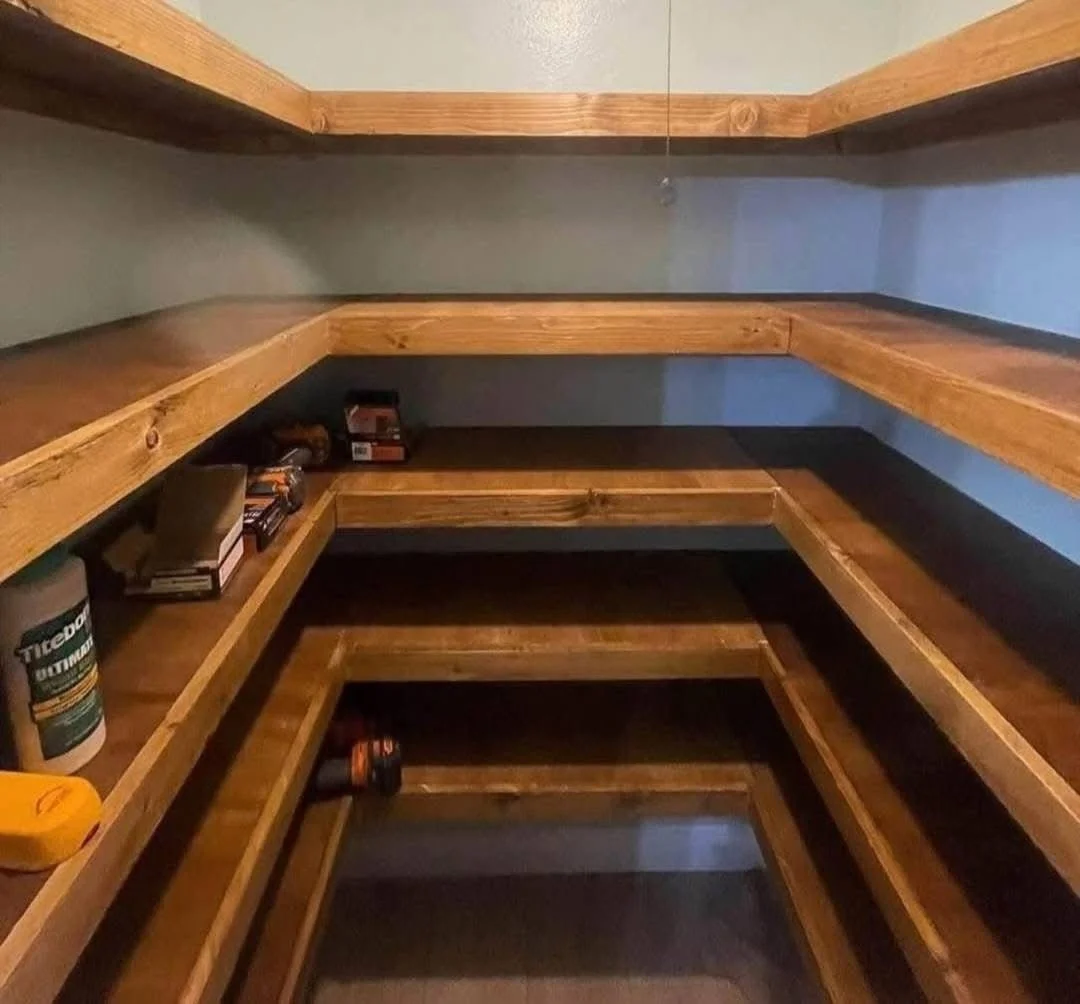
With the right organization methods, you can make existing shelves work harder, uncover forgotten storage areas, and create a pantry that looks cleaner and feels easier to use. A simple shelf riser can reveal a second layer of storage. A well-placed basket can gather scattered packets into one accessible place. A sturdy wooden shelf can transform an empty wall into useful storage while adding warmth and character to your kitchen.
The best pantry organization ideas do more than make a cupboard look attractive. They help you see what you own, reach ingredients without unpacking an entire shelf, and put groceries away without starting another round of rearranging.
For homeowners who appreciate practical storage with beautiful natural materials, Stumps Custom Wood, a family-owned woodworking business based in Shelby, Ohio, offers handcrafted shelves, wooden home goods, and custom woodworking that can inspire a more organized, inviting home.
Here are 18 practical pantry organization ideas to help you create more usable shelf space without necessarily expanding your kitchen.
1. Measure Your Shelves Before Buying Organizers
Before purchasing baskets, containers, or new shelving, take a few minutes to measure your pantry. This simple step can prevent wasted money and help you identify exactly where additional storage would be useful.
Measure the width, depth, and vertical clearance of each shelf. Pay attention to the space between the shelf surface and the shelf above it. A deep shelf with generous height may look spacious, but it can become difficult to use if smaller items disappear behind large packages.
Next, look at the products you regularly store. Tall cereal boxes, short cans, wide jars, and large bags of rice all require different amounts of room.
Instead of buying organizers first and trying to make everything fit, plan around your actual groceries.
You may discover that one shelf needs more vertical clearance, another would benefit from a riser, and a third could accommodate two rows of smaller containers. Those small adjustments can create more usable space without adding a single cabinet.
2. Use Shelf Risers to Create a Second Level
organized kitchen pantry shelf risers canned food jars spices two tier storage" One of the easiest ways to make better use of a pantry shelf is to introduce a raised platform.
Without a riser, cans and short jars often sit in a single row, leaving unused vertical space above them. A shelf riser creates a second level, allowing smaller products to sit above or behind others while remaining visible.
For example, place canned beans and vegetables on the lower level, then use the raised section for smaller cans or jars. You can also use a riser for spices, condiments, or other compact packages.
The key is to match the riser to the shelf's depth and the height of the products. Make sure items remain stable and that you can remove them without knocking over the containers around them.
This is particularly useful in deep pantries where products at the back tend to become forgotten.
3. Add Wooden Shelves Where Vertical Space Is Being Wasted
<AsyncImage query="natural walnut wooden pantry shelves neatly organized jars baskets kitchen storage warm wood" aspectRatio="5:4" width="100%" />
Sometimes, the most effective way to gain usable storage is to add another shelf.
If there is a large empty gap between two existing shelves, that vertical space may be suitable for an additional shelf or an adjustable shelving system. By dividing a tall opening into smaller sections, you can store more cans, jars, packets, and containers without stacking everything precariously.
Wooden shelves can be especially attractive in a pantry or kitchen where storage is visible. Their natural grain introduces warmth, helping practical shelving feel like part of the home's design rather than an afterthought.
Imagine neatly arranged glass jars on a warm walnut shelf, with baskets below holding baking supplies and snacks. The wood provides a natural backdrop that makes the entire arrangement feel more considered.
When installing shelves, check the wall structure, choose appropriate brackets and fasteners, and account for the weight of pantry goods. Canned food can be heavy, so the shelf and its supports must be suitable for the intended load.
Stumps Custom Wood connection: If standard shelving does not fit your pantry's dimensions, explore custom woodworking options that can help you make better use of the available space while introducing the natural character of wood into your home.
4. Move Frequently Used Items to Eye Level
A pantry becomes easier to use when the products you reach for most often are stored where you can see and access them comfortably.
Keep everyday ingredients such as pasta, rice, breakfast supplies, frequently used canned goods, and favorite snacks on the most accessible shelves. Reserve higher shelves for lightweight items you use less often, and use lower shelves for heavier packages that are easier to lift from below.
This arrangement reduces the need to move products every time you cook.
It also helps reveal how much space you really have. When frequently used products are grouped together, you can see which areas are overcrowded and which shelves could be reorganized.
Think of your pantry as a workspace. The ingredients you use every day should be as easy to reach as the tools you keep beside your stove.
5. Use Clear Containers for Dry Goods
<AsyncImage query="organized pantry clear airtight containers rice pasta flour oats wooden shelves minimalist kitchen" aspectRatio="5:4" width="100%" />
Open bags of flour, rice, cereal, pasta, and other dry goods can take up awkward amounts of space. Their packaging may not stand upright, and folded bags can spill or become difficult to identify.
Suitable airtight containers help create a more uniform arrangement. They make it easier to stack or line up dry goods, see how much remains, and keep pantry shelves looking orderly.
Choose containers that fit your shelf dimensions rather than buying a matching set without measuring. A row of containers that is too tall or too deep can actually waste space.
Label each container clearly, including the food type and relevant storage information. Keep product packaging or ingredient details when needed for allergen information and cooking instructions.
Use food-safe containers with secure lids, and make sure they are clean and completely dry before filling them. For foods that require special storage conditions, follow the package instructions.
6. Organize Small Packets in Baskets
Seasoning packets, sauce sachets, snack bars, drink mixes, and small baking ingredients can quickly turn a pantry shelf into a jumble.
Instead of spreading them across several shelves, gather them into baskets or small bins. Assign each container a purpose, such as baking additions, quick snacks, seasoning packets, or lunchbox supplies.
A basket creates a clear boundary for small items and makes them easier to retrieve. When you need something, pull the basket forward instead of reaching into the back of a crowded shelf.
Choose baskets that fit the available width and depth without blocking access to other products. Labels can help everyone in the household return items to the right place.
Natural woven baskets can introduce texture and warmth, while simple plastic bins may be more practical for items that need frequent cleaning. Choose the material that suits your pantry and the products being stored.
7. Turn Deep Shelves Into Organized Zones
Deep shelves can provide plenty of capacity, but they can also hide food behind other packages. When products disappear from view, you may buy duplicates or forget to use them before their quality declines.
Create front and back zones for each category. Place current, frequently used items at the front and suitable backup supplies behind them, keeping everything visible enough to manage.
For smaller products, consider shallow bins that can be pulled forward. For canned goods, arrange items so that labels are easy to read and older products can be selected first.
Avoid pushing loose packages into the deepest part of the shelf. A little structure can make a deep shelf feel much more accessible without reducing its storage capacity.
8. Make Better Use of the Back of the Pantry Door
The inside of a pantry door can offer additional storage for lightweight items, provided there is enough clearance between the door and the shelves.
A suitable door-mounted organizer may hold seasoning packets, small snack packages, or other compact pantry supplies. This can free up shelf space for larger products.
Before installing anything, measure the available depth and check that the door can close fully. Make sure the organizer does not strike jars, containers, or shelving when the door moves.
Choose hardware appropriate for the door and the organizer's load rating. Heavy glass containers should not be placed in a door organizer unless it is specifically designed to support them.
The goal is to use otherwise wasted space without making the pantry harder to open or navigate.
9. Group Food by Category Instead of Scattering It Everywhere
A pantry can feel full simply because similar products are stored in several different places.
Keep baking ingredients together, place canned goods in one area, group breakfast supplies on another shelf, and designate a separate zone for snacks. The exact layout should reflect the way your household cooks and shops.
For example, if you regularly make pasta dishes, store pasta, canned tomatoes, and other commonly used ingredients in nearby sections. If baking is a regular activity, give flour, sugar, baking powder, and other baking essentials a dedicated area.
Grouping items makes it easier to see how much you have and helps prevent overcrowding caused by duplicate purchases.
It also makes the pantry more intuitive for other household members. Everyone can learn where items belong, which helps keep the organization system working after the initial cleanup.
10. Use Stackable Bins for Bulky Packages
Large snack bags, packaged baking supplies, and irregularly shaped products can waste valuable shelf space because they do not sit neatly beside one another.
Stackable bins can help create a more compact arrangement. They are particularly useful when storing lightweight items that do not require individual containers.
Choose bins with dimensions that suit the shelf and a design that allows you to access the contents easily. Avoid stacking them so high that the top bin becomes difficult to remove or the arrangement becomes unstable.
Keep heavier items lower down, and do not stack food in a way that crushes delicate packaging.
The benefit is not just a tidier shelf. By giving bulky packages a defined footprint, you can make better use of the space between them.
11. Add Pull-Out Baskets or Drawers
If the back of a pantry shelf is difficult to reach, a pull-out basket or drawer can make that area much more useful.
Instead of removing everything in front to reach a product, you can slide the storage unit forward and see the contents. This can be particularly helpful for deep cabinets, lower shelves, and narrow pantry spaces.
Use pull-out storage for suitable items such as packets, small jars, snacks, or baking accessories. Make sure the hardware is rated for the expected weight and installed according to its instructions.
For a pantry that has unusual dimensions, a custom storage solution may be worth considering. A well-fitted drawer or pull-out unit can make an awkward space easier to access.
12. Store Canned Goods in Neat, Visible Rows
Canned goods are convenient, but they can occupy a large portion of pantry space if they are arranged without a plan.
Group cans by type, such as vegetables, beans, soups, and tomatoes. Keep labels facing outward where practical so you can identify contents quickly.
Use a shelf riser or an appropriate can organizer when it improves visibility. Avoid stacking cans too high or creating unstable piles, especially on shelves that are difficult to reach.
Rotate products so older cans are used before newer ones, while always checking their condition and dates as appropriate.
A well-organized canned-goods section makes it easier to plan meals and quickly identify which ingredients need replenishing.
13. Keep Baking Supplies Together
Baking often involves several ingredients that are used in small amounts but need to be easy to find. When flour, sugar, cocoa, vanilla, baking powder, and decorations are scattered across different shelves, preparing a recipe becomes unnecessarily frustrating.
Create a dedicated baking zone with containers or baskets suited to the products you use. Keep heavier ingredients on a sturdy, accessible shelf and small packets or decorations in labeled bins.
If you have enough vertical clearance, a small riser can create a second level for compact ingredients without hiding them behind larger containers.
Keep the area clean and dry, and make sure containers are properly sealed to protect their contents.
A dedicated baking shelf also makes it easier to check what you already own before buying ingredients for holiday cookies, cakes, or other special recipes.
14. Use the Lowest Shelf for Heavy and Bulky Items
Large bags of rice, flour, pet food stored separately from human food, and bulk pantry purchases can be difficult to handle when placed on high shelves.
The lowest accessible shelf is often a more practical location for heavier items, provided the shelf is strong enough and the products can be stored safely.
Use sturdy bins or containers where appropriate, and keep products off the floor when needed to protect them from moisture and make cleaning easier.
Reserve upper shelves for lightweight, less frequently used items. This arrangement can improve safety and leave the most convenient shelves available for everyday ingredients.
15. Use Labels to Prevent Overcrowding
Labels may seem like a small detail, but they can make a big difference in how a pantry functions.
When each basket or container has a clear purpose, you are less likely to scatter new groceries wherever there happens to be a gap. Labels also help everyone in the household return items to the correct place.
Use simple categories such as “Snacks,” “Baking,” “Pasta and Rice,” or “Breakfast.” For decanted dry goods, label the contents clearly and include relevant dates when useful.
Avoid creating so many categories that the system becomes complicated. A few well-defined zones are usually easier to maintain than dozens of tiny groupings.
16. Create a Dedicated Space for Backstock
Buying pantry staples in larger quantities can be convenient, but backup packages can quickly overwhelm shelves if they are mixed with items currently in use.
Choose one area for unopened extras and keep only the quantity you need for immediate use in the main cooking zone.
For example, keep the open bag of rice in its usual place and store the unopened backup package in the backstock section. When the first package runs low, you can replenish it without searching the entire pantry.
Use a simple first-in, first-out routine where appropriate, and follow each product's storage instructions.
This system makes it easier to see what you already have, reduces duplicate purchases, and prevents backup supplies from taking over every shelf.
17. Make Small Pantries Work Harder With Narrow Shelves
A small pantry may not have room for wide shelving, but narrow shelves can be useful for compact items such as spices, jars, small cans, or packaged ingredients.
Look for unused vertical areas, slim wall sections, or gaps that could accommodate appropriately designed shelving without obstructing movement or access.
Narrow shelving is most effective when the stored items match its dimensions. It should not be so shallow that containers become unstable or so deep that products are hidden behind one another.
If standard shelves do not fit your pantry, custom woodworking can help you explore a design that makes better use of the available space.
18. Choose Wooden Shelving That Combines Storage and Style
beautiful natural walnut wooden pantry shelving with organized jars baskets and warm modern kitchen interior
A well-organized pantry should be practical, but it can also look beautiful.
Wooden shelving introduces natural grain, warm tones, and texture into a space often dominated by packaging, metal cans, and plastic containers. Even a simple shelf can make the pantry feel more intentional.
Imagine a set of wooden shelves holding clear jars of pasta and grains, a row of neatly arranged cans, and baskets containing smaller essentials. The natural wood creates a visual connection between the pantry and the rest of the home, particularly if your kitchen already includes wooden cutting boards, serving pieces, or cabinetry.
The design should still prioritize strength, cleanliness, and access. Choose suitable materials and finishes for the environment, install shelves securely, and ensure that the structure can support the intended load.
Stumps Custom Wood is a family-owned woodworking business based in Shelby, Ohio, offering shelves, wooden home goods, and custom woodworking. If you want to make better use of your pantry while maintaining a warm, natural aesthetic, custom woodwork can be an option to explore.
Rather than treating shelves as invisible storage, consider how their material and design contribute to the overall appearance of your kitchen.
Bring Natural Wood and Thoughtful Storage Into Your Home With Stumps Custom Wood
A pantry that works well can change the way your kitchen feels. When ingredients are visible, shelves are easy to reach, and groceries have a clear place, everyday cooking becomes less frustrating.
But practical organization does not have to mean filling your home with generic plastic storage products. Wooden shelves, trays, and carefully selected home accessories can help create a space that feels warm, organized, and personal.
At Stumps Custom Wood, handcrafted wooden products combine everyday function with the natural character of wood. The business offers shelves, wooden home goods and décor, cutting boards, charcuterie products, bathtub trays, personalized gifts, and custom woodworking.
For a pantry refresh, think about the areas where a better shelf or storage arrangement could make the biggest difference. Perhaps you need an additional shelf to separate baking supplies, a better arrangement for jars and baskets, or a custom solution for a narrow section that standard shelving cannot use efficiently.
Wood's natural grain can complement a range of interiors, from simple modern kitchens to warmer, traditional spaces. A thoughtfully chosen shelf can help organize essentials while contributing to the room's overall design.
The same approach works beyond the pantry. A wooden tray can group everyday items on a counter, a bathroom accessory can help keep essentials organized, and a well-designed shelf can give favorite objects a proper place elsewhere in the home.
Explore Stumps Custom Wood's handcrafted wooden products and custom woodworking for inspiration on combining practical storage with natural beauty. When your storage works better and looks more considered, the benefits extend beyond one shelf or one cupboard.
Final Thoughts: Make Every Pantry Shelf Work Harder
Creating more usable pantry shelf space does not always require a larger pantry. It starts with understanding how you use the space you already have.
Shelf risers can reveal unused vertical room. Clear containers and baskets can make small items easier to manage. Grouping food by category can prevent duplicate purchases, while additional wooden shelves or pull-out storage can make awkward spaces more accessible.
Start with one problem shelf, make a few thoughtful changes, and build from there. Choose organizers that fit your measurements, keep food stored appropriately, and avoid filling every available inch simply because you can.
A well-organized pantry should make life easier. You should be able to find ingredients, put groceries away, and see what needs replenishing without rearranging the entire cupboard.
For homeowners who want practical storage with an attractive, natural finish, Stumps Custom Wood offers handcrafted shelves, wooden home goods, and custom woodworking to inspire a more organized home. With the right combination of smart organization and thoughtful design, even a crowded pantry can become a cleaner, more useful part of your kitchen.
