
Standard Barn Door Sizes vs Custom Sizes: Which Should You Buy?
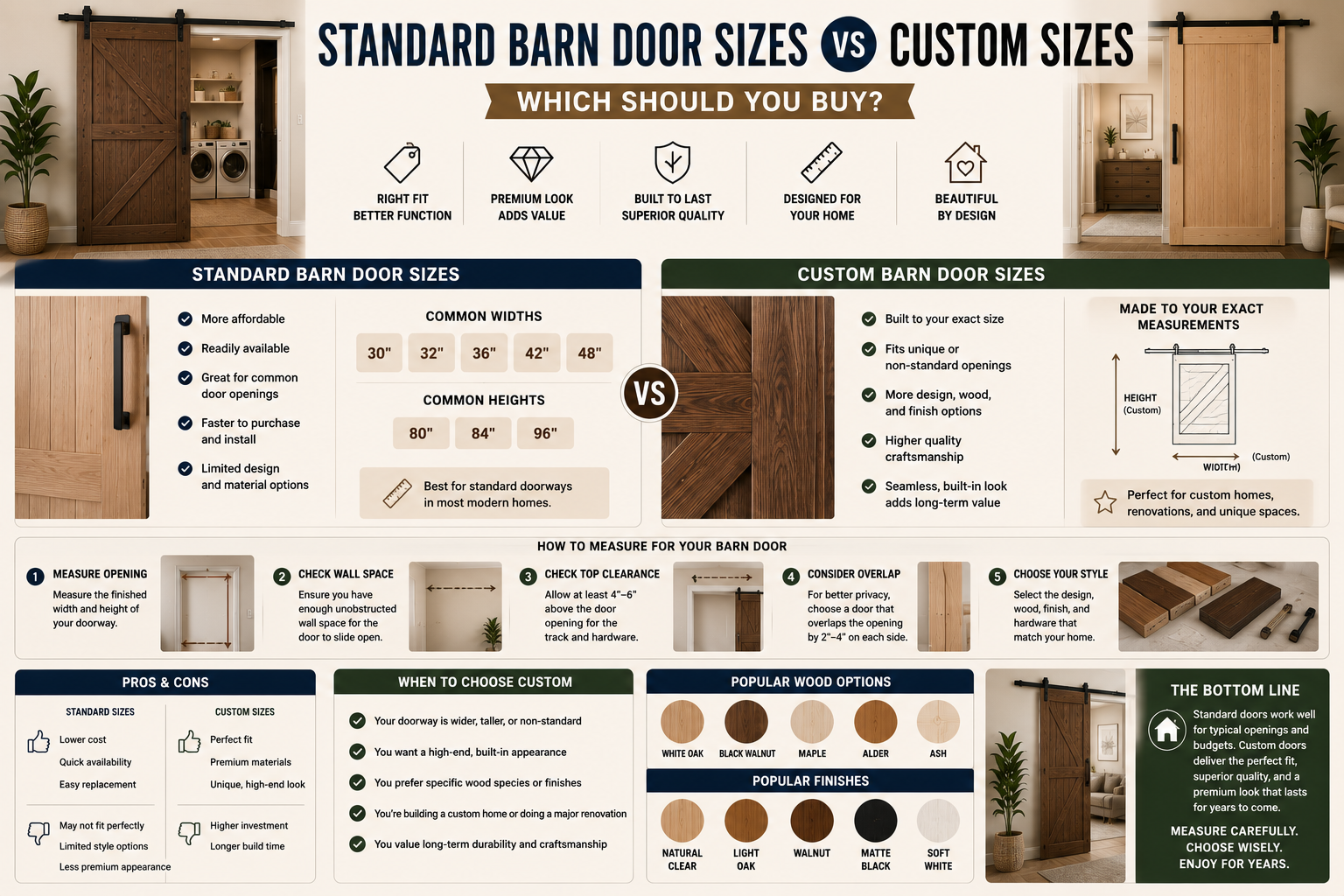
Standard Barn Door Sizes vs Custom Sizes: Which Should You Buy?
Standard barn door sizes are ideal for homes with conventional door openings because they're more affordable and readily available. However, custom barn doors are built to your exact measurements, providing a better fit, greater design flexibility, and a more premium appearance. If your doorway is an unusual size or you're looking for a high-end, built-in look, a custom barn door is often the smarter long-term investment.
Understanding Barn Door Sizes
One of the biggest decisions homeowners make when purchasing a barn door is whether to choose a standard size or invest in a custom-built option.
While both can look beautiful, the right choice depends on your doorway, your home's architecture, and the level of customization you want.
A properly sized barn door doesn't just improve appearance—it also affects privacy, smooth operation, and overall functionality.
What Are Standard Barn Door Sizes?
Standard barn doors are manufactured in common dimensions that fit most residential doorways.
Typical widths include:
30 inches
32 inches
36 inches
42 inches
48 inches
Common heights include:
80 inches
84 inches
96 inches
These sizes are designed for traditional interior openings found in bedrooms, bathrooms, pantries, closets, and laundry rooms.
Because they're mass-produced, they're usually available for immediate purchase.
What Is a Custom Barn Door?
A custom barn door is built specifically for your home.
Instead of choosing from preset sizes, the door is crafted according to your exact requirements.
You can customize:
Width
Height
Thickness
Wood species
Panel design
Finish
Hardware style
Handle placement
The result is a door that fits perfectly and complements your home's overall design.
Standard vs Custom Barn Doors
FeatureStandard Barn DoorCustom Barn DoorSizingLimited to common dimensionsBuilt to exact measurementsAvailabilityUsually in stockMade to orderCostLower upfront costHigher initial investmentMaterialsLimited optionsWide range of premium hardwoodsDesign ChoicesBasic stylesFully customizableOverall AppearanceGoodLuxury, built-in look
When a Standard Barn Door Is the Right Choice
Standard sizes work well when:
Your doorway matches common dimensions.
You want a faster installation.
You're working within a budget.
You're renovating a rental property.
You need a replacement for an existing standard door.
For many homeowners, a standard-sized barn door provides an attractive and practical solution.
When You Should Choose a Custom Barn Door
Custom sizing is often the better option if:
Your doorway is unusually wide or narrow.
You have extra-high ceilings.
You're renovating an older home.
You're building a custom home.
You want a premium architectural feature.
You need a specific wood species or finish.
Custom doors eliminate the compromises that often come with trying to adapt a standard-sized product to a unique opening.
Why Proper Sizing Matters
Choosing the correct size is about much more than appearance.
A properly sized barn door helps:
Improve privacy
Cover the doorway completely
Slide more smoothly
Create balanced proportions
Prevent excessive light gaps
A door that's too small may leave visible openings around the edges, while an oversized door can interfere with nearby walls or furniture.
How to Measure for a Barn Door
Before ordering, measure carefully.
Door Opening Width
Measure the finished width of the doorway from edge to edge.
Door Opening Height
Measure from the finished floor to the top of the opening.
Wall Space
Ensure there's enough unobstructed wall space beside the doorway for the door to slide completely open.
Watch for obstacles such as:
Light switches
Electrical outlets
Windows
Built-in shelving
Cabinets
Furniture
Clearance Above the Door
You'll also need enough room above the doorway for the track system and mounting hardware.
Accurate measurements help prevent installation issues and ensure smooth operation.
Design Flexibility
One of the biggest advantages of a custom barn door is the ability to personalize every detail.
Popular options include:
White oak
Black walnut
Maple
Alder
Live edge slabs
Shaker panels
Modern flat-panel designs
Glass inserts
Custom paint colors
Specialty stains
Standard doors typically offer fewer choices in both materials and finishes.
Cost Considerations
Standard barn doors usually have a lower purchase price because they're manufactured in large quantities.
Custom barn doors generally cost more because they involve:
Individual design
Premium materials
Skilled craftsmanship
Exact sizing
Hand-applied finishes
Although the upfront investment is higher, many homeowners appreciate the long-term value of a door built specifically for their home.
Which Option Lasts Longer?
Durability depends on both construction quality and materials.
Many professionally built custom doors feature:
Solid hardwood construction
Heavy-duty hardware
Precision craftsmanship
Durable protective finishes
These features can contribute to excellent long-term performance when properly maintained.
Some standard doors also provide good durability, particularly those made from quality materials, but construction methods and material choices can vary by manufacturer.
Common Mistakes to Avoid
Measuring the Existing Door Instead of the Opening
Always measure the finished doorway rather than relying solely on the size of the old door.
Forgetting Wall Clearance
A barn door needs enough clear wall space to slide fully open.
Prioritizing Price Over Fit
Saving money on a standard door may lead to visible gaps or an awkward appearance if the opening isn't a standard size.
Choosing the Wrong Hardware
Larger or heavier doors require hardware designed to safely support their weight.
Frequently Asked Questions
What is the most common barn door size?
One of the most common sizes is 36 inches wide by 84 inches high, although the ideal size depends on your specific doorway.
Are custom barn doors worth the extra cost?
If you have a non-standard opening or want premium craftsmanship and a tailored appearance, many homeowners find custom barn doors to be a worthwhile investment.
Can I use a standard barn door for a custom opening?
Sometimes, but it may result in larger gaps or incomplete doorway coverage if the dimensions don't match well.
Should a barn door be wider than the doorway?
Yes. Barn doors are generally designed to extend beyond the doorway on each side to provide better coverage and improve privacy.
Conclusion
Choosing between a standard and custom barn door comes down to your home's layout, your budget, and your design goals. Standard sizes are practical, affordable, and ideal for conventional doorways, making them a great solution for many renovation projects.
However, if you're looking for the perfect fit, premium materials, and a truly custom look, a custom barn door offers clear advantages. Built specifically for your home, it delivers improved functionality, greater design flexibility, and a finished appearance that can elevate the style of any room for years to come.
